What “Large Loss” Means in Commercial Disaster Restoration
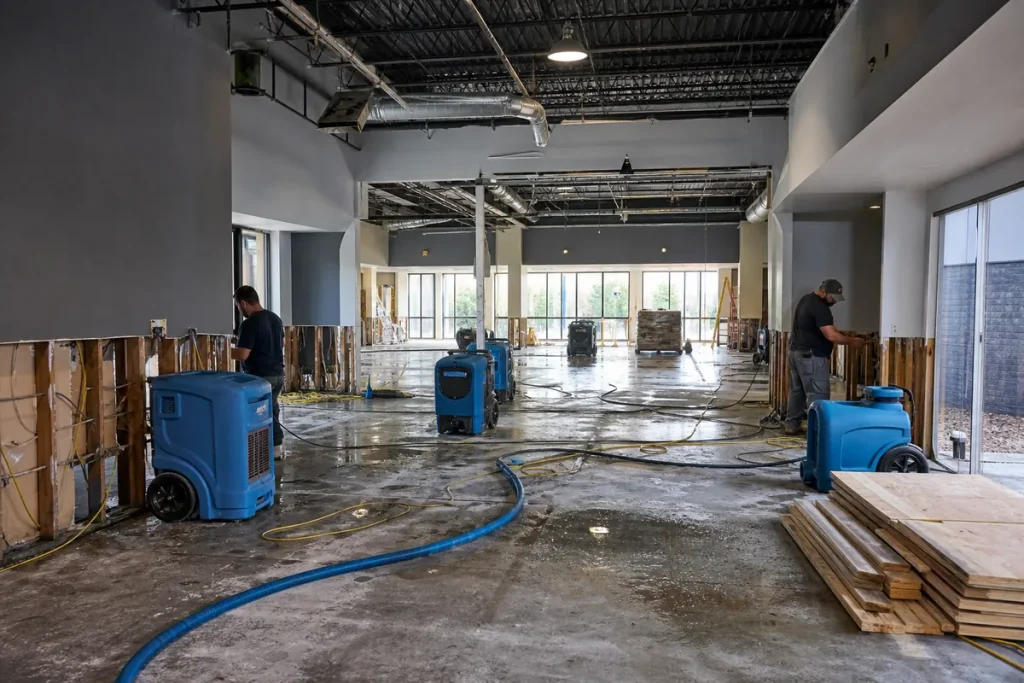
Large loss in commercial restoration isn’t just about size—it’s about complexity, downtime, and financial exposure. When a hospital wing floods, a hotel loses multiple floors, or a warehouse fire impacts inventory and structure, you’re dealing with multi-system failure at once. These jobs involve structural drying, environmental controls, demolition, and coordination with engineers, adjusters, and facility managers—all under tight timelines because every hour offline costs real money.
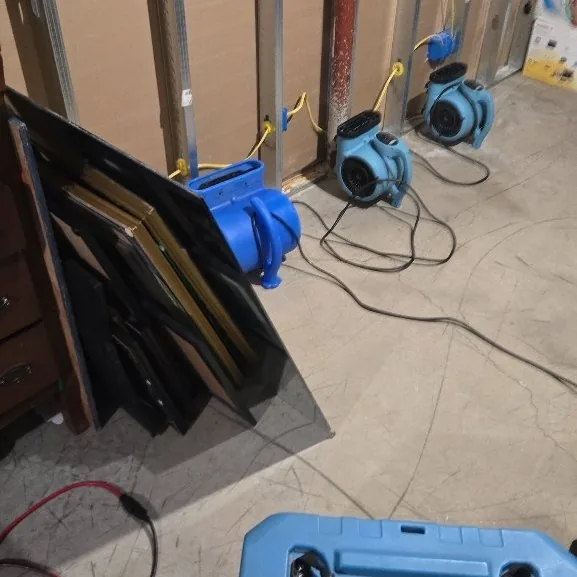
From a technical standpoint, large loss projects require scaled equipment and strategy. You’re not placing a few air movers—you’re deploying desiccant dehumidifiers, temporary power, negative air systems, and building-wide moisture mapping. Materials behave differently at scale too. Concrete slabs hold moisture longer, steel framing can condense humidity, and HVAC systems can spread contaminants across zones if not isolated properly.
What separates a true commercial restoration team is control. Large loss jobs must follow strict protocols, often aligned with IICRC standards, while also adapting to business continuity needs. That means phased restoration, after-hours work, and detailed documentation for insurance. It’s not just about drying a building—it’s about stabilizing an operation so it can survive the event.
Commercial Water and Mold Restoration
Commercial water damage is rarely contained to one area. Water travels through wall cavities, along conduit lines, and across flooring systems—especially in buildings with large square footage and shared infrastructure. A leak in one tenant space can impact multiple units, making detection and containment far more complex than residential jobs.
Mold in commercial environments introduces another layer of risk: liability. Office buildings, medical facilities, and schools must maintain safe indoor air quality. When moisture is left unresolved, microbial growth can spread through HVAC systems, above drop ceilings, and behind wall systems. Proper remediation isn’t just removal—it’s containment, air filtration, and source correction to prevent recurrence.
The real challenge is minimizing disruption. Businesses can’t shut down for weeks, so restoration must happen in controlled phases. Technicians isolate affected zones with containment barriers, run HEPA filtration, and work around operational hours when needed. The goal is simple: fix the problem without stopping the business.
Where Commercial Restoration Services Happen
Commercial restoration doesn’t happen in one type of building—it happens anywhere operations rely on a physical space. This includes office buildings, apartment complexes, hotels, hospitals, schools, retail stores, warehouses, and industrial facilities. Each environment comes with its own risks, layouts, and restoration challenges.
For example, a flooded basement in an apartment complex affects multiple tenants and shared systems like electrical and plumbing. A water loss in a hospital requires strict infection control and negative air containment. A warehouse fire means dealing with soot contamination across inventory and structural components. The environment dictates the approach every time.
What ties all these spaces together is urgency and scale. Commercial properties have more people, more systems, and more at stake. Restoration in these environments isn’t just about fixing damage—it’s about protecting revenue, safety, and long-term asset value.