Mold Removal - Louisville KY

Commercial Mold Remediation for Large-Loss Properties in Louisville, KY

Commercial mold is not a surface problem—it is a building failure that has been active long before it became visible. By the time mold shows up in a commercial property, moisture has already been trapped inside walls, ceilings, flooring systems, or mechanical spaces for days or weeks. In large-loss environments, that moisture spreads across units, floors, and structural assemblies, turning a small issue into a building-wide concern.

At Bear Restoration, owner Emery treats commercial mold as a system problem, not a cleaning job. The focus is identifying the moisture source, understanding how far contamination has spread, isolating affected areas, and restoring the building safely while protecting tenants, employees, and operations.

Call (502) 200-6968

HVAC and Hidden Mold in Louisville Commercial Buildings

One of the most overlooked risks in commercial mold situations is the HVAC system. When mold spores enter ductwork, they can spread throughout the building, affecting multiple areas even if the original problem was isolated.

Hidden mold is also common behind walls, above ceiling grids, under flooring, and inside mechanical rooms. In large-loss situations, Bear Restoration uses moisture detection, inspection methods, and experience to identify where mold is likely to exist—not just where it is visible.

Commercial Mold Remediation Process (IICRC-Based Approach)

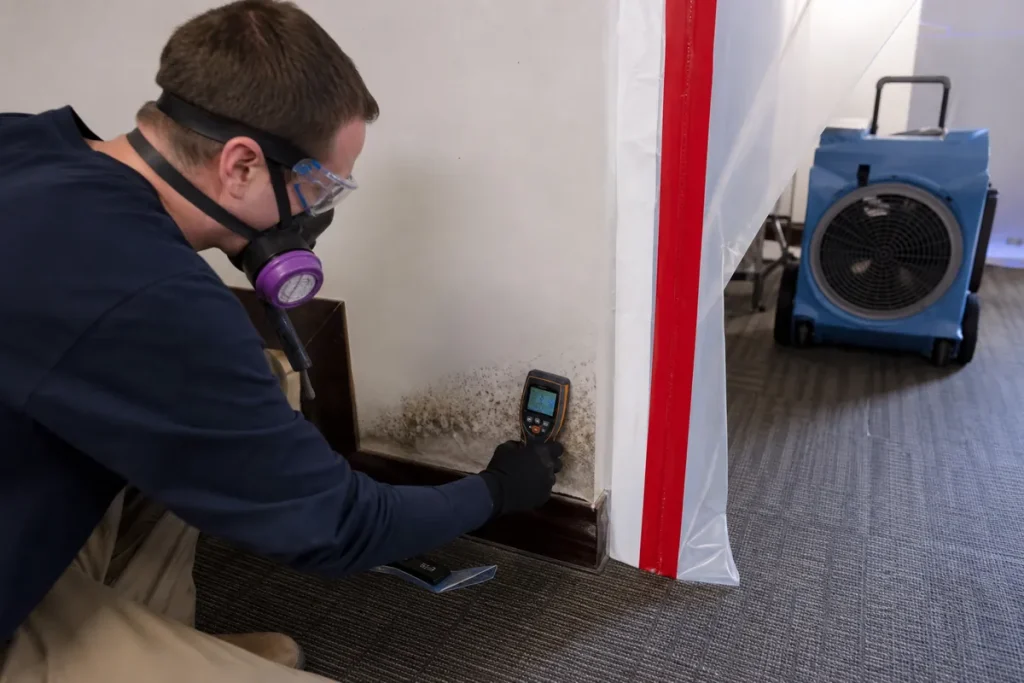
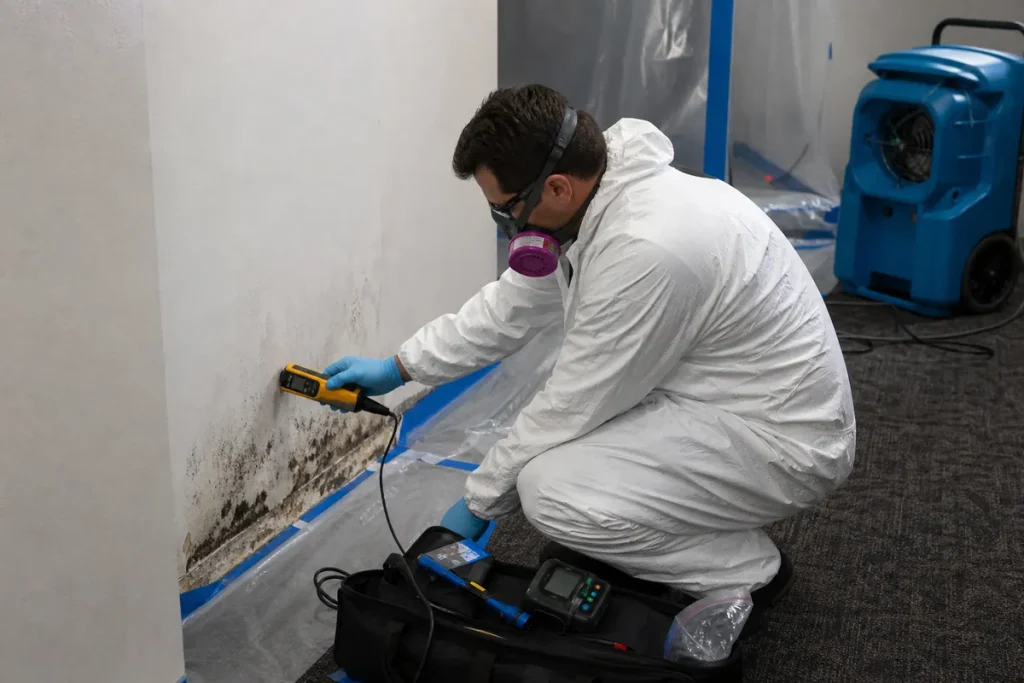
Commercial mold remediation follows a controlled process built around industry standards. The first step is identifying and correcting the moisture source. Without this, remediation will fail. Once the source is addressed, the affected areas are isolated using containment barriers and negative air pressure to prevent spores from spreading.

Contaminated materials that cannot be cleaned are removed carefully. Remaining surfaces are cleaned using professional methods designed to remove mold growth and residual particles. Air filtration devices are used throughout the process to capture airborne spores. After remediation, the area is dried, cleaned again if needed, and prepared for clearance or reconstruction.

This is not about making mold “look gone.” It is about removing contamination and returning the environment to a normal condition.

Business Continuity During Mold Remediation

Commercial mold remediation often needs to happen while parts of the building remain operational. Offices, retail spaces, apartment units, and facilities cannot always shut down completely. That means the remediation plan must be designed around safety and continuity.

Containment zones, controlled work areas, off-hour scheduling, and phased remediation allow businesses to continue operating while the problem is being resolved. Emery and the Bear Restoration team coordinate closely with property managers and owners to minimize disruption without cutting corners.
Mold Removal - Louisville KY

Where Commercial Mold Problems Are Most Common

Mold in commercial properties often develops in basements, storage areas, behind walls with plumbing lines, near roof leaks, inside HVAC systems, around poorly ventilated bathrooms, and in areas affected by past water damage that was never fully dried.

Buildings in Louisville are especially vulnerable due to groundwater pressure, older construction methods, and humidity patterns that allow moisture to linger. Large buildings with multiple tenants or complex layouts are at even higher risk because moisture can spread unnoticed.

Call (502) 200-6968

Why Documentation and Compliance Matter

Commercial mold remediation is not just a cleanup—it is a documented process. Property owners, managers, and insurance carriers require clear records of what was found, what was removed, how the work was performed, and how the building was returned to a safe condition.

Bear Restoration provides detailed documentation, including affected areas, containment setup, removal scope, cleaning methods, and progress tracking. Emery reviews projects to ensure the work meets professional standards and supports any needed reporting or claims.

Schedule A Commercial Mold Inspection & Remediation in Louisville

Mold problems in commercial buildings do not fix themselves. The longer moisture remains, the further contamination spreads and the more expensive the repair becomes.

Call Bear Restoration for commercial mold remediation in Louisville and surrounding areas. Emery and the team are ready to assess the problem, control the environment, and restore your building with a clear, professional plan built for large-loss conditions.

Call (502) 200-6968

Commercial Mold FAQs

Mold grows when moisture sits too long. This usually comes from leaks, past water damage, or high humidity.

Yes. Mold spores can travel through air systems, hallways, and shared spaces, especially in large properties.

In some cases, yes. Proper containment keeps affected areas sealed so other parts of the building can still be used.

Yes. Mold can impact health, safety, and tenant conditions, which can lead to legal and insurance issues.

Mold can start growing within 24–72 hours if moisture is not removed.

Commercial mold remediation follows the same IICRC S520 principles but at larger scale, with additional complexity. Commercial buildings have shared HVAC systems that can spread spores across multiple floors, fire-rated wall assemblies that cannot be opened without code-compliant reconstruction, and occupied tenant spaces that require scheduling and access coordination.

Containment in commercial settings typically involves larger negative air machines, longer ducting runs, and sometimes phased remediation to allow partial building occupancy during the project.

Kentucky does not have a specific mold statute, but landlords and property managers can be held liable under general negligence, lease obligations, and habitability standards if they knew or should have known about a moisture problem and failed to act. OSHA also requires employers to maintain safe indoor air quality for workers.

Documenting moisture complaints, maintaining HVAC systems, and responding promptly to leaks are the best legal protections. We provide detailed reports that commercial property managers can use to demonstrate due diligence.