Our Team Specializes In Cleaning Up Flooded Homes in Middletown, KY

Flooding can turn a normal day into a stressful situation in a matter of minutes. Whether the water comes from a burst pipe, water heater failure, appliance leak, s or severe storm, the damage can spread quickly throughout your home. At Bear Restoration, owner Emery and his team understand how important a fast response is when water enters your property. That’s why we provide rapid flood cleanup and water damage services throughout Middletown, KY, helping homeowners minimize damage and begin the recovery process as quickly as possible.

Bear Restoration uses professional water extraction equipment, moisture detection technology, and commercial-grade drying systems to remove standing water and address hidden moisture that can lead to mold growth, material deterioration, and costly repairs. Every flooded home presents different challenges, from saturated drywall and flooring to water trapped inside wall cavities and subfloors. Emery and the Bear Restoration team take a thorough, property-specific approach to ensure moisture is properly identified, removed, and monitored throughout the drying process. Our goal is not only to restore your home but to provide peace of mind during one of the most disruptive events a property owner can face.

Why Does Water Damage Affect Middletown Homes Differently Depending on When They Were Built?

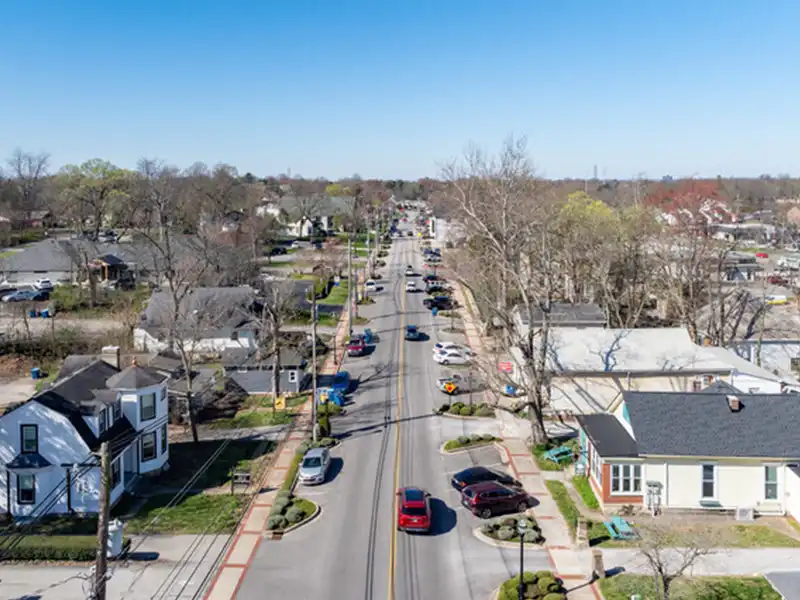
w in Middletown affects properties differently based on their age, construction methods, and building materials. From historic homes near the original town center to newer subdivisions along Shelbyville Road and the eastern growth corridor, each structure presents unique drying and restoration challenges. At Bear Restoration, we tailor every water damage restoration project to the specific property because effective mitigation depends on how the building was constructed.

Older Middletown homes often contain plaster walls, hardwood flooring, crawl spaces, and dimensional lumber framing. These materials can hold moisture deep within structural assemblies, allowing water to spread beyond the visible damage. If not properly detected and dried, trapped moisture can lead to wood deterioration, mold growth, and long-term structural issues.

Newer homes typically feature tighter building envelopes, advanced insulation systems, and engineered wood products. While energy efficient, these materials can trap moisture inside walls, ceilings, and flooring after a leak or flood. Products such as OSB sheathing and laminate flooring are particularly susceptible to swelling and permanent damage when exposed to water.

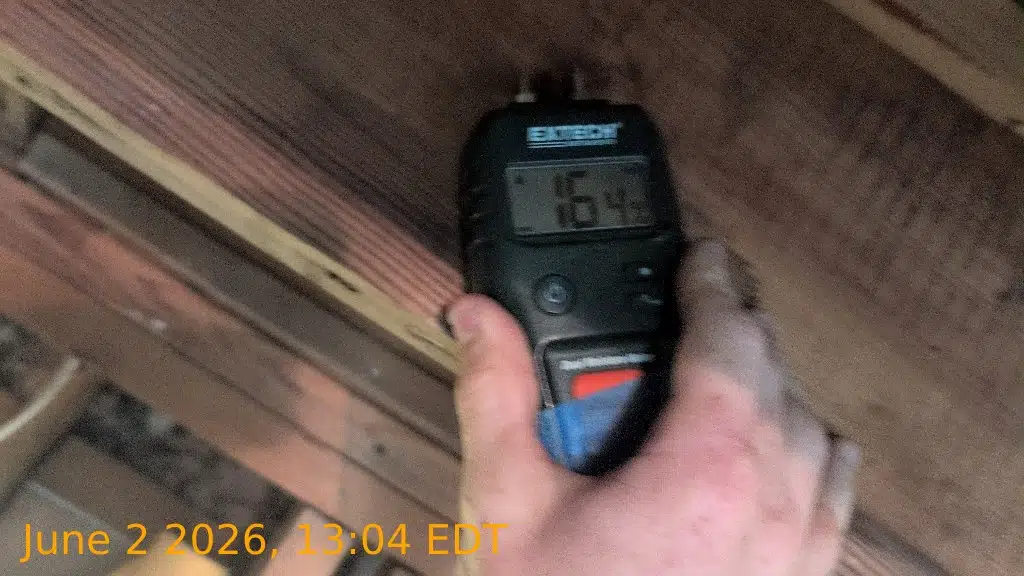
Our IICRC-certified technicians use moisture mapping, thermal imaging, and industry-standard drying procedures to identify hidden moisture and restore affected materials to safe moisture levels. Whether the loss involves a burst pipe, appliance failure, roof leak, or storm intrusion, the right restoration plan starts with understanding how water interacts with the specific construction of your Middletown property.

Call (502) 200-6968

examples of work in middletown, ky

At What Category of Water Damage Can Materials Be Saved and When Must They Be Removed?

This is the question Middletown homeowners with historic or high-value finishes ask most often, and the answer depends on three variables: water category, exposure duration, and material porosity. Getting this decision right is the core of effective water damage mitigation.

Category 1 (clean water) plus less than 48 hours: Most materials can be dried in place, including solid hardwood, plaster, and structural framing. We use pin-type moisture meters calibrated for each specific material to track drying progress against IICRC-published benchmarks.

Category 2 (gray water): Non-porous and semi-porous materials can often be cleaned and dried. Fully porous materials like carpet pad, cellulose insulation, and unsealed particleboard must be removed regardless of exposure time. Professional water damage cleanup requires antimicrobial treatment of all remaining surfaces before structural drying begins.

Category 3 (contaminated/sewage): All porous materials below the flood line are removed per IICRC S500 protocol. Non-porous structural elements are cleaned with antimicrobial agents, dried, and verified before any rebuild begins. This level of water damage restoration is the most involved and requires certified technicians with proper PPE and biohazard training.

For irreplaceable items like hand-hewn joists, original plaster medallions, and antique trim profiles, we use non-invasive drying techniques first. We escalate to more aggressive methods only when moisture monitoring data shows that gentler approaches are not achieving dry standards within the expected timeframe.

How Does Bear Restoration Protect Irreplaceable Finishes During Structural Drying?

Aggressive drying saves time but can destroy materials that have survived over a century. In Middletown’s older properties, we moderate our approach based on what is at stake.

For plaster walls: Rather than cutting flood openings immediately, we first assess moisture migration using Tramex non-invasive meters and Flir thermal imaging. If moisture is confined below 18 inches and the plaster key (the lath-plaster bond) remains intact, we dry from the surface using directed airflow and controlled dehumidification. We monitor hourly during the first 24 hours to confirm the plaster is releasing moisture without delaminating from the lath.

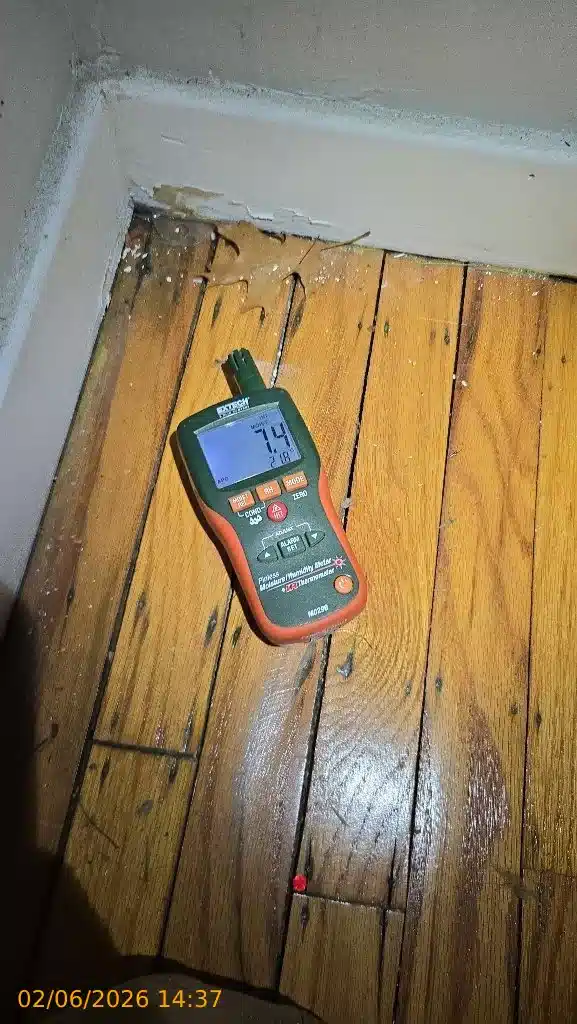
For original hardwood flooring: Solid 3/4-inch hardwood has far more resilience than engineered products. If the wood has not cupped beyond 3/16-inch deviation per NWFA standards, we deploy floor mat drying systems that apply warm, dry air and negative pressure across the surface. This technique pulls trapped moisture from between the boards and the subfloor without forcing the wood to dry unevenly, which causes permanent crowning.

For structural timber framing: Old-growth beams and joists dry slowly because of their density. We set extended drying targets of 7 to 10 days versus the 3 to 5 typical for modern lumber, and monitor with deep-penetration pin meters to ensure the core moisture content reaches safe levels, not just the surface reading.

Patience and precision protect what makes a Middletown historic home irreplaceable. Our flood water removal process eliminates bulk water fast, and our structural drying brings the building back carefully.

Call (502) 200-6968

What Does the Building Science Behind a Professional Water Damage Dry-Out Actually Involve?

Effective structural drying services are applied physics, not guesswork. Every decision our water damage services team makes during a Middletown dry-out is based on psychrometric principles, the relationship between temperature, humidity, and airflow.

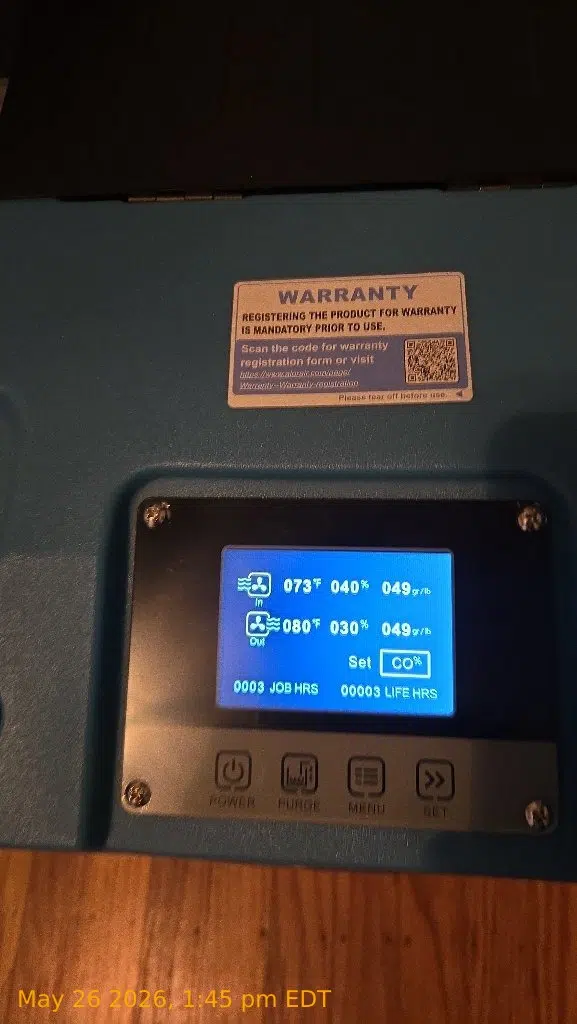
The core concept is simple: warm, dry air absorbs more moisture from wet materials than cool, humid air. Our LGR dehumidifiers create dry air by pulling room air across refrigerated coils that condense water vapor, then reheating the air before returning it to the space. This process lowers the grain content of the air (measured as grains per pound), which increases the air’s ability to pull moisture from wet building materials.

Air movers accelerate this exchange by directing high-velocity airflow across saturated surfaces. The moving air disrupts the boundary layer of humid air that clings to wet materials, replacing it with the drier air produced by the dehumidifier. Positioning matters: air movers angled at 15 to 20 degrees toward a wet wall create laminar flow across the surface, which is more effective than pointing them directly at the material.

Temperature control is the third variable. Warmer conditions speed evaporation, but excessive heat can cause secondary damage to certain materials. For Middletown homes with plaster and old-growth wood, we typically maintain ambient temperatures between 75 and 85 degrees Fahrenheit during active active drying, warm enough to drive evaporation without thermally stressing historic finishes.

Every day, we measure moisture content, relative humidity, temperature, and GPP at multiple points throughout the drying area. The water damage restoration job closes only when objective data confirms every surface is dry. No shortcuts, no guessing.

Middletown’s Trusted Water Damage Restoration Contractor

Emery Bear and the Bear Restoration team cover all of Middletown and surrounding Jefferson County communities, including neighborhoods along Shelbyville Road, Old Shelbyville Road, English Station Road, and the Middletown-Anchorage corridor. Our average arrival time for emergency water damage restoration in the 40243 and 40245 zip codes is under 60 minutes from the initial call.

Whether you are dealing with a basement flood in an older section near the historic district or a supply-line failure in a newer subdivision, our water damage company brings the full complement of extraction, drying, and monitoring equipment needed to begin water removal and restoration immediately on arrival. Call (502) 200-6968 anytime, 24/7.

Call (502) 200-6968

What Happens When an Upstairs Bathroom Floods Your Middletown Kitchen Overnight?

When a second-floor bathroom supply line fails overnight in a Middletown two-story, water runs for hours before anyone wakes up, and the kitchen below takes the worst of it. The water follows the drain penetrations and light fixtures down, loads the kitchen ceiling until the drywall sags, and spreads across the countertops and floor below. This exact sequence is one of the most common losses we work in Douglass Hills and the subdivisions off Shelbyville Road.

The response has to work on both floors at once. Upstairs, we shut down the source, extract the bathroom and hallway, and meter how far water traveled under the tile and into the wall plates. Downstairs, sagging ceiling drywall gets drained through controlled openings before it collapses on its own, and the insulation above it comes out because wet fiberglass never dries in place. Cabinets, countertop seams, and the kitchen floor are metered next, since water that entered through the ceiling reaches places a floor-level kitchen flood never touches.

What surprises most Middletown homeowners is the scope: a single failed supply line routinely produces a claim touching two bathrooms’ worth of flooring, a full kitchen ceiling, and cabinet repairs. The Insurance Information Institute puts the average water damage claim above twelve thousand dollars, and overnight two-story losses are a big reason why. The countermeasure is cheap: close the supply valves on toilets and sinks before any trip out of town, and call (502) 200-6968 the moment you find water where it should not be.

How Do You Know a Middletown Water Heater Is About to Fail?

A water heater near failure announces itself: rumbling or popping during heating cycles, rust-tinted hot water, moisture or rust streaks at the bottom seam, and an age past the eight-to-twelve-year mark stamped in the serial number on the data plate. Any one of those signs in a Middletown home is a reason to plan replacement; two or more is a reason to do it this month.

The popping sound is sediment. Minerals settle on the tank bottom, the burner superheats water trapped beneath the sediment layer, and the resulting steam pockets collapse with a bang. That cycle stresses the tank lining every day it continues, and once corrosion works through the steel, the failure is not a drip you can catch with a bucket. The tank empties into the utility closet and keeps flowing from the supply side until someone shuts the valve.

Placement decides the damage. Many Middletown two-stories put the tank in an interior closet on the main floor or upstairs, surrounded by finished rooms on every side, so a rupture soaks carpet, hardwood, and drywall in the first hour. If your tank sits in one of these interior locations, a drain pan plumbed to the exterior and a screw-on leak alarm cost very little compared to what they prevent. When a tank has already let go, the water finds its way into wall cavities fast, and prompt professional water damage restoration is the difference between drying and demolition. We answer at (502) 200-6968 around the clock.

Get Emergency Help Now

Where Do Middletown’s 1980s and 1990s Subdivisions Let Water In?

The water intrusion points in Middletown’s 1980s and 1990s housing stock are the deck ledger board, window and door flashing, and the additions that came later: sunrooms, bump-outs, and converted porches. These are the seams where two eras of construction meet, and seams are where wind-driven rain wins.

The deck ledger deserves first mention because the damage hides in plain sight. Where a deck bolts to the house, water running down the siding meets the ledger connection, and if the original builder skipped or shortcut the ledger flashing, every storm sends a small amount of water into the rim joist. Twenty storm seasons later, a homeowner calls us about a soft spot in the family room floor and we find a rim joist you can press a thumb into. Sunroom additions fail similarly at the roof tie-in, where a low-slope addition roof meets the original wall.

Storm water adds a seasonal layer. The subdivisions at the headwaters of the South Fork of Beargrass Creek shed runoff fast during intense spring cells, and when detention systems back up, flood water crosses yards and finds garage thresholds and low door sills. Storm flood water removal is a contamination job as well as a drying job, so we extract, remove what cannot be sanitized, and treat before rebuild. However it entered, water that has been inside a wall system for more than a couple of days deserves a mold evaluation, and our Middletown mold remediation team handles that assessment as part of the same response.

Which Appliance Leaks Do Middletown Homeowners Miss Until the Floor Fails?

The refrigerator ice maker line, the washing machine drain standpipe, and the dishwasher door gasket are the three appliance leaks Middletown homeowners consistently miss, because all three release small amounts of water into places nobody looks. Each one shows up in our job files as a floor repair that could have been a five-dollar part.

The ice maker line leaks behind and beneath the refrigerator, wetting the subfloor a little with every fill cycle. The washer standpipe overflows just slightly during the drain cycle when lint narrows the pipe, splashing the wall cavity behind the machine. The dishwasher gasket weeps at the door corners, and the water tracks under the adjacent cabinet toe kicks. In all three cases the first visible symptom is flooring: builder-grade oak cupping at the edges, vinyl seams lifting, or carpet that smells musty at the wall line. By then the wet flooring usually needs removal in the affected area, and the subfloor beneath needs drying before anything new goes down.

Detection is straightforward once you know to look. Pull the refrigerator forward twice a year, run the dishwasher through a cycle and check the toe kick with a flashlight, and put ten-dollar water alarms behind each appliance; the alarm pays for itself the first night it wakes you. If a floor in your Middletown home already feels loose or looks cupped near an appliance, have it metered before you replace it, because covering a wet subfloor with new flooring restarts the failure. Call (502) 200-6968 and the meter readings will settle whether you have a flooring project or a supply line failure still in progress.

Schedule a Free Assessment

Middletown Water Damage FAQ

Yes, and we routinely do. We use thermal imaging and pinless meters first to avoid unnecessary cuts, calibrate readings against dry reference samples from the same structure, and coordinate with preservation craftsmen for plaster repair and trim matching when character details are involved.

Almost never. Engineered hardwood has a plywood substrate that delaminates under saturation. Solid 3/4-inch hardwood has a roughly 70 to 85 percent salvage rate when we arrive within 24 hours. The decision gets made based on Lignomat hardwood meter readings, not guesswork.

Immediately. Water begins soaking into drywall, wood, and insulation within minutes. Within 24–72 hours, mold can start forming. The faster you act, the more you limit structural damage, contamination, and overall cost.

Middletown has a large number of split-level homes built in the 1970s–1990s. Water on the upper level flows down into the lower level through stairwell walls and floor systems, creating damage on multiple levels from a single source. The interconnected wall cavities act as hidden channels for water migration.

Our technicians use moisture mapping across all levels to trace the full path of water and set up zone-specific drying, because each level may have different materials and moisture loads that require different equipment placement.

Waiting too long to call for professional help. Many homeowners try to handle cleanup with a shop vacuum and box fans, which is not enough to dry wall cavities, subfloor systems, or insulation. Surface drying creates a false sense of completion while moisture stays trapped inside structural materials.

IICRC standards require measuring moisture at the material level—not just what you can see or feel. We use penetrating and non-invasive meters to verify drying is complete to prevent mold growth and structural deterioration.

Louisville’s metro area, including Middletown, averages 12–15 severe thunderstorm events per spring season. Heavy rain overwhelms aging storm drains in parts of Middletown, causing street flooding that backs into lower-level entries, window wells, and garage floors.

Storm-driven water is typically Category 2 or 3 (gray or black water) because it carries contaminants from road surfaces and sewer overflow. This requires antimicrobial treatment and, in many cases, removal of affected porous materials like carpet, pad, and lower drywall.

Yes. Several Middletown neighborhoods have HOA requirements for exterior repairs, noise restrictions, and contractor parking. We coordinate directly with your HOA before starting exterior work such as roof tarping, siding removal, or debris disposal to make sure every step meets community guidelines.

We also provide detailed project documentation that HOA boards can review, including scope of work, timeline, and completion photos.

OTHER SERVICES WE OFFER IN MIDDLETOWN, KY

Start now
Start now
Start now