Fast Response To Flooding From A Water Heater Burst or Leak

A failing water heater can go from a minor inconvenience to a full-scale property emergency in a matter of minutes. Whether you’re dealing with a slow leak, a sudden burst, or a full tank failure that floods your home, the damage spreads quickly—especially in mold growth within 24–48 hours. within 24–48 hours.

This isn’t just a plumbing issue—it’s a water damage event that requires immediate mitigation, proper drying, and professional restoration aligned with IICRC standards. The difference between a controlled cleanup and a six-figure rebuild often comes down to how fast and how correctly the response is handled.

What Happens When a Water Heater Fails?

Water heaters typically fail in three ways: gradual leaks, pressure-related bursts, or catastrophic tank ruptures. Each scenario presents a different level of urgency, but all require immediate attention.

A slow leak often starts at the base of the unit or from a faulty valve. These leaks can go unnoticed for days or weeks, allowing water to seep into surrounding materials and cause hidden damage behind walls or under flooring. By the time it’s visible, mold growth may already be underway.

A water heater burst is far more aggressive. This typically occurs when internal pressure builds due to sediment buildup, a malfunctioning temperature and pressure (T&P) relief valve, or corrosion inside the tank. When the tank gives out, dozens of gallons of water can release instantly—flooding the surrounding area and rapidly spreading through the property.

A full flooding event from a water heater failure is most common in basements or utility rooms. In Louisville homes, where many water heaters are located on lower levels, gravity works against you. Water flows outward and downward, affecting subfloors, baseboards, framing, and even electrical systems if not addressed immediately

Call (502) 200-6968
Basement Water Heater Leak 3 Louisville KY
Emergency Water Damage Restoration in Middletown KY After Basement Water Heater Leak

How Do We Handle Flooding From A Water Heater Burst?

  • Source Isolation & Water Heater Failure Assessment: We first stop the water source and determine whether the loss was caused by a leaking tank, failed drain valve, pressure relief valve failure, supply line leak, or catastrophic tank rupture. Understanding the cause helps us identify how long the leak may have been active and how far water has traveled.
  • Water Migration Inspection & Moisture Mapping: Water heater leaks often spread beyond the utility room or basement. Using moisture meters and thermal imaging, we inspect surrounding walls, flooring, baseboards, subfloors, and nearby rooms to locate hidden moisture.
  • Emergency Water Extraction: Standing water is removed using commercial-grade extraction equipment. Fast water removal helps limit damage to drywall, flooring, cabinets, personal belongings, and structural materials.
  • Targeted Demolition Only Where Necessary: Instead of tearing out large sections of the property, we use moisture readings to determine exactly which materials can be saved and which must be removed. This often includes damaged drywall, insulation, baseboards, flooring, or cabinetry near the failed water heater.
  • Antimicrobial Treatment & Mold Prevention: Water heater leaks that go unnoticed for days or weeks can create ideal conditions for mold growth. We apply professional antimicrobial treatments to affected structural materials and moisture-prone areas.
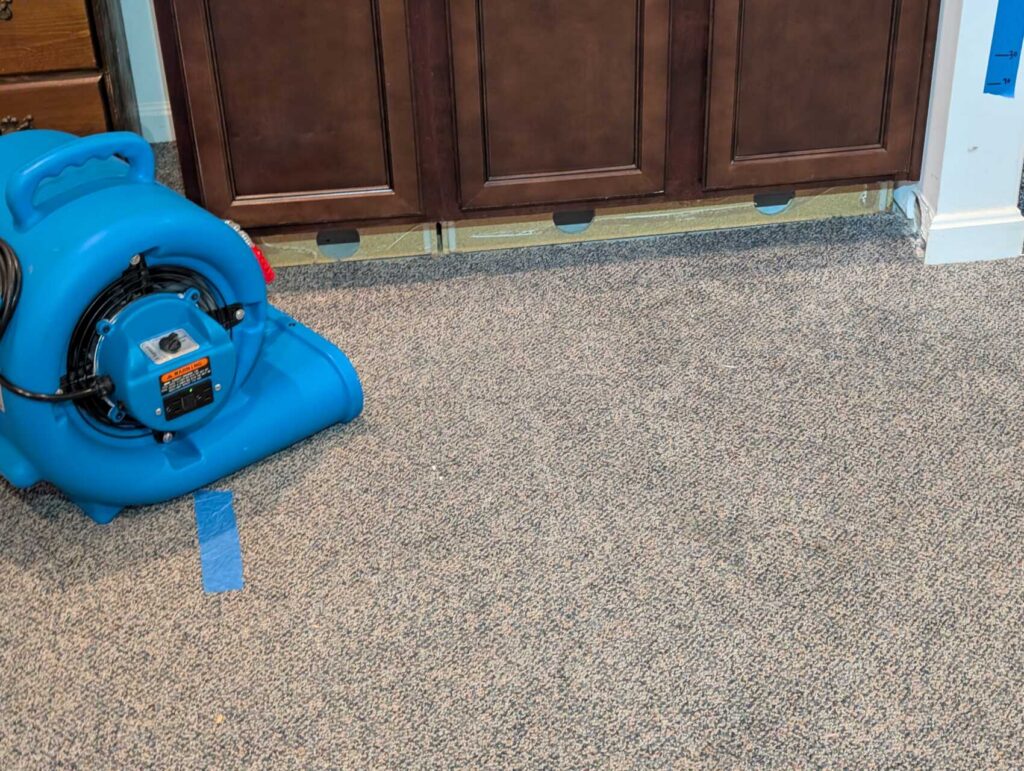
  • Structural Drying & Dehumidification: Commercial air movers and dehumidifiers are strategically placed to remove moisture from drywall, framing, flooring, and other building materials while accelerating the drying process.
  • Subfloor & Wall Cavity Drying: Water frequently migrates beneath flooring systems and inside wall cavities. Specialized drying techniques may be used to remove hidden moisture and reduce the risk of future mold growth.
  • Daily Moisture Monitoring: Throughout the drying process, our technicians monitor moisture levels and adjust equipment as needed to ensure all affected materials are progressing toward established drying goals.
  • Final Moisture Verification: Before any rebuilding begins, we verify that all affected materials have returned to acceptable moisture levels and meet the property’s established dry standard.
  • Complete Restoration & Reconstruction: Once drying is complete, Bear Restoration can repair or replace damaged drywall, flooring, trim, paint, and other affected materials to return your Louisville property to its pre-loss condition.
Emergency Water Damage Restoration in Middletown KY After Basement Water Heater Leak

Signs Your Water Heater Is About to Fail

Catching a problem early can save thousands in water damage. Some of the most common warning signs include:

  • Rust-colored water or corrosion on the tank
  • Popping or rumbling noises caused by sediment buildup
  • Water is pooling around the base of the unit
  • Inconsistent hot water supply
  • Visible leaks from valves or connections
Call (502) 200-6968

Sudden rupture or slow leak: which kind of damage are you facing?

These two failure modes produce very different jobs, and identifying which one you had shapes the entire cleanup. A sudden rupture is dramatic and obvious: the tank seam or bottom fails, the full volume dumps out, and you have an immediate flood. The damage is widespread but recent, which paradoxically can be the better case, because the water has not been sitting hidden for months and the structure may dry out with prompt mitigation.

A slow leak is the quieter and often more destructive failure. A weeping fitting, a pinhole in the tank, or a seeping relief valve can release small amounts of water continuously, soaking into the platform, the subfloor, and the wall behind the unit over weeks or months before anyone notices.

By the time a slow leak is discovered, mold has frequently already established itself inside the wall or under the flooring, wood framing may be rotted, and the affected area can extend well beyond the heater. With a slow leak, our inspection focuses heavily on moisture mapping and checking for existing microbial growth, because the visible water is the least of the problem. The presence and extent of mold determines whether the job stays a drying project or expands into mold remediation.

Emergency Water Heater Flood Cleanup in Louisville – Call Now

When a water heater leaks, bursts, or floods your home, time is not on your side. Water spreads fast, damage compounds quickly, and every hour increases the cost and complexity of the repair. Acting immediately is the difference between a manageable cleanup and a major reconstruction project.

If you’re dealing with a water heater failure in structural drying and rebuild, the focus is on restoring your property completely—and protecting it from future issues.

Call now for emergency water heater leak and flood cleanup in Louisville, KY. Get fast response, expert restoration, and the confidence that your home or business is being handled the right way from start to finish.

Flooding From Water Heater Burst FAQ

Shut off the water supply valve to the heater and, if safe, turn off the power (electric breaker or gas supply). Move valuables away from the area and avoid standing water near electrical outlets. Then call a professional restoration team to begin extraction and drying before damage spreads.

Initially, it’s typically classified as Category 1 (clean water). However, if it sits for more than 24–48 hours or contacts building materials, it can degrade into Category 2 or 3, requiring more aggressive cleaning and disinfection per IICRC S500.

A full tank failure can release 40–80 gallons of water within minutes, especially under pressure. In Louisville homes with basements, this water spreads rapidly across subfloors and into wall cavities, increasing damage exponentially.

Yes. Prolonged exposure can weaken wood framing, subfloors, and drywall. If not properly dried, it can also lead to mold, rot, and costly reconstruction.

Regular maintenance is key—flush the tank annually, inspect the pressure relief valve, and replace units nearing the end of their lifespan (typically 8–12 years). Installing a leak detection system can also provide early warning.

A standard residential water heater holds 40–50 gallons, but the damage comes from more than just the tank. When a water heater fails catastrophically (tank rupture, blown T&P valve, or corroded bottom), the supply line continues feeding water until someone shuts off the main. At typical residential water pressure (40–60 PSI), an open supply line can deliver 5–10 gallons per minute—meaning hundreds of gallons can flood a home in the time it takes to notice.

This is why we recommend knowing where your main water shutoff valve is and testing it annually to make sure it actually closes.

If the tank itself failed (corrosion, rupture, or a blown fitting), replacement is the only option. Tank-style water heaters have a typical lifespan of 8–12 years. If your unit is over 10 years old and leaked from the bottom (indicating internal corrosion), repair is not cost-effective or safe.

If the flood was caused by a failed relief valve, loose fitting, or connected appliance line, the heater itself may be fine. Either way, have a licensed plumber inspect it before reconnecting—and check your anode rod, which is the sacrificial component that protects the tank from internal rust.