The Range of Losses Across a Managed Portfolio
A property management portfolio in Louisville rarely contains one building type, which means the losses do not look alike. A multifamily community brings unit-above-flooding-the-unit-below events, stacked-plumbing failures, and burst lines in vacant units between leases. A commercial office or retail property brings roof and HVAC leaks, common-area plumbing failures, and storefront water intrusion. A mixed-use building brings all of it at once, with a ground-floor commercial tenant catching water from residential units above. The common thread is that the manager owns the coordination problem regardless of which building called.
Louisville’s climate drives the seasonal pattern across every property type. Winter freeze-thaw bursts supply lines in exterior walls, vacant units, and unconditioned spaces, and these losses cluster in cold snaps when several properties may call in the same week. Spring and summer storms, including the derecho-type wind events that move through the Ohio Valley, drive roof and storefront water intrusion. Properties near the Ohio River and in low-lying areas face groundwater and slab moisture during high-river and heavy-rain periods. A manager covering a geographically spread portfolio needs a contractor who understands all of these failure modes, not just one.
Why a Standing Response Agreement Changes the Math
The single biggest driver of how large a water loss becomes is how fast the first extraction happens, and the fastest response comes from a contractor who already knows the property. With a standing agreement, when your after-hours service or on-call manager makes the call, we are not learning your building from scratch at 2 a.m. We already have the shutoff locations, the access procedure, the owner approval threshold, and the insurance contact. That turns a chaotic call into a dispatch, and it routinely saves a day of spread that would otherwise double the scope.
A standing agreement also fixes the approval bottleneck. Property managers often cannot authorize large spends without owner sign-off, but mitigation cannot wait for a morning email. We pre-establish an emergency mitigation authorization threshold so we can start extraction and stabilization immediately under an agreed cap, then bring the full scope and estimate for approval once the bleeding has stopped. Stopping the spread first and approving the full scope second is how a managed property avoids a small loss becoming a gut job.
After-Hours Mitigation and Single-Point Coordination
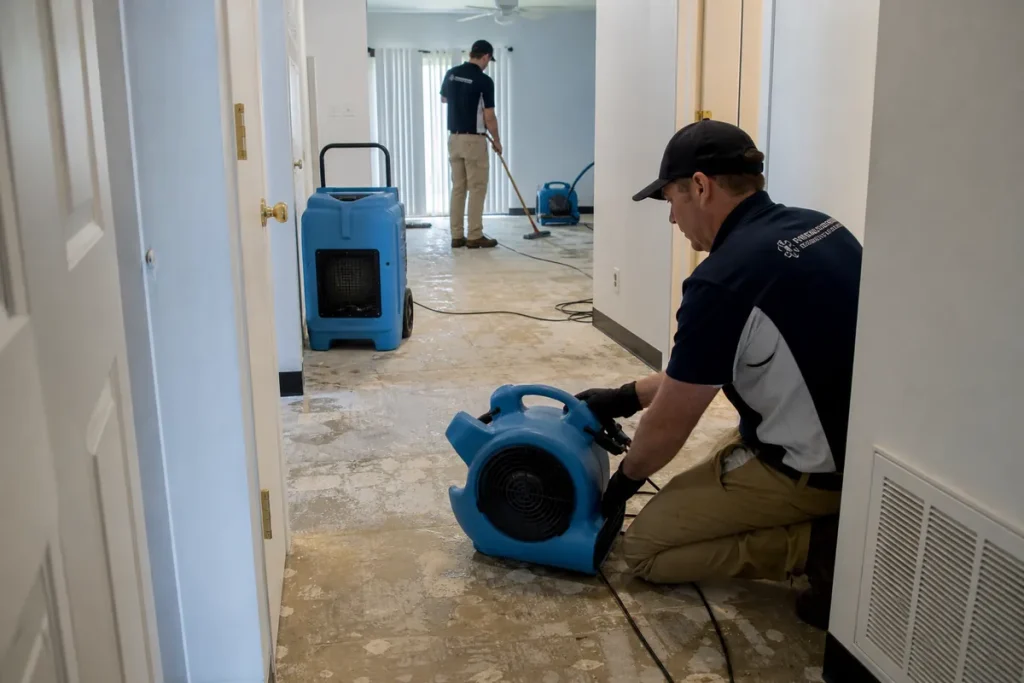
Property losses happen at night and on weekends, and the manager is usually not on site. When you call, we coordinate with your on-call maintenance to shut water at the riser or fixture, dispatch a crew sized to the loss, and begin extraction and containment immediately. From that first hour, you have a single point of contact who manages the scene so you are not relaying messages between a tenant, an owner, a plumber, and an adjuster.
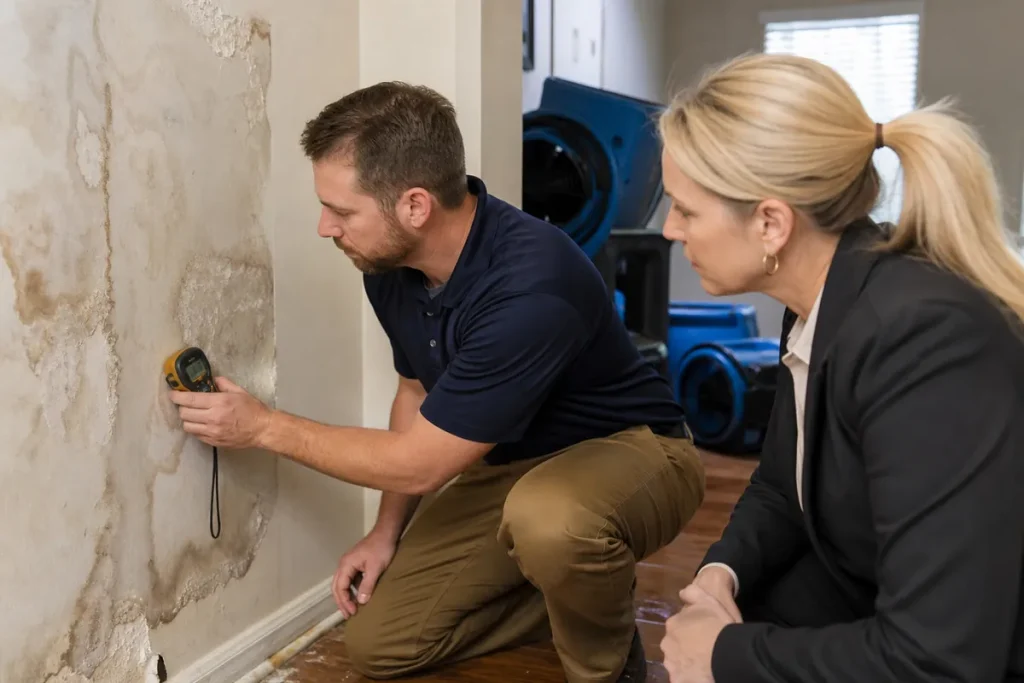
We handle the tenant interaction on site, documenting unit conditions and coordinating access, and we keep the manager and owner informed with photos and status rather than leaving you to guess. For occupied buildings, we contain the work and keep common areas usable so the rest of the property stays functional. The point is to take the coordination load off the manager, because the manager’s job is the portfolio, not the wet-vac.