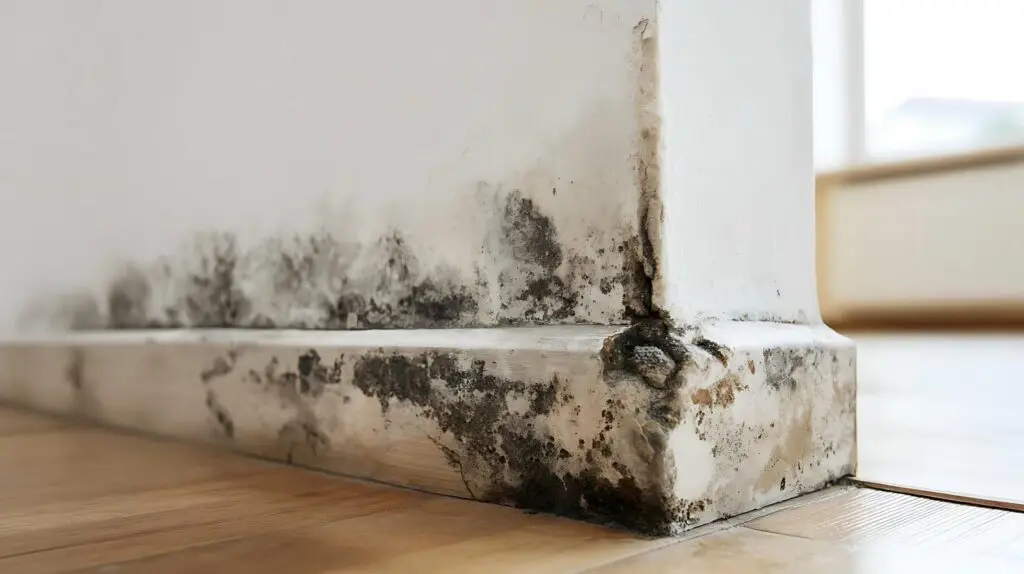
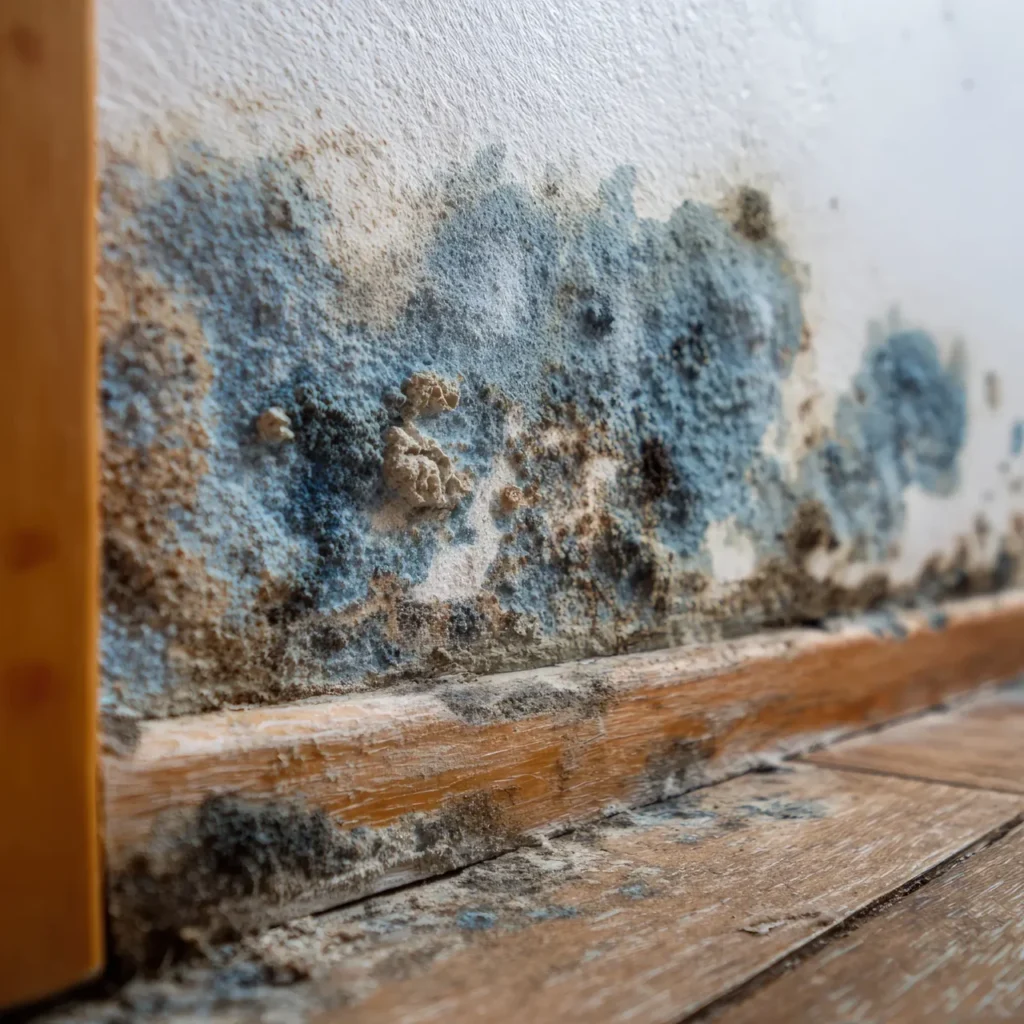
Black mold growth on the baseboard and lower wall corner near a wooden floor.
Safe Mold Removal

Reliable Louisville Mold Removal for Residential Properties

Louisville sits in a humid river valley. From June through September, outdoor humidity often stays above 75 percent. That moisture finds its way into basements, crawl spaces, and attics. Add in our older housing stock and you have ideal conditions for mold growth.

Mold growth can occur quickly in damp areas, leading to potential health risks and property damage. That’s why our mold remediation services are designed to provide a thorough and safe solution to remove mold from your home or business. Bear Restoration handles mold removal and remediation across Louisville, KY and the surrounding metro. Our team finds the moisture source, removes the mold safely, and helps make sure it does not come back.

Call (502) 200-6968

What Is Bear Restoration’s Mold Remediation Process?

Every job we run follows the IICRC S520 standard. That means we do not just spray bleach on a wall and call it done. We treat mold like a moisture problem first, because that is what it is. Here is how the work flows from start to finish.

Step 1: Inspection and Moisture Mapping

We start with a free visual inspection. Then we use moisture meters and thermal imaging cameras to find water that is hidden behind drywall, under flooring, or above ceiling tiles. Mold needs water to grow, so finding the source is the most important step. Without this, the mold will come back even after a perfect cleaning.

Step 2: Containment

Mold spores travel through the air. If we tear out drywall in your basement without sealing the area first, spores can spread to your living room, kitchen, and HVAC system. We use plastic sheeting and HEPA-filtered negative air machines to keep the work zone sealed off. Negative air pressure means the air flows into the zone, not out, so spores cannot escape.

Step 3: Removal of Damaged Materials

Drywall, insulation, carpet pad, and wood trim that have been soaked and grown mold usually cannot be saved. We remove these materials in sealed bags and dispose of them safely. Hard surfaces like studs, joists, and concrete are cleaned in place using HEPA vacuums and EPA-registered antimicrobial cleaners.

Step 4: Cleaning and Disinfection

We use cleaning agents that are safe for indoor air but tough on mold. These include sodium hypochlorite (the active ingredient in bleach) for hard surfaces, quaternary ammonium compounds for porous wood framing, and hydrogen peroxide for odor control. The right product depends on the surface and the type of mold present.

Step 5: Drying and Moisture Control

Mold cannot grow without water. After cleaning, we run LGR (low grain refrigerant) dehumidifiers and air movers to bring moisture levels back to normal. We also fix the source. That might mean sealing a foundation crack, adding a sump pump, replacing a leaky pipe, or improving crawl space ventilation. If we skip this step, the mold will return.

Step 6: Final Inspection and Clearance

Before we close the job, we walk the space with you. In larger jobs, or when an insurance company requires it, we bring in a third-party industrial hygienist for clearance testing. This proves the air and surfaces are safe before you move furniture back in or let kids and pets near the area.

Louisville and Mold: Why the Health Risk Hits Harder Here

Mold is a problem in every city, but the numbers show it hits Louisville harder than most. The Ohio River Valley traps humidity and recycles pollen and mold spores instead of letting them blow away. Add in our older housing stock and long muggy summers, and you get a city that has spent years near the top of national allergy and asthma rankings.

A few stats worth knowing as a homeowner here:

  • Louisville was the #1 worst city in America for spring allergies in 2014, according to the Asthma and Allergy Foundation of America (AAFA). It stayed in the top 10 nationally through 2019.
  • Louisville ranks #2 in the country for asthma-related emergency room visits, based on the AAFA 2025 Asthma Capitals Report. That puts Derby City ahead of major metros like Memphis and Oklahoma City.
  • Roughly 13 percent of Louisville residents have asthma, one of the highest rates in the United States, according to a long-running air-quality study covered by PBS NewsHour.
  • Adult asthma in Kentucky runs above the national average, with about 9.7 percent of Kentucky adults reporting current asthma compared to 8.5 percent nationally, per CDC data.

What ties this back to mold is simple. Mold spores are one of the main indoor triggers for asthma attacks, allergic reactions, and chronic sinus issues. The EPA warns that even small amounts of indoor mold can worsen breathing problems in people who are already sensitive. In a city where one in eight people has asthma, a damp basement in the Highlands or a leaky bathroom in Louisville is not just a property problem. It is a health problem.

That is the reason we do not cut corners on containment, drying, or final clearance. Removing mold the right way keeps your family breathing easier in a city where the air is already working against them.

Contact Us
Hurstbourne, KY Mold Remediation

A Famous Louisville Mold Case: The Metro Government Buildings

Louisville has dealt with its share of mold problems, but one case made headlines for years. In a WDRB Special Assignment investigation, ten Louisville Metro Government employees filed a class action lawsuit against the city after working in buildings they said were full of toxic black mold. The buildings named in the case were 768, 810, and 850 Barret Avenue and 633 West Jefferson Street. Workers reported headaches, breathing problems, and other health issues they tied to long-term mold exposure on the job.

What made the case stand out was not just the size of the buildings or the number of people involved. It was how long the problem had been ignored. Documents released during the investigation showed that the city had tried to clean up mold before, but the fixes were short-term. One employee called them band-aids because the moisture source kept coming back. This is the same mistake we see in homes across Louisville every week. If you only clean the surface without fixing the water problem, the mold will return.

The Metro Government case is a strong reminder for any property owner in Louisville, whether you run a business downtown or own a home in the Highlands. Mold does not fix itself, and it does not stay hidden forever. Old buildings with original plumbing, flat roofs, and shared HVAC systems are at higher risk, especially in our humid Ohio Valley climate. The right time to deal with mold is when you first notice the smell, the stain, or the soft drywall. Waiting turns a small remediation into a lawsuit-sized problem.

What Equipment Is Used To Remediate Mold in Residential & Commercial Properties in Louisville, KY?

The right tools make the difference between a job done once and a job that has to be done twice. We use commercial-grade gear on every mold remediation, not the equipment you find at a home improvement store.

Moisture meters and FLIR thermal cameras find water hiding behind walls without unnecessary demo. HEPA-filtered negative air machines and air scrubbers trap mold spores down to 0.3 microns so they never reach the rest of your home. LGR dehumidifiers like the Dri-Eaz LGR 7000XLi pull moisture out of wood framing well below the point a home dehumidifier stops working. We pair these with axial fans, HEPA vacuums, and EPA-registered antimicrobials matched to each surface and mold type. Every job is documented with digital moisture readings and photos, which makes insurance claims move faster.

Thorough Mold Remediation

What Makes Our Mold Removal Services the Best in Louisville?

Mold is a persistent issue that can be difficult to manage without professional help. It thrives in damp, poorly ventilated areas, and if left untreated, it can cause significant damage to your property and pose serious health risks. Mold exposure can lead to respiratory problems, allergic reactions, and even more severe health conditions over time. Our mold remediation services are specifically designed to address the problem at its source. We begin by thoroughly inspecting your property to identify the root cause of the mold, such as leaks, poor ventilation, or excessive humidity.

Our experienced team then uses the latest equipment and techniques to safely remove the mold and prevent it from spreading or returning. After the mold is eliminated, we clean and disinfect the affected areas to ensure that no harmful spores remain. We also implement moisture control solutions, such as sealing leaks or improving airflow and ventilation, to help prevent future mold growth. As part of our comprehensive mold remediation services, we maintain clear communication throughout the process, keeping you informed and confident in our efforts. Our goal is to restore your property fully, not just remove the mold.

We understand how crucial it is to act quickly when dealing with mold, so we prioritize your health and your property’s integrity. Trust us to handle your mold problem with the care and expertise it deserves, giving you peace of mind and a healthy, safe living environment.

Get A Free Mold Removal Estimate For Your Property in Louisville, FL

Bear Restoration is locally owned and locally run. Owner Emery built this company on a simple idea: treat every home like it belongs to a neighbor, because in Louisville, it usually does.

We respond 24 hours a day, 7 days a week to mold damage calls across the Louisville metro and surrounding cities. Our service area covers Louisville, Jeffersontown, Middletown, St. Matthews, Prospect, Hurstbourne, Crestwood, Shively, West Buechel, and Jeffersonville, IN. If you live anywhere in the metro and are not sure whether we cover your zip code, just call. We will give you a straight answer on the phone.

When you see mold, smell that musty odor, or know your home has recently taken on water, do not wait. Mold gets worse with time, and the longer it sits, the more it costs to fix. Bear Restoration offers free visual inspections, written scopes, IICRC-certified work, and direct billing to your insurance carrier. Where pride still matters.

Call (502) 200-6968 or request a free estimate online.

Mold Removal & Remediation in Louisville, KY – FAQ

Mold removal is the physical act of cleaning or removing visible mold growth from surfaces. Mold remediation is a controlled, multi-step process that identifies the moisture source, contains contamination, removes affected materials when necessary, and restores the structure to normal fungal ecology per IICRC S520 standards.

If you only remove what you see but do not correct the moisture and contamination pathways, mold will return—often worse.

Hidden mold is usually discovered through conditions, not visibility.

Key indicators include:

  • Persistent musty odor that doesn’t go away
  • Drywall staining, bubbling paint, or soft baseboards
  • Warped flooring or unexplained humidity
  • Past water damage (leaks, floods, AC issues)

Professionals use moisture mapping, thermal imaging, and hygrometric readings to confirm hidden growth—not guesswork.

Mold can begin forming within 24 to 72 hours under the right conditions.

Growth accelerates when:

  • Humidity stays above 60%
  • Materials remain wet (drywall, carpet, wood)
  • Airflow is limited

In places like Indiana or Kentucky basements, this timeline can move even faster due to environmental moisture.

Mold returns when the root cause was never fixed.

Common reasons:

  • Moisture source still active (hidden leak, humidity, poor ventilation)
  • No containment during cleanup (spores spread elsewhere)
  • Incomplete removal of contaminated materials
  • No proper drying or verification

Mold is not a cleaning problem—it is a moisture control problem.

Testing is situational.

  • Before remediation: helps confirm presence and scope (when unclear)
  • After remediation: used for clearance verification

In many cases, a qualified technician can diagnose mold without testing based on conditions and moisture data.

The IICRC S520 is the professional standard that defines how mold remediation should be performed in occupied buildings. It covers containment setup, negative air pressure, PPE requirements, cleaning methods, and post-remediation verification. It also classifies mold contamination into three conditions based on the extent and location of growth.

Condition 1 means normal fungal ecology. Condition 2 means settled spores with no active growth. Condition 3 means active colonization. Each condition requires a different remediation approach—and skipping the assessment step is the most common reason remediations fail.

Mold needs moisture to grow, and the critical threshold is 60% relative humidity at the material surface. Even after remediation is complete, if indoor humidity stays above 60%, dormant spores on surfaces that were cleaned—not removed—can reactivate within days.

In Louisville’s climate, maintaining indoor humidity below 50% year-round often requires a whole-house dehumidifier, especially in basements and crawl spaces where ventilation is poor. We verify post-remediation humidity with data-logging hygrometers to confirm the environment will not support regrowth.