
Why Do Shively Properties Flood More Often Than Other Southwest Louisville Neighborhoods?

Water damage in Shively, KY hits harder than in most of Jefferson County, and the reason is geography. Shively occupies some of the lowest terrain in the county, sitting in the southwest corner near the confluence of Pond Creek and several smaller tributaries. That low elevation, combined with aging stormwater infrastructure built for a far smaller population, creates a persistent flood risk that affects homeowners across the community.

During severe storms, storm drains, roadside ditches, and aging drainage systems can struggle to move water away fast enough. Water often collects around foundations, enters through basement walls, window wells, garage openings, and crawlspaces, or finds its way inside through small cracks that homeowners may not even realize exist.

Many Shively homes were also built decades ago and contain older plumbing systems, foundation designs, and exterior drainage setups that become more vulnerable over time. Combined with Kentucky’s humid climate, even a small water intrusion can quickly lead to damaged drywall, flooring issues, elevated moisture levels, and potential mold growth if not addressed properly.

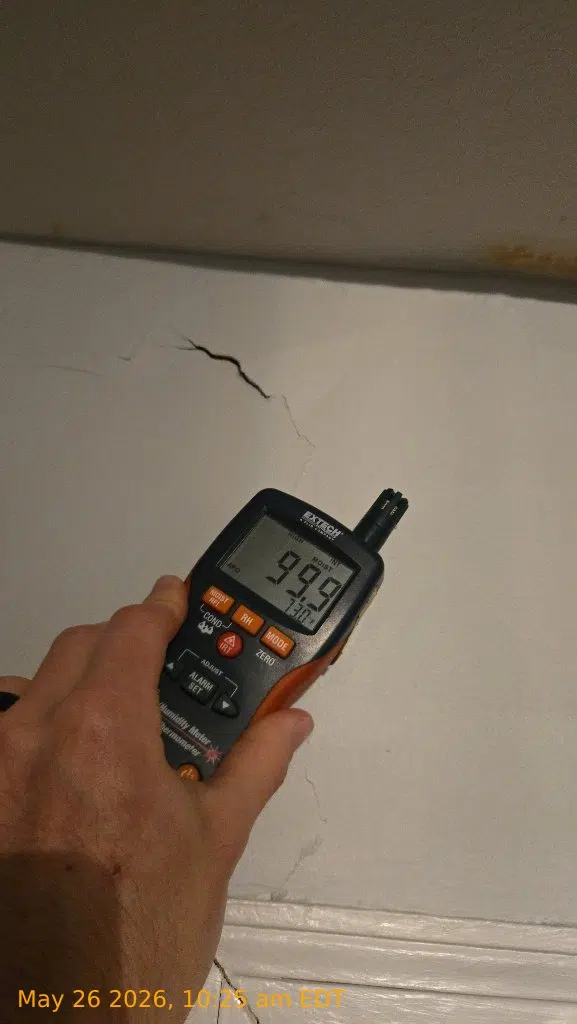
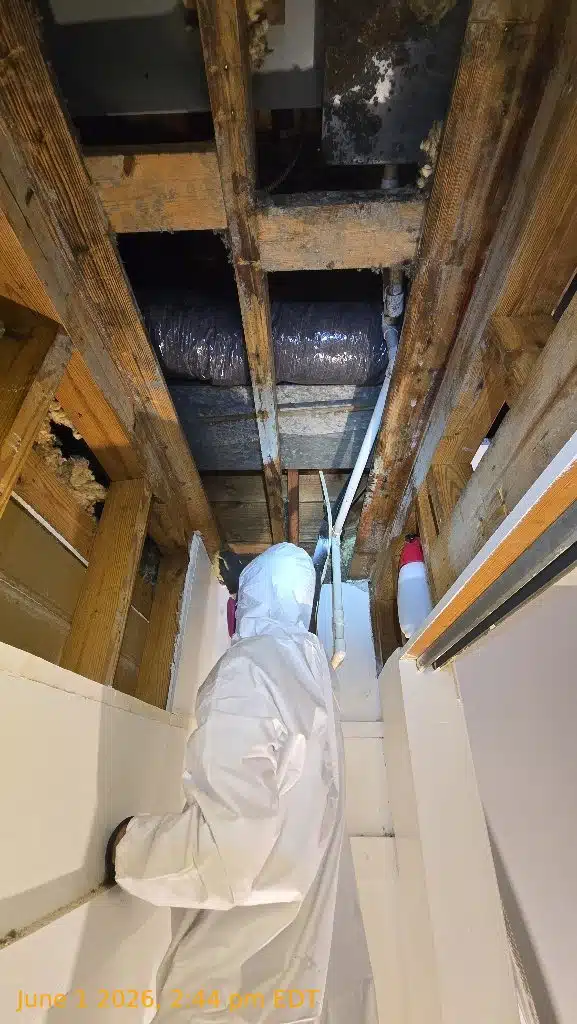
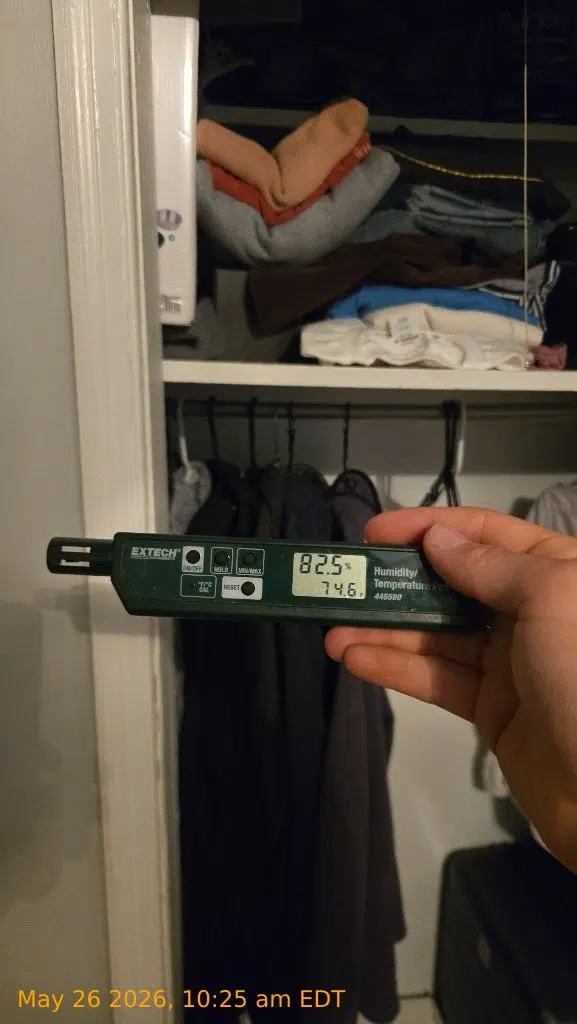
At Bear Restoration, we use moisture mapping, thermal imaging, commercial extraction equipment, air movers, and LGR dehumidifiers to locate hidden moisture and restore properties to industry drying standards. Whether you’re dealing with basement flooding, a plumbing leak, storm damage, or a sewage backup, our team is available 24/7 to respond throughout Shively and the surrounding Louisville area.

Call (502) 200-6968

examples of work in shively, ky

shively flood cleanup
shively water mitigation company
shively water damage detection company

What Should Homeowners in Shively Do Within The First Hours of Experiencing Water Damage?

The first hour after a large water damage loss decides how much we can save. First, stop the water at its source if you can safely reach the supply valve or the main shutoff. Next, cut power to the affected rooms at the breaker before you step into any standing water. Then move valuables, electronics, and documents to a dry level, and photograph everything for your insurance claim before anything gets touched.

Finally, call Bear Restoration at (502) 200-6968. We answer 24/7, and a crew is typically on-site in Shively within 45 minutes of dispatch. The faster extraction begins, the more flooring, drywall, and framing stay in place, which keeps your claim smaller and gets your home livable sooner.

How Does Post-War Construction in Shively Respond to Water Damage Differently?

The majority of Shively’s housing stock was built between the late 1940s and early 1960s to serve Louisville’s post-war population boom. These homes, predominantly ranch and Cape Cod floor plans, share construction characteristics that directly affect how water damage spreads and how our water damage repair process must adapt.

Concrete block foundations are the defining feature of Shively’s post-war homes. Unlike poured concrete, block walls have hollow cores that trap and hold water. During a basement flood, water enters these cores through mortar joints and can remain trapped inside the blocks long after the visible standing water is removed. Without targeted drying techniques, including directed airflow through the block cores, this hidden moisture becomes a long-term mold risk.

Plaster-over-block interior walls in many Shively basements create a similar problem. The plaster skin may appear dry while the block behind it retains moisture for weeks. Non-invasive moisture meters detect this condition, but only if the technician knows to check for it, which is why hiring an experienced water damage contractor matters.

Original cast-iron and galvanized plumbing in homes that have not been re-piped is a leading source of water damage calls in Shively. After 60–75 years of service, these pipes corrode from the inside, developing pinhole leaks behind walls that run undetected until staining, odor, or structural softness reveals the damage. By that point, mold has often colonized the wall cavity.

Bear Restoration’s technicians understand post-war construction intimately. We know where water hides in these homes, and our water damage cleanup process accounts for the unique drying characteristics of block, plaster, and aged framing materials.

What Does Professional Emergency Water Extraction Look Like in a Shively Home?

When our crew arrives at a Shively water damage call, the process follows a disciplined sequence built around IICRC S500 protocols and adapted for the construction types found in this community.

Source identification and shutoff. If water is still entering the home, we locate and control the source first. For plumbing failures, we close the nearest supply valve or the main shutoff. For storm-related intrusion, we establish temporary barriers and begin extraction simultaneously, because you cannot wait out a storm while water sits on your floors.

Water category classification. We test and classify the water on-site. Clean supply-line water (Category 1) allows us to preserve most materials. Gray water from appliance discharge (Category 2) requires cleaning protocols. Sewer backflow (Category 3) triggers full contamination response, PPE, antimicrobial treatment, and removal of all porous materials below the flood line.

Truck-mounted extraction. Our extraction units generate over 200 PSI of suction through weighted wands. For carpet, a single pass removes 85–95% of absorbed water. For concrete slab floors common in Shively ranches, rover extractors recover surface water while floor mat systems address moisture trapped beneath flooring materials.

Controlled demolition. When materials cannot be saved- saturated carpet pad, compromised drywall, waterlogged insulation- we remove them in a controlled manner to prevent spreading contamination. Flood cuts are made 12–24 inches above the visible water line to account for capillary wicking.

From arrival to extraction completion, the goal is the same: get the water out fast, preserve everything we can, and set the stage for a successful structural drying phase. Call (502) 200-6968 for immediate response.

Call (502) 200-6968

When Does a Sewer Backup in Shively Escalate to a Category 3 Biohazard Event?

Any sewage backflow into a home is classified as Category 3 under IICRC standards, regardless of how “clean” the water appears. Category 3 water contains pathogenic organisms, bacteria, viruses, and parasites that pose serious health risks to occupants and restoration workers alike.

In Shively, sewer backups happen most often during heavy rain events when the combined storm/sanitary system surcharges. Signs of a sewer backup include water rising through floor drains or toilet bases, dark or discolored water with a foul odor, and visible waste material. If you see any of these indicators, evacuate the affected area immediately and call our emergency water removal team.

Our Category 3 water damage mitigation protocol includes:

  • Full PPE for all crew members (Tyvek suits, N95 respirators, eye protection, gloves)
  • Containment barriers between affected and unaffected zones to prevent cross-contamination
  • HEPA air scrubbers running continuously to capture airborne contaminants
  • Removal of all porous materials that contacted sewage, carpet, pad, drywall, insulation, personal items
  • Antimicrobial treatment of all non-porous surfaces (concrete, framing, metal)
  • Structural drying with dehumidifiers and air movers only after decontamination is verified

Sewer backup events are the most hazardous type of residential water damage we handle. Do not attempt to clean sewage-contaminated water yourself. Bear Restoration has the training, equipment, and certifications to restore your Shively home safely.

shively downtown cityscape

Bear Restoration: Shively’s Trusted 24/7 Water Damage Restoration Team

Bear Restoration is an IICRC-Certified Firm (Company ID #70216409) and a licensed Kentucky general contractor (License #LIC-GBCL-24-00148), owned and operated by Emery Bear right here in Louisville. Every Shively job is run to ANSI/IICRC S500 standards.

We understand the neighborhood-level flood risks, the post-war construction challenges, and the urgency of every water damage call in this community.

We serve all areas of Shively, including the Dixie Highway corridor, Crums Lane, National Turnpike, Watterson Expressway adjacent neighborhoods, and the St. Dennis–St. Helen parish communities. Response time to anywhere in Shively averages under 45 minutes from dispatch.

Call (502) 200-6968

Schedule A Free Water Damage Assessment At Your Property In Shively

Our emergency water damage services include water extraction, flood cleanup, structural drying, basement flood restoration, sewage backup cleanup, storm damage mitigation, moisture monitoring, dehumidification, odor removal, and complete water restoration services. Whether your property experienced a small appliance leak or a large-scale flood event, our goal remains the same: stop further damage, dry the structure correctly, document the process thoroughly, and help you return to normal as quickly as possible.

We also work directly with insurance carriers and adjusters throughout the claims process. Detailed moisture reports, drying documentation, photographs, and Xactimate-compatible estimating help provide transparency for both property owners and insurance representatives.

When water damage affects your Shively home or business, immediate action makes a difference. Fast extraction and professional drying often mean the difference between a straightforward mitigation project and a major reconstruction effort. Bear Restoration is available 24 hours a day to respond to water emergencies throughout Shively and the surrounding Louisville metro area.

Why Do Original Shut-Off Valves Fail Shively Homeowners During a Kitchen Flood?

Because a valve that has not been turned in fifty years is usually a decoration, not a control. In Shively’s post-war homes, the multi-turn stops under kitchen sinks and behind toilets are often the originals, and when a supply line lets go, the homeowner grabs a valve that spins freely, weeps at the stem, or will not budge at all. The failure that should have released five gallons releases a hundred while someone hunts for the main.

The kitchen is where this plays out most often. Original galvanized supply stubs corrode from the inside, flexible connectors added during remodels age against them, and the dishwasher that was retrofitted into a 1950s cabinet run ties into fittings never meant for it. When the connection fails, kitchen flooding in a compact Shively floor plan reaches the hallway and the nearest bedroom within minutes, and the seized valve turns a mishap into a loss.

Two practical defenses cost almost nothing. First, find your main shut-off now, before you need it; in most Shively homes it sits near the front foundation wall or at the meter, and knowing its location is worth more than any gadget. Second, exercise every fixture valve twice a year with a gentle quarter turn so the stems stay free, and replace any multi-turn stop that weeps with a modern quarter-turn valve during your next plumbing visit. When the water is already down, our crews handle the supply line cleanup and the drying behind it. Call (502) 200-6968 any hour.

Where Do Water Heaters Sit in Post-War Shively Homes, and Why Does It Matter?

In much of Shively’s housing stock, the water heater stands in a kitchen closet, a back utility porch, or a hallway cabinet, directly adjacent to the home’s main living space. That placement is a product of compact post-war floor plans, and it means a tank failure releases forty-plus gallons straight into the rooms where the family lives, with no garage or unfinished space to absorb the loss.

Utility porch installations carry their own quirk: the tank sits at the edge of the heated envelope, so it works harder through winter, and the floor beneath it is often the original tongue-and-groove decking of an enclosed porch rather than a sealed slab. A slow seep from the drain valve or the bottom seam soaks that decking invisibly, and more than once we have found a tank held up by framing that moisture had been quietly consuming for years.

The age math is unforgiving anywhere, but placement decides the consequence. If your tank is past ten years and lives inside your floor plan, put a pan and a leak alarm under it this week and price a replacement this season. If it has already failed, water is moving through a small house quickly, and fast emergency water extraction is what keeps the loss to one room’s worth of repairs. We stage crews for southwest Louisville around the clock at (502) 200-6968.

Get Help Within the Hour

Is There Hardwood Under Your Wet Carpet in Shively?

In a post-war Shively home, very likely yes. Most houses built here in the 1940s and 1950s were floored in oak strip, and decades of remodels buried it under carpet and pad. A water loss is frequently the moment a homeowner rediscovers it, and that discovery changes the restoration math: instead of replacing flooded carpet with new carpet, many owners choose to dry and refinish the oak that was hiding underneath all along.

The salvage sequence has to respect both layers. Saturated pad comes out immediately; it cannot be dried to a safe standard and it holds water against the oak below. The carpet itself is extracted and, after a clean water loss, can often be cleaned and reused or simply retired by choice. The oak then gets the full hardwood drying protocol, mats and monitored dehumidification, until readings return to normal range. What emerges is regularly a floor in better shape than the carpet it was protecting.

One caution belongs in this conversation. Some post-war homes also carry 9×9 inch flooring tiles from the same era, and tiles of that vintage can contain asbestos, which the EPA warns should never be dry-scraped or disturbed by an unlicensed crew. When a loss involves suspect tile, we leave it undisturbed, dry the assembly around it, and bring in licensed abatement when removal is genuinely required. Wet flooring removal done right protects your lungs as well as your subfloor, and cutting that corner is not a service to anyone.

How Does Bathroom Flooding Move Through a Compact Shively Floor Plan?

Fast, and in every direction. A Shively home’s single full bath usually sits at the center of the floor plan with bedrooms on two sides and the hall on a third, so an overflowing tub or a failed toilet supply line has three rooms’ worth of flooring within a few feet of the source. In a thousand-square-foot house, there is no long hallway to buy you time.

The original cast iron tub is part of the story. These tubs hold sixty-plus gallons, and a filler left running walks water over the rim and into the floor system, where it follows the cast iron drain stack down into the crawl or lower level. The drum traps and stack joints of that era seep at their threads once disturbed by a flood event, which is why we meter around the stack on every Shively bathroom loss rather than assuming the visible overflow was the whole event.

The compact footprint cuts both ways, and this is the encouraging part: small homes dry fast when the call comes early. An extraction crew can reach every wet surface in a Shively bathroom loss within the first hour on site, and complete water removal in a house this size often takes days rather than weeks, provided the water was clean and the response was prompt. Lingering dampness in a small home, however, concentrates quickly into a mold problem, and our Shively mold remediation team sees the losses where the call came a month late. Make it early: (502) 200-6968.

Call Now for Fast Response

Water Damage Restoration in Shively, KY – FAQ

Shively’s housing stock is predominantly small to mid-size ranch and cape cod homes built in the 1940s–1960s, many with concrete-block basements and original plumbing. The age of the infrastructure means galvanized pipes, clay sewer laterals, and limited waterproofing are common. These factors make Shively homes more susceptible to both supply-line failures and sewer backups than newer subdivisions.

Our technicians are experienced with the specific construction methods used in Shively-era homes, including plaster walls, balloon framing, and unlined block foundations.

Concrete block absorbs and holds water differently than poured concrete. Each block has hollow cores that trap water, and the mortar joints wick moisture laterally. Standard surface drying is not enough, we direct warm, dry airflow across block walls using high-velocity air movers while running commercial dehumidifiers to pull moisture from the block cores.

Drying a saturated block wall can take 5–7 days or more depending on the wall’s exposure and thickness. We monitor with non-invasive moisture meters daily until readings confirm the wall has returned to dry standard.

Yes. Shively has a significant number of multi-family properties, and water damage in apartments requires coordination between the tenant, the landlord or property management company, and the insurance carrier. In most cases, the building owner’s policy covers the structure while the tenant’s renter’s insurance covers personal contents.

We coordinate with all parties and, when water migrates between units (a common scenario with upstairs plumbing failures), we map and dry every affected unit, not just the one where the leak originated.

Yes. Louisville’s summer humidity regularly exceeds 80% outdoors, and Shively homes without central air conditioning or dehumidification can see indoor humidity climb above 70%. At that level, mold can begin germinating on damp surfaces within 24–48 hours, even without a water loss event.

If you have experienced water damage and are waiting for restoration, keeping the home’s indoor humidity below 50% with air conditioning or a portable dehumidifier significantly slows mold growth and gives the restoration team more material to save.

Stop the water source if possible (shut off the supply valve or main), document the damage with photos and video, and call a professional restoration company the same day. Under Kentucky landlord-tenant law, a landlord is responsible for maintaining the property in habitable condition, and delaying water damage repair can result in mold, structural deterioration, and potential liability.

We provide landlords with complete documentation packages, including scope of work, daily drying logs, and final verification reports that demonstrate the property was restored to pre-loss condition.

Cost depends on the source, category, volume of water, and affected area. A small Category 1 kitchen leak affecting one room might cost $1,500–$3,000 for extraction and drying. A full basement flood with Category 3 contamination requiring demolition and reconstruction can range from $8,000–$20,000 or more.

We provide a detailed Xactimate estimate before starting reconstruction work. Mitigation (extraction and drying) begins immediately to prevent further damage, and we coordinate with your insurance company on pricing from day one.

Yes. We provide a free on-site assessment for water damage in Shively. During the assessment, we identify the source, measure moisture levels, determine the contamination category, and outline the scope of work needed. If it is an emergency, we begin extraction and drying during the same visit, because waiting costs more than acting.

Call (502) 200-6968 any time, day or night. We serve Shively and all of Jefferson County.

OTHER SERVICES WE OFFER IN SHIVELY, KY

Start now
Start now
Start now