What Local Factors Make Jeffersontown a High-Risk Area for Water Damage?

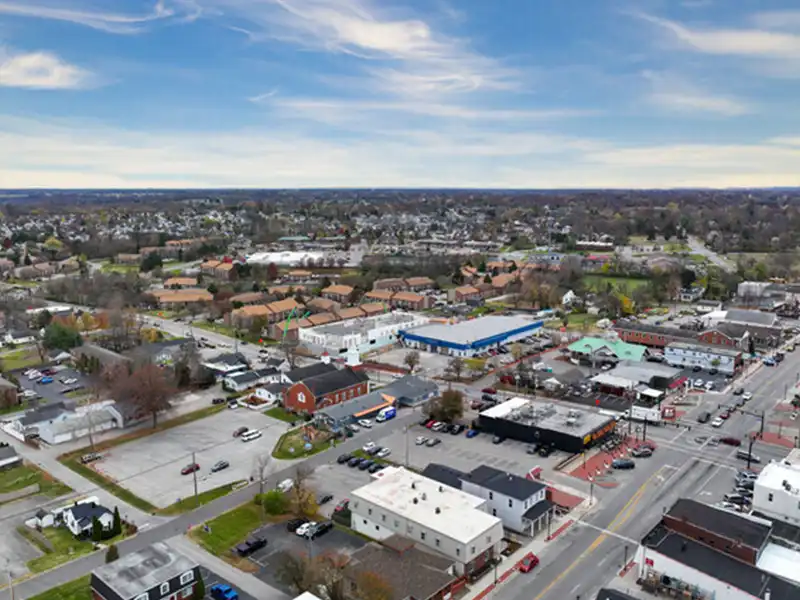
Jeffersontown sits in southeastern Jefferson County along the Chenoweth Run watershed, where heavy clay soils, aging storm infrastructure, and a mix of 1960s ranch homes and modern subdivisions create layered water damage risks that affect properties throughout the community year-round.

The Chenoweth Run corridor floods during heavy spring storms, sending surface water across low-lying neighborhoods on both sides of the creek. But even homes well above the flood zone face water damage from plumbing failures, sump pump breakdowns, and appliance leaks. In fact, supply line bursts and water heater failures account for more restoration calls in Jeffersontown than weather-related events in a typical year.

Jeffersontown’s mid-century housing stock presents specific vulnerabilities. Homes built in the 1950s through 1970s often sit on concrete slab foundations with original copper or galvanized plumbing embedded in or beneath the slab. When these pipes corrode and develop pinhole leaks, the damage occurs beneath the flooring system where it goes undetected for weeks. By the time visible signs appear, mold growth, subfloor deterioration, and structural concerns have already developed.

Our water damage cleanup team knows Jeffersontown’s construction patterns and flood zones. That local knowledge guides every extraction response we run in the 40299 and 40220 zip codes.

Call (502) 200-6968

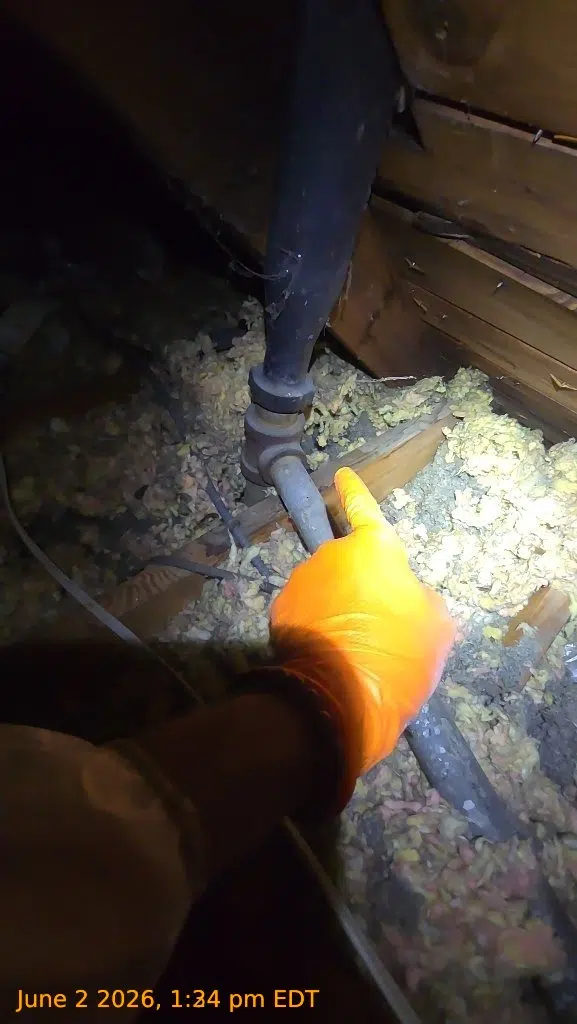
examples of work in jeffersontown, ky
jeffersontown-emergency-water-removal

What Happens in the First 24 Hours of Water Extraction in Jeffersontown?

Within the first 24 hours, standing water is extracted, absorbed moisture is mapped with meters, and drying equipment is running in every affected room. That first day determines whether a Jeffersontown water loss stays a drying job or grows into demolition and rebuild, so here is how the timeline actually unfolds.

The first 30 minutes on site are pure water removal. Standing water is pulled from floors, carpet, and low spots before anything else happens, because water that sits keeps soaking deeper into drywall and sill plates the entire time. Extraction is also the cheapest phase of restoration; every gallon we recover mechanically is a gallon that never has to be evaporated out of your walls later.

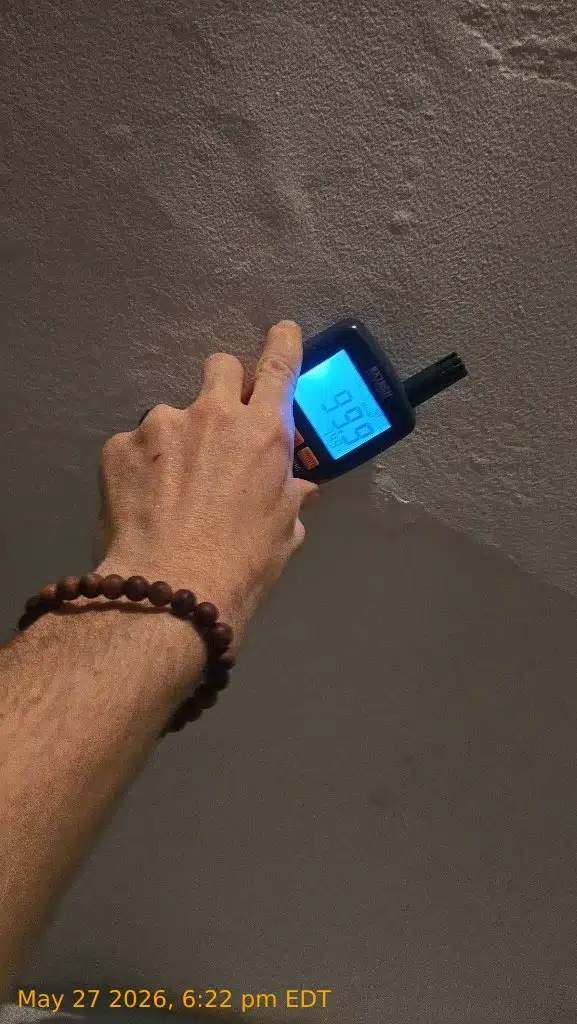
Hours one through three shift from the water you can see to the water you cannot. Technicians trace how far moisture traveled through wall cavities and under flooring, then open only what the readings justify. In Jeffersontown ranches, water that entered a hallway routinely shows up two rooms away at the slab line, which is why we meter the entire floor plate rather than just the wet room.

Days one through four are complete water removal: pulling the bound moisture out of framing, drywall, and concrete until each material hits its published dry standard. Extraction takes hours; true water removal takes days and daily documentation. If a contractor tells you a soaked Jeffersontown home was “dried” over a weekend without readings to prove it, be skeptical. For 24 hour water extraction anywhere in 40299, 40220, or 40291, call (502) 200-6968.

How Does Bear Restoration Dry Slab-on-Grade Homes in Jeffersontown?

Slab-on-grade construction, common throughout Jeffersontown’s older neighborhoods, creates unique challenges for restoration because moisture can become trapped between the concrete slab and the flooring material above it. Standard surface drying will not reach this trapped moisture. It requires specialized techniques.

For tile and vinyl over slab: After emergency water removal, we deploy floor mat drying systems that create negative pressure between the flooring surface and the slab. Warm, dry air is drawn across the concrete surface, pulling trapped moisture out through seams and edges. This approach can save flooring that would otherwise need to be torn out for the slab to dry.

For carpet over slab: Carpet pad is removed (it cannot be dried to safe standards once saturated), but the carpet itself is lifted and the exposed slab is dried directly using air movers and dehumidifiers. Once the slab reaches equilibrium moisture content, the carpet is cleaned, treated with antimicrobial agents, and relaid on new pad.

For engineered hardwood over slab: Engineered products are highly susceptible to delamination when exposed to moisture from below. If the flooring has not already cupped or buckled, we use bottom-up drying techniques. If delamination has begun, the affected sections must be removed to allow direct slab drying before new flooring can be installed.

Slab moisture verification is critical. We use calcium chloride testing (ASTM F1869) and relative humidity probes (ASTM F2170) to confirm the concrete has dried sufficiently before any new flooring is installed. Skipping this step leads to repeat water damage failures within months.

What Neighborhoods and Streets in Jeffersontown Generate the Most Water Damage Calls?

Our restoration data shows higher call volume from specific Jeffersontown neighborhoods based on construction era, elevation, and proximity to drainage corridors.

Watterson Trail and Taylorsville Road corridor: Older commercial and residential properties along these main roads often have aging plumbing and limited drainage capacity. Repair calls here frequently involve burst supply lines in older buildings and storm-related flooding where parking lots direct runoff toward building foundations.

Plainview and surrounding ranch neighborhoods: These 1960s-era developments feature slab-on-grade construction with original plumbing. Under-slab pipe failures and sump pump breakdowns are the primary damage sources. Our flood water removal crews know these homes and can begin extraction and structural drying faster because the floor plans and construction details are familiar.

Newer subdivisions near Jeffersontown city limits: Modern homes with finished basements face water intrusion from groundwater during wet seasons. These properties require careful water damage mitigation to protect finished lower levels while managing hydrostatic pressure from the exterior.

Chenoweth Run adjacent properties: Homes near the creek corridor face the highest flood risk during spring storms. Flood water extraction in these situations involves contaminated Category 2 or Category 3 water, requiring full biohazard protocols and removal of all porous materials below the flood line.

Regardless of which Jeffersontown neighborhood you call home, Bear Restoration provides emergency water damage restoration with the equipment, certification, and local knowledge to handle your situation. Call (502) 200-6968 anytime.

Call (502) 200-6968

Where Does Water Intrusion Show Up First in Jeffersontown’s Ranch Homes?

Water intrusion in Jeffersontown ranch homes shows up first at the slab edge, at window sills on the weather side of the house, and at roof-to-wall junctions, because those are the three points where the building envelope works hardest against wind-driven rain. Unlike a plumbing failure, intrusion rarely announces itself; it accumulates through repeated storms until a stain, a musty odor, or swollen trim finally gives it away.

Sixty years of settling makes the slab edge the most common entry point. Many 1960s and 1970s J-town lots have lost their original positive grading, so storm runoff now drains toward the foundation instead of away from it. Additionally, the brick veneer on these homes absorbs rainfall and releases it into the wall cavity, where clogged weep holes hold that moisture against the sheathing. Jefferson County’s heavy clay soil compounds both problems by swelling against the foundation when saturated and shrinking away from it in drought, opening new pathways each cycle.

Storm flooding is intrusion at a larger scale. When a summer cell stalls over southeastern Jefferson County and runoff from acres of surrounding pavement moves across yards and driveways, flood water removal becomes a contamination response as well as a drying job. Surface water arrives carrying fuel film, lawn chemicals, and bacteria, so we treat storm flood water removal under contaminated-water protocols: extract, remove what cannot be sanitized, apply antimicrobials, and verify with post-drying readings before anything is closed up.

Get a Free Intrusion Assessment

Which Rooms in a Jeffersontown Home Flood Most Often, and Why?

The kitchen, the laundry room, and the water heater closet produce more water damage calls in Jeffersontown than every weather event combined. Each room concentrates pressurized supply lines against materials that hide a leak until it has spread, and each one fails in its own predictable way.

Kitchen Flooding: the Slowest Leaks and the Most Hidden Damage

Kitchen flooding in Jeffersontown homes usually starts small: a refrigerator ice maker line weeping behind the unit, a dishwasher drain connection loosening under the sink, or a corroded supply valve. Because the water runs beneath cabinets and across the slab, it often travels into the dining room subfloor transition before anyone sees it. By then the cabinet toe kicks have wicked water into the boxes, and the repair scope has tripled. If your kitchen floor feels loose or the cabinet bases smell musty, have it metered now rather than after the floor fails.

Laundry Room Flooding: the Fastest Water Release in the House

A burst washing machine supply hose releases roughly 650 gallons per hour, according to the Insurance Institute for Business and Home Safety, and most fail while the house is empty. On a slab, that water fans out through hallways within minutes. Rubber hoses past their fifth year are the usual culprit; braided stainless replacements cost a few dollars and prevent one of the most damaging appliance failures we see. When one lets go anyway, our burst pipe and supply line cleanup crews handle the extraction and drying.

Water Heater Failures: 40 Gallons With Nowhere to Go

Most Jeffersontown water heaters sit in a garage corner or an interior utility closet, and tank corrosion after 8 to 12 years of sediment buildup is how they typically fail. A closet-mounted tank that ruptures pushes 40 to 50 gallons directly into adjacent carpeted rooms. Check the manufacture date on your data plate, and look for rust weeping at the bottom seam once the tank passes its eighth year. If it has already let go, call (502) 200-6968 and we will extract before the water finishes spreading.

When Does Bathroom Flooding in Jeffersontown Mean the Flooring Has to Come Out?

Wet flooring comes out after bathroom flooding when the water was contaminated, when the material has permanently changed shape, or when moisture is trapped in a layer that equipment cannot reach. Everything else is a candidate for drying in place, and the honest answer comes from moisture readings, not from how the floor looks.

The water source decides the first question. A toilet overflow involving waste is Category 3 water under IICRC S500, which means every porous material it touched, including carpet runners, laminate, and the particleboard base of a vanity, is removed rather than dried. By contrast, a clean tub overflow or a failed toilet supply line caught the same day usually allows full in-place drying, provided extraction starts before the water finds the hallway.

The material decides the second question. Laminate flooring, common in J-town bathroom and hallway remodels, swells at the seams on contact and never returns to dimension, so wet laminate removal is standard on nearly every loss where we find it. Sheet vinyl can trap water against the slab and may need to be lifted even when it looks untouched. Solid hardwood in adjacent hallways is the material most worth saving, and early mat drying usually does save it.

Because slab-built homes give bathroom water nowhere to drain, it spreads laterally fast, and a modest overflow can involve three rooms by morning. Moisture left behind feeds mold within 24 to 48 hours by EPA estimates, which is when a drying job becomes a Jeffersontown mold remediation job. If your bathroom has flooded, call (502) 200-6968 and we will tell you from the readings exactly what stays and what goes.

Call (502) 200-6968

What Equipment Does Bear Restoration Deploy for Water Extraction in Jeffersontown?

Professional water damage services require commercial-grade equipment that consumer products cannot match. Here is what our crews bring to every Jeffersontown emergency water extraction call.

Truck-mounted extractors generate over 200 PSI of suction and recover standing water at rates exceeding 100 gallons per minute. For large basement floods or multi-room events, this extraction power is the difference between a 30-minute job and a 3-hour job, and that time savings directly reduces your overall restoration cost.

LGR dehumidifiers rated for commercial-scale structural drying remove 25 to 30 gallons of moisture from the air per day per unit. Placement is calculated using psychrometric data, not simply dropped in the center of a room. We monitor grain depression targets to verify each unit is performing at rated capacity throughout the drying cycle.

Centrifugal air movers create high-velocity directed airflow across wet surfaces. For a 1,000-square-foot affected area, we typically deploy 12 to 16 air movers in a calculated grid that maximizes evaporation efficiency. Proper positioning reduces total drying time by 30 to 40% compared to random placement.

HEPA air scrubbers filter airborne contaminants when water damage involves Category 2 or Category 3 water. These units capture 99.97% of particles at 0.3 microns, including mold spores, bacteria, and dust from demolition activities. Air scrubbers are standard equipment on any Jeffersontown cleanup job involving contaminated water.

Bear Restoration: Jeffersontown’s Local Water Damage Restoration Company

Emery Bear and the Bear Restoration team serve all of Jeffersontown and the surrounding communities of Middletown, Hurstbourne, Fern Creek, and Buechel. We are a local water damage contractor with deep roots in Jefferson County and a commitment to delivering thorough, documented restoration work on every job.

Whether your Jeffersontown home needs emergency water extraction at midnight, flood water removal after a spring storm, or professional repair for a slow leak that has been running behind your wall, our crews respond fast with full equipment and IICRC certification. Call (502) 200-6968 24 hours a day, 7 days a week.

Call (502) 200-6968

Jeffersontown Water Damage FAQ

We dispatch a crew to Jeffersontown 24 hours a day, 7 days a week, with a typical onsite arrival inside 60 minutes from anywhere in 40220, 40291, or 40299. Our trucks stage out of the Louisville metro area, so J-town is one of our fastest response zones. The first crew arrives with extraction equipment and moisture meters, ready to start mitigation the moment we walk through the door.

Yes, finished basements and lower-level family rooms are one of the most common job types we run in Plainview, Hurstbourne Acres, and the older split-level corridors along Taylorsville Road. We carry the equipment to extract, dry, and rebuild lower-level spaces, and we coordinate sump pump replacement and drainage corrections when the underlying cause warrants it.

In most cases, sudden and accidental water damage (burst pipes, supply line failures, appliance leaks, storm-driven roof leaks) is covered under standard Kentucky homeowners policies. Gradual leaks, ground-water seepage, and flooding from external sources are typically excluded unless you carry a separate flood policy. We work directly with every major carrier in Jefferson County and document each job to the standard adjusters expect, which speeds claim approval considerably.

The three most common sources we respond to in Jeffersontown are supply-line failures (burst pipes, refrigerator lines, washing machine hoses), sump pump failures during spring storms, and sewer backups from aging clay lateral lines. Many Jeffersontown homes built in the 1960s–1980s still have original sewer laterals that crack or collapse from root intrusion.

Each source carries a different contamination level. Supply-line water is Category 1 (clean), but sewer backup is Category 3 (black water), requiring full PPE and antimicrobial protocols per IICRC S500.

Water in a Jeffersontown home often reaches the HVAC return air system, especially in homes with floor-level returns in the lower level. Running the HVAC while ductwork is wet circulates mold spores and moisture throughout the house.

Our first step is to isolate the HVAC system, inspect ductwork for standing water or contamination, and set up independent drying equipment. Once the structure is dry, we recommend having the duct system professionally cleaned before restarting it.

Prolonged moisture exposure weakens concrete block and poured foundations over time. In Jeffersontown, where many homes sit on concrete-block basements, water wicking through the blocks causes efflorescence (white mineral deposits) and, eventually, spalling where the block face crumbles.

Proper water extraction and dehumidification prevent long-term foundation deterioration. If we find evidence of chronic moisture, we recommend a foundation waterproofing consultation in addition to restoration.

We provide a complete loss documentation package: timestamped photos of all damage, moisture readings with mapped locations, a detailed scope of work using Xactimate (the same estimating software your adjuster uses), daily drying logs, and final verification readings showing the structure met IICRC dry standards.

This documentation package is designed to support your claim from start to finish and reduce the chance of a denied or underpaid settlement.

OTHER SERVICES WE OFFER IN JEFFERSONTOWN, KY

Start now
Start now
Start now