Commercial Water Damage Restoration for Large-Loss Properties

Commercial water damage is different from residential water damage because the stakes are bigger, the building systems are more complex, and every hour of downtime costs money. A large-loss water damage event can affect multiple floors, tenant spaces, mechanical rooms, inventory areas, office suites, restrooms, hallways, elevators, and electrical systems at the same time.

At Bear Restoration, owner Emery understands that commercial water damage is not just about removing water. It is about protecting the building, controlling moisture, reducing business interruption, documenting the loss, and getting the property safely back into operation.

What Does “Large Loss” Mean in Commercial Water Damage?

A large-loss water damage project usually means the damage is too widespread, too complex, or too high-risk for a basic cleanup crew. This can include multi-room flooding, multi-floor water migration, sewage contamination, sprinkler system discharge, stormwater intrusion, pipe failures, roof leaks, or water damage inside a building that must remain partially open during the cleanup.

In commercial buildings, water does not stay where it started. It can travel through ceiling cavities, wall assemblies, elevator shafts, shared plumbing chases, floor penetrations, insulation, subfloor systems, and HVAC pathways. That is why large-loss restoration requires moisture mapping, containment planning, extraction strategy, structural drying, documentation, and project management from the beginning.

Call (502) 200-6968
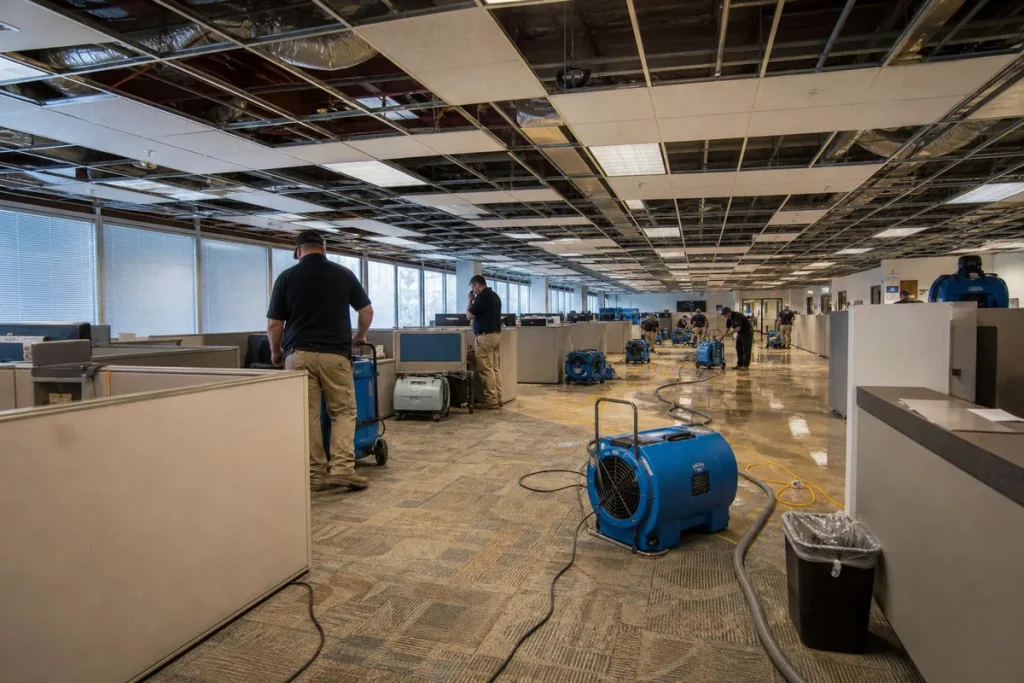
Water Damage - Louisville KY
Commercial Structual Drying Louisville KY

Why Commercial Water Damage Requires a More Technical Response

Commercial buildings are built with layered systems that can trap moisture behind finished surfaces. Drywall, metal framing, insulation, concrete, carpet tile, ceiling grids, vinyl base, cabinetry, and mechanical spaces all dry differently. A wet wall in an office may look minor from the outside, while insulation, base plates, and wall cavities stay damp behind the surface.

A professional commercial restoration plan must answer three questions fast: where did the water go, what materials are affected, and what must be removed versus dried in place?

Emery and the Bear Restoration team approach commercial losses with this mindset because guessing creates bigger problems later, including mold growth, odor, structural deterioration, tenant complaints, and failed insurance documentation. 

Common Reasons Why Businesses Need Water Damage Services 

Bear Restoration helps commercial properties recover from burst pipes, sprinkler line failures, roof leaks, storm flooding, appliance leaks, restroom overflows, sewage backups, and hidden moisture issues. The goal is not only to clean the visible water but to stabilize the building and prevent secondary damage. helps commercial properties recover from burst pipes, sprinkler line failures, roof leaks, storm flooding, appliance leaks, restroom overflows, sewage backups, and hidden moisture issues. The goal is not only to clean the visible water but to stabilize the building and prevent secondary damage.

Commercial water damage services may include emergency water extraction, moisture inspections, thermal imaging, drying equipment setup, containment, demolition of unsalvageable materials, antimicrobial treatment when needed, daily drying checks, humidity control, and full documentation for property managers, owners, and insurance carriers.

Large-Loss Water Extraction and Structural Drying

Large-loss water extraction must be aggressive, controlled, and planned around the building layout. Water removal from a warehouse is different from water removal inside a medical office, retail store, school, hotel, church, or apartment building. The faster bulk water is removed, the less moisture remains available to soak into walls, flooring, and structural materials.

After extraction, the real science begins. Structural drying uses air movement, dehumidification, temperature control, and moisture readings to bring affected materials back to proper dry standards. Air movers alone do not dry a commercial building. The drying plan must control vapor pressure, humidity, airflow, and material-specific moisture levels until the structure is actually dry.

Commercial Mold Risk After Water Damage

Mold becomes a serious concern when commercial water damage is not dried correctly. In large buildings, moisture can hide behind baseboards, inside wall cavities, under flooring, above ceiling tiles, around HVAC systems, and inside poorly ventilated storage areas. Even if the surface looks dry, trapped moisture can support microbial growth.

That is why commercial water damage and mold prevention must be handled together. Bear Restoration focuses on finding the source, removing unsalvageable wet materials, drying what can be saved, and preventing the kind of hidden moisture problem that turns a water loss into a mold remediation project. 

learn more
commercial water damage restoration

Where Commercial Water Damage Happens Most Often

Commercial properties introduce a level of complexity that goes beyond residential restoration. The scale of the loss, the need to maintain operations, and the variety of materials involved all change how the project must be handled.

In Louisville, commercial losses often involve:

  • Multi-unit buildings with shared systems
  • Large open spaces that require controlled airflow
  • Sensitive equipment or inventory that must be protected

The goal in these environments is not just to remove water, but to minimize downtime while protecting the structure and its contents. That requires a coordinated approach where extraction, drying, and containment are all planned around the specific needs of the business.T

A retail space, for example, must be dried in a way that allows portions of the operation to continue. A multi-family property requires isolating affected units while preventing moisture from spreading to others. These are not one-size-fits-all situations, and they cannot be handled with residential-level strategies.

Why Documentation Matters on a Large Commercial Loss

Large commercial water damage claims require clean documentation. Photos, moisture readings, drying logs, affected material lists, equipment placement, demolition notes, and daily progress updates all matter. Without documentation, it becomes harder to prove the extent of damage, justify the scope, and keep the project moving with insurance.

Emery and Bear Restoration understands that commercial owners need more than cleanup. They need a restoration partner who can communicate clearly, document the loss properly, and help protect the value of the building.

Call Bear Restoration for Commercial Water Damage Cleanup

When a commercial property floods, time matters. Water can move fast, damage can spread quietly, and business interruption can become expensive quickly.

Call Bear Restoration for commercial for commercial water damage restoration in Louisville and the surrounding areas. Emery and the team are ready to respond with the equipment, documentation, and large-loss experience needed to protect your building and get recovery moving. in Louisville and the surrounding areas. 

Commercial water damage in louisville FAQ

Common causes include burst pipes, sprinkler system failures, roof leaks, heavy rain, and plumbing backups.

No. Some materials can be dried in place if handled quickly. Others, like saturated drywall or insulation, usually need removal.

Yes. Water can reach outlets, panels, and wiring, creating safety risks that must be inspected before power is restored.

Professionals use moisture meters, thermal imaging, and inspections to locate water behind walls and under floors.

When water affects multiple rooms, units, or floors, or requires heavy equipment and project management, it is considered large-loss.

Accidental sprinkler discharge is one of the most common sources of commercial water damage. A single sprinkler head flows 15–40 gallons per minute, and the water in older systems is stagnant black water that has sat in iron pipes for years—it is heavily contaminated and corrosive. Even a small discharge can cause tens of thousands of dollars in damage to inventory, electronics, and finishes.

We treat accidental sprinkler discharge as a Category 2 or Category 3 water loss depending on the age and type of system, and we coordinate with your fire protection contractor to isolate the affected zone.

Business interruption is the income your business loses while operations are shut down due to a covered loss. Most commercial property insurance policies include business interruption coverage, which pays for lost revenue and ongoing fixed expenses (rent, utilities, payroll) during the restoration period.

Faster restoration directly reduces business interruption costs. Our commercial team prioritizes getting critical areas operational first—server rooms, production floors, customer-facing spaces—while completing full restoration in phases to minimize total downtime.