
Water in your basement has a cause, and finding that cause fast saves money, materials, and a lot of avoidable damage. The Insurance Information Institute reports that water damage and freezing make up 29.4% of home insurance claims, which tells you something important right away: if you are dealing with a water in basement cause issue, you are dealing with one of the most common and expensive home problems there is.
Why Water in Your Basement Demands Fast Action
The Insurance Information Institute’s recent claims data shows that water damage and freezing account for 29.4% of home insurance claims, and average water-damage claims run into the thousands. What this means in practice is simple: basement water is not a cosmetic nuisance. It is a time-sensitive building problem.The Insurance Information Institute’s recent claims data shows that water damage and freezing account for 29.
Basement water comes from four main sources: exterior drainage failures, groundwater pressure, plumbing or drain failures, and indoor moisture that condenses on cool surfaces. That distinction matters because the wrong fix wastes money. If runoff from your roof is soaking the soil beside your foundation, a dehumidifier does nothing. If a water heater is leaking in dry weather, exterior waterproofing does nothing.
Fast diagnosis is the move that works. Once you know whether the water starts outside, below the slab, inside your plumbing, or in the air, the right repair becomes much clearer.
What’s Actually Causing Water in Your Basement
According to 98% of basements, some form of water damage happens at least once. That number is huge, but it fits reality. Basement water intrusion is common because a basement sits below grade, surrounded by soil, runoff, utility penetrations, and pressure.
A wet basement is not the real problem. The real problem is the water source feeding it. Sometimes that source is obvious, like a burst washing machine hose. More often, it is a drainage defect that sends water to the same wall after every storm, or saturated soil pressing against the foundation until water slips through a seam or crack.
Here is the simplest version of this: water gets in because it is being directed toward your basement, forced toward it, released inside it, or formed on its surfaces. Every cause falls into one of those buckets.
Surface Water Getting Too Close to Your Foundation
The University of Minnesota Extension reports that 1,250 gallons fall on the roof of a 2,000-square-foot house during a 1-inch rain. That is an enormous volume of water to control during a single storm.
If your yard slopes toward the house, your gutters overflow, or your downspouts dump at the base of the wall, that roof water and surface runoff collect beside your foundation. Once the soil becomes saturated, water starts looking for the easiest path down and in. That path is often a basement wall, window well, cove joint, or utility penetration.
Groundwater Pressure Forcing Water Through Walls and Floors
A 2024 study in Case Studies in Construction Materials found that intense summer rain can raise surrounding groundwater and trigger basement floor cracking and leakage. What this means in practice is that the water does not need an open stream to enter. Saturated soil builds pressure against basement walls and under the floor slab until water finds a pore, crack, seam, or weak spot.
This is hydrostatic pressure in plain English: soaked ground pushes. In Louisville, Jeffersontown, Middletown,St. Matthews, Prospect,Crestwood, and nearby communities with clay-heavy soils and low-lying lots, that pressure gets worse after repeated rain because clay holds water longer and drains slower.
Interior Water Sources That Look Like a Foundation Leak
A plumbing leak often copies the symptoms of a foundation leak. A failed water heater, leaking softener line, washing machine hose, HVAC drain issue, or sump discharge problem can leave standing water in the same part of the basement where seepage usually appears.
That is why source-tracing comes first. If water appears in dry weather, near appliances, or without any relation to rainfall, stop blaming the foundation until you rule out indoor sources.
Poor Grading Around Your Home
The University of Minnesota Extension identifies poor surface drainage as a leading basement moisture driver and recommends sloping soil away from the foundation. This is one of the most common causes because the fix is basic, but the failure is easy to miss.
Your home should sit higher than the soil touching it. Instead, many homes settle over time, especially where backfill around the foundation sinks after construction. Older homes and newer homes both develop this problem. The result is a shallow moat around the house that traps stormwater exactly where you do not want it.
Signs Your Yard Is Draining Toward the House
You can usually see this problem without any tools. Water puddles beside the wall after rain. Mulch washes against the house. Soil forms channels that aim runoff toward one side. Grass stays soggy near the foundation while the rest of the yard dries out.
Recurring moisture along one basement wall usually points to an exterior defect directly above or beside that section. That pattern matters. Random water problems are rare. Repeating water patterns are diagnostic.
The Move That Works: Rebuild the Slope
The simplest corrective action is restoring positive grading so water moves away from the house for the first several feet. Soil should not sit flat against your foundation, and it definitely should not slope inward.
Here’s how to use it this week: inspect your foundation line during the next rain and identify the lowest area where water collects. That low spot is often the first place to correct.
Clogged or Misdirected Gutters and Downspouts
The same University of Minnesota Extension guidance explains why roof drainage fails so often: a lot of water lands on a roof quickly, and gutters have one job, to collect it and move it away. When that system clogs or dumps too close to the house, your foundation becomes the backup plan.
This is one of the most fixable causes of basement water. It is also one of the most ignored.
Overflowing Gutters
According to RubyHome, clogged gutters can divert rainwater down the side of the home and contribute to water problems below. Leaves, seed pods, roofing grit, and sagging sections stop water from flowing to the outlets. Separated gutters spill behind the trough instead of inside it. Bad pitch leaves standing water that overflows during storms.
That repeated dumping saturates the soil next to the basement wall. Once the ground stays wet long enough, seepage starts.
Downspouts That Dump Water Next to the House
A downspout ending at the base of the wall defeats the entire drainage system. Water collects in a concentrated column right where your foundation meets saturated soil.
Buried extensions fail too. Crushed pipe, root intrusion, clogged corrugated line, or a disconnected elbow underground can leave you thinking the downspout is working when it is actually dumping water beside the footing. If you want a deeper explanation of this pattern, start with how drainage failures around a foundation turn into basement flooding….
The Move That Works: Extend Water Away From the Foundation
During the next storm, check where every downspout discharges. If any outlet ends near the house, correct it. Moving roof water farther away is one of the fastest ways to reduce basement intrusion because it cuts off a major source before it reaches the soil beside your wall.
Hydrostatic Pressure Under the Basement Floor and Against the Walls
The University of Minnesota Extension explains that basement moisture moves through liquid flow, air movement, vapor diffusion, and capillary suction. Capillary rise is especially useful to understand because fine soils do not just hold water, they move it. Water can rise only a few inches in gravel, but it can move 12 to 20 feet in clay.
That matters in Kentucky soils. Once the ground around your basement becomes saturated, water does not stay politely at footing level. It migrates upward and inward. Hydrostatic pressure is the force, and capillary action is the transport system. Together, they drive water through concrete pores, cold joints, cracks, and seams.
Water Through the Cove Joint
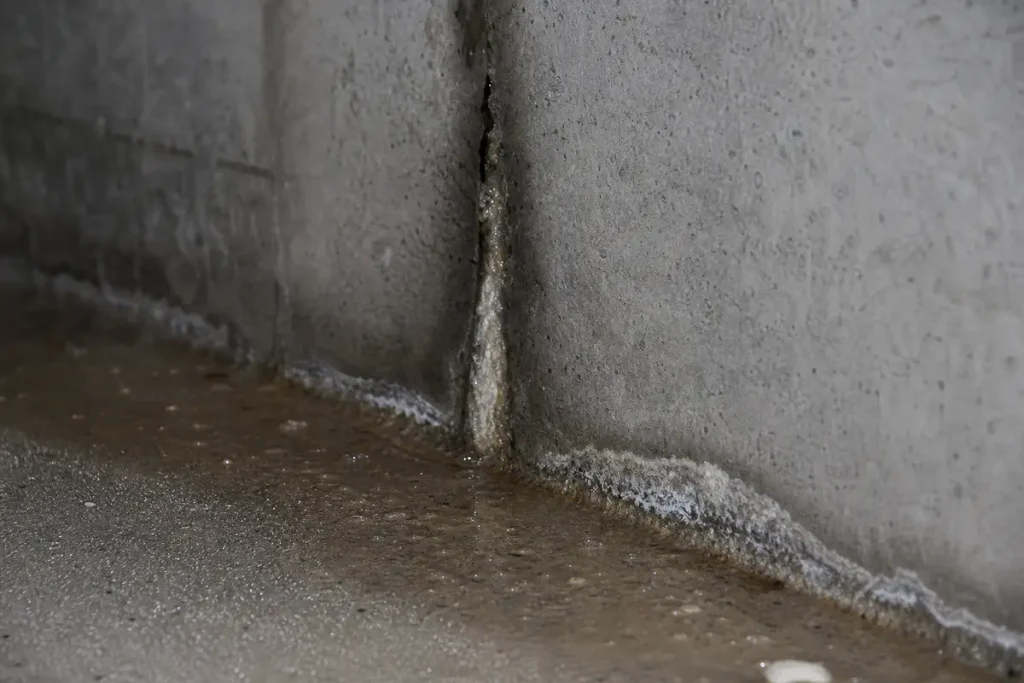
The cove joint is the seam where the wall meets the floor. Water appearing at that line is one of the strongest clues that pressure is building under the slab or just outside the footing.
This is not a random spill pattern. It usually means groundwater is collecting outside and pushing inward at the weakest transition point in the basement. If you see a damp line or intermittent seepage around the perimeter, think below-grade pressure first.
Water Rising Through Floor Cracks
Floor cracks, shrinkage cracks, utility cutouts, and weak patches in old concrete become relief valves when pressure builds under the slab. During heavy rain cycles, rising groundwater pushes through these openings and leaves puddles that seem to appear from nowhere.
That often happens after several wet days, not just one storm. The timing is the clue.
The Move That Works: Track When the Water Appears
Write down exactly when the water shows up: right after rain, only after several wet days, or even in dry weather. That timing separates groundwater pressure from plumbing leaks and indoor humidity faster than almost any product or guess.
Foundation Cracks and Weak Entry Points
An ASCE analysis reports that basement failures occur at a rate far higher than other house components. The reason is straightforward: once water is directed toward a basement, small construction and aging defects become entry points.
Cracks do not create water. They create access. Settlement, poor construction, aging damp-proofing, and weak penetrations give runoff and groundwater a path into the basement.
Wall Cracks
Vertical cracks usually track settlement or shrinkage. Diagonal cracks often point to differential settlement. Horizontal cracks are more serious because they can signal lateral soil pressure against the wall.
Any crack that leaks, widens, or comes with bowing deserves prompt evaluation. Water intrusion and structural movement often travel together, and ignoring one usually makes the other worse.
Floor Cracks and Utility Penetrations
Pipe penetrations, tie-rod holes, cable entries, and gaps where lines pass through the wall explain a lot of so-called mystery leaks. Water follows the path of least resistance. A tiny opening around a service line can leak repeatedly while the rest of the wall looks fine.
Localized leaks in homes from the 1980s forward often show up around these penetrations because sealants shrink, sleeves loosen, and surrounding concrete weakens over time.
Window Wells and Basement Windows
Below-grade windows are natural collection points. If a window well fills during a Kentucky thunderstorm, water pours directly against the sash, frame, and wall seam. Clogged wells, failed drains, poor covers, and bad caulking all turn a basement window into an easy point of entry.
The Move That Works: Mark and Monitor the Entry Point
The next time water appears, mark the exact entry point with painter’s tape or a pencil line. Do not just note the wet area. Mark where the water starts. A precise entry map shortens diagnosis and keeps you from paying for the wrong repair.
Failed Drain Tile, Sump Pump, or Footing Drainage
The University of Minnesota Extension identifies ineffective subsurface drainage as a common cause of persistent basement water. Drain tile, footing drains, and sump systems exist to collect groundwater before it enters your basement. When that system fails, water follows the next available path, which is usually inside.
This is why some basements stay wet even after you clean gutters and regrade the yard. The surface problem gets fixed, but the underground collection system still does not move water away.
How Perimeter Drain Systems Fail
Drain tile clogs with sediment. Old pipe collapses. Connections separate. Some systems were poorly installed from day one and never carried water to a discharge point that actually works.
Persistent seepage along the same perimeter area often points to this issue. If water repeatedly appears at one wall-floor seam, one corner, or one side of the basement, the collection path outside that area is often blocked or ineffective.
Sump Problems
A sump pump fails in predictable ways: power outage, stuck float, undersized pump, frozen discharge line, missing check valve, or no battery backup. During a storm, that failure matters immediately because your basement becomes the low point for rising groundwater.
If you are comparing repair approaches, it helps to understand when drainage collection works better than exterior barrier repairs. The right answer depends on where the water starts and whether you are managing it or blocking it.
The Move That Works: Test the Pump Before the Next Storm
Pour water into the sump pit this week. Confirm the pump turns on, discharges properly, and sends water well away from the foundation. A sump pump is only useful if it works before the storm, not during the panic.
Sewer Backups, Floor Drains, and Plumbing Leaks
Not every basement water problem is seepage through walls and floors. Water that rises through a drain or spreads from a utility area follows a completely different path and carries different risks.
This category matters because the cleanup cost climbs fast. Minor fixture leaks can be cheap to fix, but contaminated water and sewage events are not. Restoration costs increase sharply once water is dirty, widespread, or left in place.
Water Coming up Through a Floor Drain
Water rising through a floor drain points to a backup, not exterior seepage. The source can be municipal storm overload, a sanitary sewer blockage, or a clog in your house lateral. That distinction changes the repair path immediately.
If water enters from a drain opening, stop looking for wall cracks first. You are dealing with a drainage or sewer problem until proven otherwise.
Leaking Supply Lines, Water Heaters, and Basement Fixtures
According to iPropertyManagement, minor plumbing leaks can cost about $100, while appliance failures average around $1,600. That gap tells you how quickly a small unnoticed issue becomes a bigger one.
Localized puddles near a water heater, washing machine, utility sink, softener, basement bath, or exposed supply line usually have nothing to do with rainfall. These leaks often spread slowly, then suddenly become obvious once flooring, trim, or drywall starts absorbing water.
The Move That Works: Shut Off and Isolate the Source
If water appears in dry weather or near appliances, shut off the nearest fixture or supply valve and watch whether the wet area stops growing. That one move separates plumbing leaks from groundwater issues fast.
Condensation That Looks Like a Leak
The University of Minnesota Extension says basement moisture comes from three main sources: liquid water from rain or groundwater, interior moisture, and humid outside air that condenses on cool basement surfaces. That last category gets missed all the time.
In Louisville summers, warm humid air enters a cool basement and drops water on pipes, floors, ducts, and walls. The result looks like seepage, but the mechanism is different. The water is forming inside the basement air, not pushing through the foundation.
Signs You’re Dealing With Condensation, Not Intrusion
Condensation leaves clues. You see beads of water on pipes. Surfaces feel broadly damp instead of wet at one entry point. The basement smells musty in hot humid weather, but the problem does not track closely with rainfall. Moisture appears on exposed metal, ductwork, and smooth surfaces first.
That pattern is different from seepage, which usually starts at cracks, wall seams, penetrations, windows, or one repeat area after storms.
Why a Dehumidifier Alone Does Not Solve the Root Cause
A dehumidifier helps with indoor humidity. It does not fix bad grading, failing downspouts, hydrostatic pressure, or a cracked wall. If the moisture source is outside the basement envelope, dehumidification only treats the symptom.
That is why permanent solutions start with diagnosis. Dry air is good. Dry drainage paths are better.
The Move That Works: Run a Simple Foil Test
Tape a square of aluminum foil to the suspect wall for 24 hours. If moisture forms on the room side, you are dealing with condensation from indoor air. If it forms behind the foil, moisture is moving through the wall.
How to Tell Which Cause You’re Dealing With
The University of Minnesota Extension recommends a systematic diagnosis before any repair. That approach works because basement water follows patterns. Your job is to read them.
You are trying to answer three questions: when does the water appear, where does it start, and what was happening outside or inside the house right before it showed up? Those answers narrow the cause quickly.
If Water Shows up After Heavy Rain
Storm-timed water points toward grading, overflowing gutters, short downspouts, clogged window wells, wall cracks, cove-joint seepage, hydrostatic pressure, or failed footing drains. Rain timing is one of the strongest clues you get.
If Water Appears During Dry Weather
Dry-weather moisture almost never starts with surface runoff. Look first at plumbing leaks, basement fixtures, sump discharge problems, drain backups, and condensation.
If You See White Staining, Peeling Paint, or Musty Odors
Efflorescence, peeling coatings, warped trim, rusting metal, mildew, and recurring musty odor point to chronic moisture, not a one-time spill. Those signs tell you the basement has been exchanging water with its surroundings for a while.
When Basement Water Becomes a Health and Safety Problem
According to iPropertyManagement, all floodwater is treated as Category 3 black water. That changes the stakes immediately. Once water comes from flooding, drains, or sewer sources, this is no longer a simple cleanup job.
The cost side is serious too. Water damage claims average $13,954, NFIP flood claims average far more, and a severely contaminated basement can require major demolition. But the safety issue matters first. Wet basements create slip hazards, mold conditions, electrical danger, and contamination risk fast.
Mold, Air Quality, and Material Damage
Wet drywall, carpet, insulation, stored contents, and wood framing break down quickly. The longer water sits, the more the damage spreads into finishes and structural materials. Musty odor is not just unpleasant. It is evidence that moisture has been there long enough to affect indoor air.
Electrical and Contamination Risks
If water reaches outlets, cords, appliances, panel areas, or HVAC equipment, the basement becomes unsafe to enter casually. Drain and flood water also carry contamination that makes DIY cleanup a bad decision.
The Move That Works: Use a 24-Hour Rule
If water has been present for 24 hours or more, or if it came from a drain, sewer, or flood source, treat it as urgent and arrange professional cleanup from Louisville water damage restoration company and source correction immediately.
The Fix Depends on the Cause
ASCE identifies three broad remedies for existing homes: interior wall sealants, interior perimeter drains with a sump pump, and exterior waterproofing. What this means in practice is that one repair does not fit every basement.
The right fix matches the source. Surface water needs drainage correction. Groundwater pressure often needs collection and discharge. Cracks and wall defects need targeted repair. Exterior pressure that persists often needs outside waterproofing, not just a coating on the inside.
Exterior Drainage Corrections
If surface water is the driver, the move that works is outside: regrading, repairing gutters, extending downspouts, improving swales, and correcting window well drainage. This is source control, and source control beats symptom management every time.
Interior Drainage and Sump Solutions
If groundwater pressure causes recurring cove-joint seepage or floor leakage, interior perimeter drains and a sump system make sense. These systems manage water before it spreads into the basement living area. They do not eliminate outside pressure, but they control the path.
Crack Repair and Exterior Waterproofing
If water enters through wall cracks, penetrations, failed exterior membranes, or foundation defects, repair has to target those openings. Crack injection helps in the right location. Excavation, membrane waterproofing, dimple board, and footing drain replacement address the outside source directly. Surface coatings alone do not stop active water pressure pushing from outside.
What You Should Do This Week
During the next rain, inspect your basement and record three things only: where the water appears, when it appears, and what was happening outside or inside the home right before it showed up.
That one observation gives you the evidence to choose the right fix. Without it, you are guessing. With it, you can tell the difference between roof runoff, groundwater pressure, plumbing leaks, drain backups, and condensation, and that is what stops wasted money and repeat water damage.

Read Our Reviews