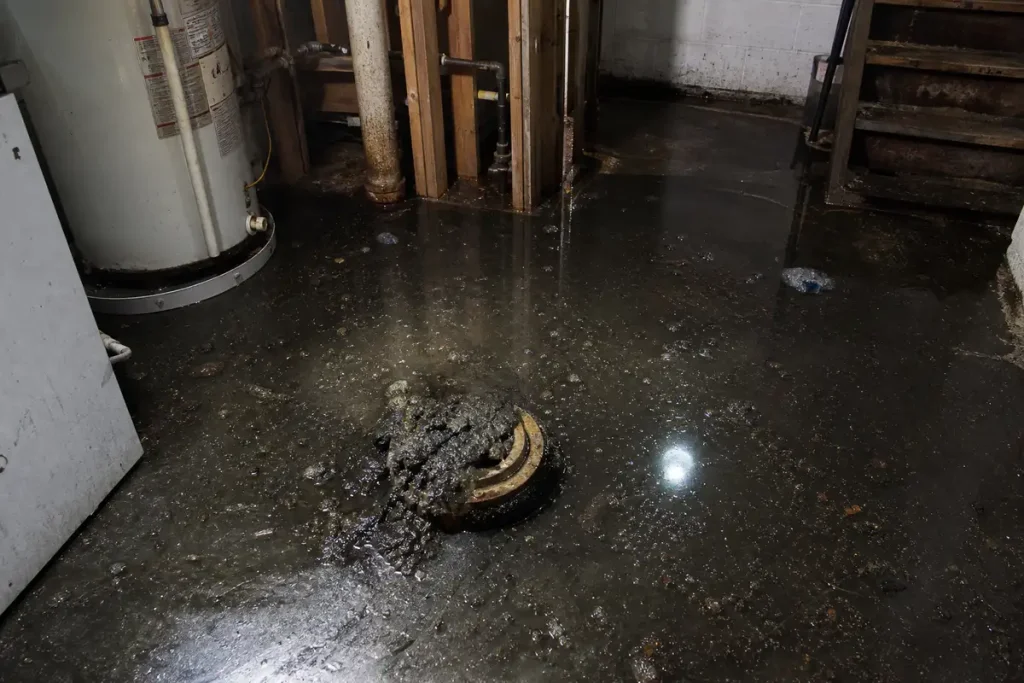
Black water damage is Category 3 water damage, which means your property has been exposed to grossly unsanitary water that carries a direct health hazard. If sewage has entered your home, rental, or commercial space, the main problem is not the mess you can see. It is the contamination you cannot. is Category 3 water damage, which means your property has been exposed to grossly unsanitary water that carries a direct health hazard.
What Black Water Damage Means and Why Sewage Changes the Risk
The IICRC-based standard used across restoration work defines black water as grossly unsanitary water containing pathogenic agents. That includes raw sewage, toilet overflows with feces, floodwater, river or lake water, and standing water that has become biologically unsafe. Sources cited by SERVPRO and UL describe this category as the highest contamination level because exposure can cause sickness through contact, inhalation, or ingestion.
That changes the entire response. Clean water losses focus on drying and preventing damage. Black water losses start with exposure control, containment, and removal of contaminated materials. A sewer backup in a basement is not just a wet-floor problem. It is a hazardous materials problem inside a building.
Time also changes the category. Multiple industry sources state that clean or gray water can turn into black water in 48 hours or less if it remains in contact with building materials. That is why delayed action drives both health risk and cost.
Finding: Black water damage is defined by contamination, and sewage makes the loss a health emergency before it becomes a repair project.
Black Water Vs. Gray Water Vs. Clean Water
The three water categories exist because not all water losses demand the same response. If you want the broader breakdown, the difference between clean, gray, and black water comes down to contamination level, not color or smell.
CategoryTypical sourceContamination levelTypical restoration approach
| Category 1 | Supply line, rain before contamination | Sanitary | Drying, limited material removal |
| Category 2 | Dishwasher discharge, washing machine overflow, sink waste | Illness-causing contamination | Controlled cleanup, drying, selective removal |
| Category 3 | Sewage, toilet backflow, floodwater, contaminated standing water | Grossly unsanitary, pathogenic | Full containment, disinfection, demolition of porous materials |
Black water is more hazardous than gray or clean water because the response standard shifts from mitigation to remediation. Lower categories aim to save more materials. Category 3 losses assume exposure has already compromised the structure unless testing and inspection prove otherwise.
Finding: Black water requires a different standard because hazard severity rises faster than cleanup complexity.
Why Sewage Is so Dangerous to Your Health
UL states that all raw sewage is contaminated with microbes such as bacteria, protozoans, molds, fungi, and viruses. The Indiana Department of Health names illnesses linked to sewage exposure, including E. coli infection, salmonellosis, giardiasis, cryptosporidiosis, hepatitis A, leptospirosis, and other enteric diseases. BELFOR also notes that sewage backups can contain viruses such as hepatitis A and norovirus, not just bacteria.
Exposure happens in more than one way. Skin contact matters, especially around cuts. Aerosols from splashing, extraction, or airflow matter because contaminated particles can spread beyond the original room. Accidental ingestion matters because contamination transfers easily from hands to face, food surfaces, and personal items. HVAC contamination matters because moving air can carry particles into occupied areas.
Visible cleanup does not solve that problem. Once the standing water is gone, pathogens can remain on hard surfaces, inside wall cavities, below flooring, and inside porous materials. A wiped-down bathroom is not a sanitary bathroom after a sewage overflow.
Finding: Sewage is dangerous because it carries biological contamination that spreads through contact, air movement, and absorbed materials.
The Hidden Contaminants You Cannot See
The most deceptive part of black water damage is what stays behind. Sewage solids embed in carpet backing, wood grain, grout lines, subfloors, and wallboard. Biofilm forms on damp surfaces and protects microorganisms from casual cleaning. UL guidance also notes that wallboard can wick contamination upward, which is why sewage-damaged drywall often has to be cut out 12 to 18 inches above the watermark.
Not every sewage event contains every pathogen listed in public health guidance. That is the limitation. But the contamination profile is unknown at the time of loss, so the event is treated as hazardous from the start. That is the only defensible standard.
If the source started as a lesser category, delay makes that worse. Water that sits too long stops being a simple cleanup, because contamination builds as materials stay wet and microbial growth accelerates.
Finding: After the water recedes, invisible contamination remains the main risk, and unknown pathogen load is enough to require Category 3 handling.
Why Children, Older Adults, and Occupants With Health Conditions Face Higher Risk
Public health and restoration guidance consistently identify children, older adults, and immunocompromised occupants as higher-risk groups. The Indiana Department of Health notes that severe complications from E. coli infection hit young children, older adults, and people with weakened immune systems harder. BELFOR applies that directly to Category 3 losses and recommends evacuation for exposed occupants.
That has practical consequences for property decisions. In an occupied house, rental unit, duplex, or small commercial space, faster isolation matters. Shared bathrooms, hallways, and HVAC returns raise cross-contamination risk. DIY cleanup in a lived-in property is not just inadequate. It increases exposure.
Finding: Higher-risk occupants change threshold for action, and that threshold is immediate isolation and professional remediation.
The Most Common Sources of Black Water Damage in Louisville-Area Properties
Louisville-area properties see black water losses from sewer backups, basement drain backups, toilet overflows involving waste, storm intrusion, and floodwater entering lower levels. Older neighborhoods with aging sewer lines and historic plumbing layouts face backup risk. Suburban homes with finished basements face higher material loss because contamination reaches carpet, drywall, trim, and stored contents quickly. Mixed-use buildings and small commercial suites add another issue: more fixtures, more traffic, and older shared plumbing.
That local pattern matters because black water often starts low and spreads wide. Basements, slab-level bathrooms, utility rooms, and first-floor commercial spaces are common points of entry. Once sewage reaches porous finishes, the cleanup scope expands fast.
Finding: In Louisville-area properties, black water damage usually starts with plumbing or flood intrusion and spreads fastest in lower levels and older systems.
Sewer Backup, Toilet Overflow, and Drain Failure
A sewer backup, waste-involved toilet overflow, or failed drain immediately creates a Category 3 loss. SERVPRO and BELFOR both state that toilet backflows from beyond the trap count as black water even when the water does not look dark. Appearance is irrelevant. Waste content controls the classification.
Contamination also travels farther than most owners expect. Water seeps under vinyl plank, into subfloor seams, behind baseboards, and into wall cavities. In multifamily and commercial spaces, it can pass through floor penetrations into lower units or service areas. A small backup at the fixture can become a much larger building loss within hours.
Finding: If waste is involved, even a small plumbing event is black water, and hidden spread usually exceeds the visible footprint.
Why Floodwater Is Treated as Black Water
Floodwater is always treated as Category 3 because the contamination source is uncontrolled. BELFOR states that floodwater can contain soil, fuel residue, pesticides, animal waste, industrial runoff, road contaminants, and sewage. RubyHome and other industry sources classify all floodwater as black water for that reason.
False confidence is common here. FEMA-based reporting cited in industry research indicates that 25% of flood losses occur outside mapped flood zones. A property does not need to sit in a high-risk zone to take on contaminated water after intense rain or drainage failure.
Finding: Floodwater is black water because its contamination mix is unknown and uncontrolled from the moment it enters the structure.
How Black Water Spreads Through Building Materials and Gets Worse Fast
Mold can begin developing within 24 to 48 hours after water intrusion, and contamination categories can worsen in that same window. Water moves by capillary action, absorption, and gravity. Drywall wicks it upward. Insulation holds it. Carpet pad traps it. Wood trim and subflooring absorb it below the surface.
Delay drives three outcomes at once: more demolition, more microbial growth, and higher cost. Industry estimates compiled by RubyHome put black water cleanup at about $7 to $7.50 per square foot, versus roughly $3 to $4 for clean water and $4 to $6.50 for gray water. That cost gap reflects labor, disposal, containment, and material replacement, not just drying equipment.
Finding: Black water gets more destructive by the hour because contamination spreads through absorbent materials long before surfaces look ruined.
What Usually Has to Be Removed Instead of Cleaned
Sewage-exposed porous materials are generally non-restorable. That includes carpet, pad, drywall, insulation, ceiling tiles, upholstered contents, mattresses, paper goods, and many engineered wood products. Industry guidance is consistent on this point because porous materials absorb contamination below the surface where routine disinfectants do not reach.
Salvage decisions depend on contamination category, dwell time, and material type. Not smell. Not color. Not surface appearance. That is why a room can look mostly normal and still require controlled demolition.
Finding: In a sewage loss, porous materials are usually removed because contamination penetrates deeper than surface cleaning can reach.
Why Odor Is a Late Signal, Not a Reliable Test
Odor confirms contamination, but it does not measure hazard. Some severe black water events smell obvious. Others do not, especially after partial drying or superficial cleaning. Pathogen load, absorbed waste, and hidden moisture do not track neatly with what you can smell.
That misconception delays action. A fading odor often means water has moved into cavities and materials, not that the risk is gone. If the source is Category 3, the protocol stays Category 3.
Finding: Smell can warn you about sewage, but it cannot clear a property as safe.
What You Should Do Immediately After a Black Water Loss
The response sequence is straightforward: keep people out, shut off power to affected areas if that can be done safely, stop the source if possible, avoid contact, document the damage, and call a certified restoration company. That sequence protects health first and supports the claim second.
Insurance context matters because water claims are common. Industry data indicates about 1 in 60 insured homes files a water or freezing claim each year, and average payouts land in the mid-five figures. But coverage depends heavily on cause of loss, not just damage severity.
Finding: The right first response reduces exposure and preserves the documentation needed for coverage review.
Safety First: Evacuate, Isolate, and Do Not Use DIY Cleanup Methods
Shop vacs, mops, bleach wipes, and box fans do not meet black water remediation standards. UL specifically advises that sewer spills should not be cleaned by in-house staff unless proper equipment and training are in place. Minimum protective gear includes rubber gloves, boots, eye protection, and at least a high-efficiency mask, but PPE alone does not solve the contamination problem.
Isolation matters just as much. Close doors, shut down airflow through the affected area if possible, and keep occupants out. If you are comparing contamination levels, why Category 3 losses are treated as a health hazard becomes obvious the moment sewage crosses into occupied space.
Finding: DIY cleanup increases risk because household tools and consumer cleaners do not control sewage contamination.
What to Document for an Insurance Claim
Photograph the source of loss, the water line, every affected room, damaged finishes, ruined contents, and any visible waste contamination. Save invoices for emergency mitigation, extraction, temporary lodging, and disposal. Record when the loss was discovered, when the source was stopped, and when professional mitigation began.
Coverage usually follows a split. Sudden internal plumbing failures often fall under standard homeowners policies. Sewer backup commonly requires a specific endorsement. External flood damage usually requires separate flood insurance. Policy language controls the outcome, and that is the limitation that matters most.
Finding: Strong documentation helps the claim, but the cause of loss and policy wording decide coverage.
How Professional Black Water Remediation Works
Professional remediation follows a disciplined sequence: inspection, containment, extraction, removal of non-salvageable materials, cleaning, disinfection, structural drying, moisture monitoring, and reconstruction. SERVPRO describes an eight-step process built around those stages, and UL adds due-diligence inspection, documentation, and verification before re-entry.
The reason Louisville water damage professionals use containment and negative air is simple. Sewage losses spread contamination during cleanup if the work area is not controlled. Disposal protocols matter for the same reason. Contaminated water and debris cannot be handled like ordinary trash or discharged into storm drains.
Finding: Professional remediation is a controlled contamination-management process, not just water removal with bigger fans.
Assessment, Containment, and Controlled Demolition
The first task is classification and mapping. Crews identify the source, the migration path, the affected materials, and the boundary between contaminated and unaffected areas. Containment barriers then separate the work zone from occupied rooms.
Controlled demolition follows that map. Baseboards come off. Wall cavities open where moisture and contamination traveled. In basements, bottom sections of drywall and insulation are often removed. In first-floor suites or mixed-use spaces, crews isolate the affected area to prevent spread into public or adjoining zones.
Finding: Good remediation starts by defining the contamination path and removing only what has actually been compromised, but removing all of that material.
Drying, Sanitizing, and Clearance
A surface that looks dry is not a completed job. Proper remediation includes dehumidification, moisture mapping, repeat readings, cleaning, and sanitizing before rebuilding starts. UL guidance recommends verification methods such as moisture meter readings and, where needed, microbial testing to support re-entry decisions.
There is a counterpoint worth stating clearly. Some contents are technically cleanable but not economically restorable. Heavy contamination, low replacement cost, or prolonged dwell time often makes disposal the better decision.
Finding: Remediation is complete only after materials test dry and sanitary enough to rebuild with confidence.
Common Questions About Black Water Damage
Can You Stay in the House During Sewage Cleanup?
Occupancy depends on how far contamination spread, whether HVAC zones were affected, whether safe bathrooms remain available, and whether the area can be isolated. In heavily affected homes, rentals, and shared buildings, temporary relocation is the standard response.
Finding: If sewage affects occupied living areas or shared air, staying put is usually the wrong choice.**
Does Black Water Always Mean Full Replacement?
No. Non-porous materials and some semi-porous surfaces can often be cleaned and disinfected. Porous materials exposed to sewage are usually removed because contamination penetrates below the surface.
Finding: Black water does not mean total replacement, but it usually means replacing every porous material it touched.**
How Fast Should You Act?
Same day response is the standard. Contamination begins immediately, and mold starts developing within 24 to 48 hours. Waiting increases demolition scope, health risk, and claim complexity.
Finding: With black water, delay is damage.**
Is Black Water Damage Covered by Insurance?
Coverage depends on cause. Sudden accidental discharge from internal plumbing is often covered. Sewer backup often requires an endorsement. Floodwater usually requires separate flood insurance. Standard homeowners policies often exclude flood-related black water losses.
Finding: The label “black water” does not decide coverage. The source of the loss does.**
Once you understand black water damage as a contamination problem instead of a simple water problem, the right response becomes clear. Treat sewage and flood intrusion as hazardous on day one, act the same day, and judge every material by contamination level, not appearance.

Read Our Reviews