Our Hurstbourne Mold Remediation Process
Mold remediation in Hurstbourne’s condominiums, townhomes, and HOA-managed communities requires more than simply removing visible growth. Every project begins with a comprehensive moisture and building science assessment designed to identify the true source of contamination. Using thermal imaging, moisture mapping, and invasive inspection when necessary, we trace water migration through wall cavities, floor assemblies, ceilings, and shared building components. In multi-family properties, this often includes evaluating adjacent units, common plumbing chases, and shared structural assemblies to determine whether the moisture source originates within the affected unit, a neighboring residence, or a common building system.
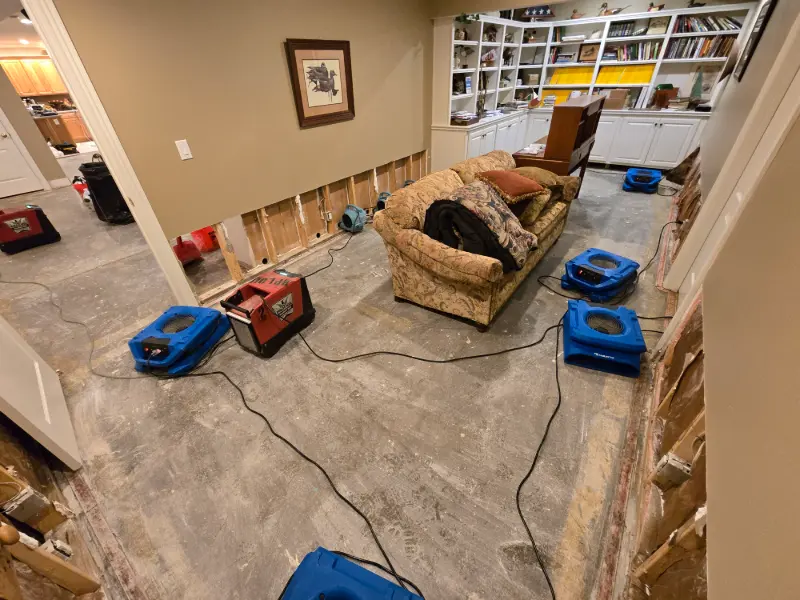
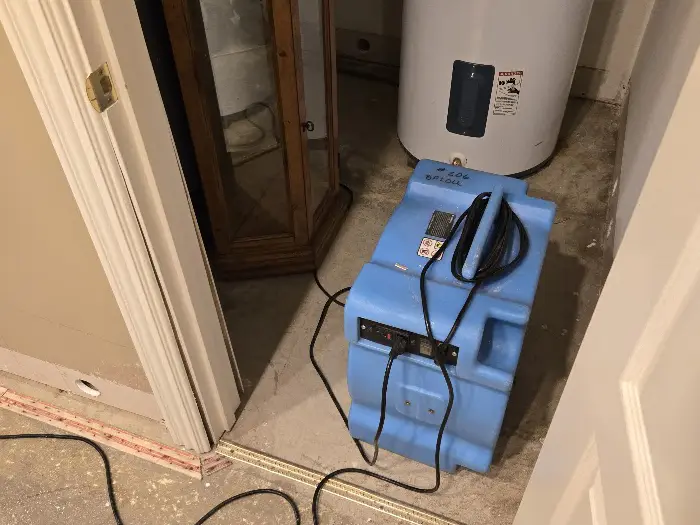
Once the source has been identified and documented, our technicians establish engineering controls in accordance with ANSI/IICRC S520 standards. Critical containment barriers and negative air pressure systems are installed to prevent the migration of mold spores into occupied areas or neighboring units. Non-salvageable porous materials are then removed, including contaminated drywall, insulation, carpet pad, and other moisture-damaged building components that cannot be effectively restored.
Where structural elements remain salvageable, we perform detailed remediation procedures that include HEPA vacuuming, mechanical cleaning of microbial growth, and application of EPA-registered antimicrobial products according to manufacturer specifications. All affected assemblies are then dried to documented moisture targets before containment is removed. Throughout the process, moisture readings, drying data, and remediation activities are recorded to create a clear chain of documentation.
For Hurstbourne condominium and HOA properties, documentation is often just as important as the remediation itself. Bear Restoration provides detailed reporting that helps property owners, property managers, insurance carriers, and HOA boards understand the source of loss, affected materials, remediation scope, and corrective actions taken. For additional verification, we routinely recommend independent third-party post-remediation verification (PRV) and clearance testing, providing objective confirmation that remediation goals have been achieved before reconstruction begins.
HEPA Vacuuming & Detailed Cleaning After Mold Removal
HEPA filtration removes 99.97 percent of airborne particles at 0.3 microns, capturing the 2 to 10 micron range of mold spores plus the finer fragments shed during removal. We size air scrubbers for at least four air changes per hour inside containment and run them continuously through removal, cleaning, and drying. After porous materials come out, every salvageable surface inside containment is HEPA vacuumed and damp-wiped per S520, including the shared-wall framing exposed during demolition. That cleaning step is what allows the assembly to be closed back up cleanly even though it borders a neighboring unit.
Indoor Air Quality Testing for Hurstbourne Homes, Condos & Townhomes
Indoor mold is a documented respiratory hazard. The CDC and EPA connect it to coughing, wheezing, nasal congestion, and asthma aggravation. In multi-family buildings, the exposure question extends beyond the unit where the mold is visible, because shared assemblies and HVAC paths can affect adjacent units. We measure airborne spore concentrations inside the affected unit before and after remediation, and where shared elements are involved we sample on both sides of the assembly when allowed, so the air quality result is documented across the building elements actually involved.