After experiencing water damage, your first step is vital: evaluating the extent of the damage. You’ll need to carefully examine all affected areas and identify hidden issues. This process sets the stage for effective restoration and impacts your insurance claim. It’s important to act swiftly and methodically. The steps you take now can greatly influence the outcome of your recovery efforts and future prevention strategies. What comes next might surprise you.After experiencing water damage, your first step is vital: evaluating the extent of the damage.
Key Takeaways
- Conduct a detailed damage assessment of affected areas, documenting moisture levels, deterioration, and hidden moisture sources.
- Capture clear, well-lit photographs of the damage from multiple angles for thorough documentation and future reference.
- Contact local restoration professionals promptly to initiate water extraction and repair processes, ensuring they are licensed and experienced.
- Communicate openly with your insurance adjuster, providing detailed information about damages and restoration efforts while keeping records of all interactions.
- Implement preventive measures to mitigate future water damage, such as waterproofing, maintaining drainage systems, and inspecting plumbing regularly.
Assessing the Damage
When you face water damage, the first step is to thoroughly evaluate the extent of the damage.
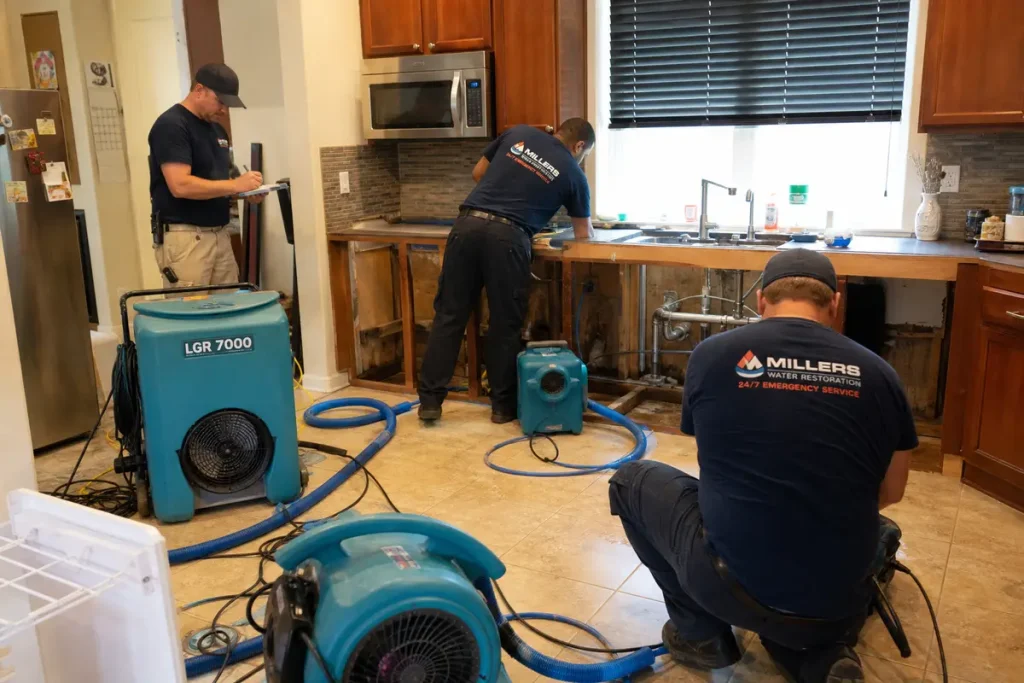
Begin with a meticulous damage evaluation, identifying affected areas such as walls, flooring, and personal belongings. Utilize specialized tools like moisture meters to conduct a precise moisture evaluation, which helps determine the severity and source of the water intrusion.
Pay close attention to hidden spaces, such as behind cabinets or under carpets, where moisture can linger undetected. Document all findings, noting the degree of saturation and any visible deterioration, as this data will be essential for restoration efforts.
Engaging with professionals during this process can provide valuable insights and ensure that you’re not missing any critical aspects.
Documenting the Incident
After evaluating the damage, the next step involves meticulously documenting the incident. Start by taking thorough incident photography, capturing all affected areas from multiple angles. This visual evidence is essential for your insurance claim and can help substantiate the extent of the damage. Confirm that your photos are clear and taken in good lighting, showing the obvious damage as well as any hidden issues, such as mold or structural concerns.
Simultaneously, create detailed damage logs that outline the specifics of the incident. Record the date, time, and nature of the water damage, along with descriptions of the affected materials and any immediate actions you took.
This extensive documentation supports your claim and provides a clear narrative for anyone reviewing your case. By keeping accurate records, you’re not just preserving your interests; you’re also fostering a sense of community through shared experiences in water damage recovery.
Contacting Restoration Professionals
While evaluating the extent of water damage, it’s crucial to contact restoration professionals promptly to mitigate further issues. Their emergency response can prevent secondary damage and mold growth, ensuring your home returns to its pre-loss condition.
Here’s what to do:
- Identify local restoration companies that specialize in water damage.
- Check their credentials to verify they’ve the necessary licenses and certifications.
- Inquire about their emergency response times and availability to assess your situation quickly.
- Discuss their professional expertise in water extraction, drying, and repair processes.
Choosing the right restoration professionals can make all the difference in your recovery journey. Their technical knowledge and experience enable them to handle complex situations efficiently, providing you with peace of mind during a challenging time.
Don’t hesitate—act quickly to secure their assistance and restore your home effectively.
Communicating With Your Insurance Adjuster
Effective communication with your insurance adjuster is essential for a smooth claims process, especially following water damage.
Begin by reviewing your insurance policy to understand your coverage limits and specific exclusions. This knowledge helps you articulate your needs clearly during adjuster communication.
When you reach out, be concise yet thorough; provide details about the damage and any restoration efforts already undertaken.
Document conversations and keep records of emails and phone calls. This shows your commitment and ensures you have a clear timeline of interactions.
Don’t hesitate to ask questions if something isn’t clear—your adjuster is there to help you navigate this process.
Regular follow-ups can keep your claim on track, reflecting your proactive approach.
Preventing Future Water Damage
To prevent future water damage, it’s essential to implement proactive measures that address potential vulnerabilities in your home.
Here are four key strategies to contemplate:
Install Waterproofing Solutions: Use high-quality waterproofing materials on your basement walls and foundation to create a strong barrier against moisture infiltration.
Enhance Drainage Systems: Verify your gutters and downspouts are clear and direct water away from your home’s foundation.
Contemplate adding French drains if necessary.
- Regularly Inspect Plumbing: Check for leaks in pipes and fixtures.
Address any signs of moisture immediately to prevent extensive damage.
- Maintain Landscaping: Grade your yard away from the house and avoid planting near foundations, as this can lead to water pooling.
The water damage restoration process typically takes several days to weeks. Restoration timeline factors include the severity of damage and drying equipment types used, like dehumidifiers and fans, which greatly impact drying efficiency and overall duration.
Your insurance policy may cover temporary accommodations during restoration, but it depends on the specifics of your plan. Review your coverage details and consult your agent to understand your options for temporary housing.
You should conduct an inventory assessment of your damaged items. Document their condition and value, then consult with your insurance provider for guidance on claims and potential restoration or replacement options. This ensures you’re adequately supported.
Absolutely, you can choose your own restoration contractor! Weigh your restoration contractor options carefully, ensuring you select qualified professionals who understand your needs and can restore your belongings to their former glory efficiently and effectively.
Yes, many restoration services offer warranty details. You should carefully review these terms to ensure coverage for workmanship and materials, providing you with peace of mind during the restoration process.
Don’t risk further damage to your property. Bear Restoration‘s ‘s IICRC-certified team is available 24/7 for emergency restoration in Louisville, KY and surrounding areas.
Learn about our Emergency Water Extraction service →

Read Our Reviews