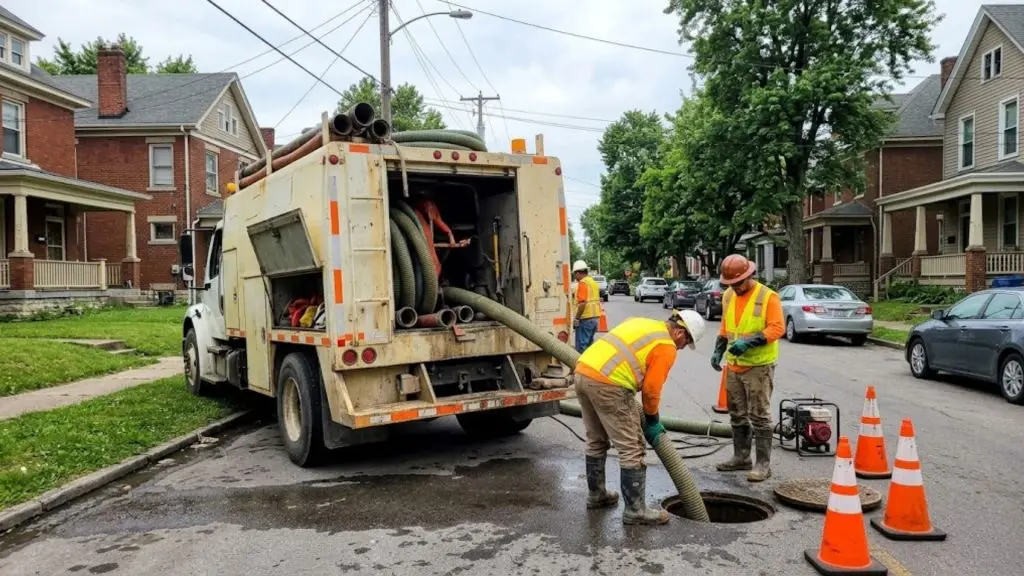
A toilet that keeps backing up no matter how many times you flush, or a floor drain in the basement that suddenly starts bubbling dark water, is rarely a simple plumbing nuisance. It usually means wastewater is coming back into the house instead of leaving it.
That difference matters more than most homeowners realize. Sewage cleanup in Louisville, KY isn’t the same job as drying out a spilled glass of water. The water carries bacteria, viruses, and other pathogens that can make a family sick if the cleanup isn’t handled correctly.
This article covers why sewage backups are classified differently from other water damage, what typically causes them in Louisville homes, what can and can’t be saved, and what the professional cleanup process actually involves.
If sewage is actively backing up into your home right now, the safest move is to keep everyone clear of the area and call a restoration team before you start cleaning anything yourself.
Why a Sewage Backup Is Different From Other Water Damage
Under the IICRC S500 water damage standard, sewage backup is classified as Category 3 water, the most contaminated class there is. It can carry bacteria, viruses, and parasites, including organisms like E. coli and Hepatitis A.
Unlike a clean water leak, sewage doesn’t stay on the surface. It soaks into carpet, drywall, insulation, and wood framing, which means the visible mess is often only part of the actual contamination. That’s why sewage cleanup follows a different set of rules than ordinary water extraction, starting with how technicians protect themselves and the rest of the home.
What Causes Sewage Backups in Louisville Homes
Several conditions around Louisville make sewage backups more common than homeowners expect. The most frequent causes we see include:
- Aging clay or cast iron sewer lines that crack or collapse over time
- Tree roots growing into underground pipes and blocking flow
- Heavy rainfall and storm surges that overwhelm municipal sewer systems
- Clogged or collapsed main sewer lines
- Sump pump failures during storms
- Grease, wipes, or other debris flushed or poured down drains
Older neighborhoods with aging infrastructure tend to see this more often, but any home can experience a backup during a hard enough storm. A sewage backup often arrives alongside a flooded basement, and contaminated moisture left behind can lead to mold growth within days if it isn’t fully dried and decontaminated.
Health Risks of Untreated Sewage Contamination
Sewage water can carry harmful bacteria, viruses, and parasites that pose a real health risk the longer they’re left in a living space. The CDC lists sewage exposure as a serious concern, particularly for children, older adults, and anyone with a weakened immune system.
Because contamination spreads into flooring, framing, and even HVAC systems, treating a backup like a typical spill, mopping it up and running a few fans, can leave pathogens behind in places you can’t see. That’s the main reason this kind of work calls for trained technicians rather than a DIY approach.
What to Do Before Help Arrives
If sewage backs up into your home, a few steps can limit the spread of contamination while you wait for help:
- Keep children and pets away from the affected area
- Avoid walking through the water, which tracks contamination to clean areas
- Turn off HVAC systems if the backup is near a return vent
- Shut off the water source if you can safely reach it
- Don’t attempt to shop-vac or mop sewage water yourself
These steps won’t fix the problem, but they buy time and reduce how far the contamination travels before professional cleanup begins.
Our Sewage Backup Cleanup Process
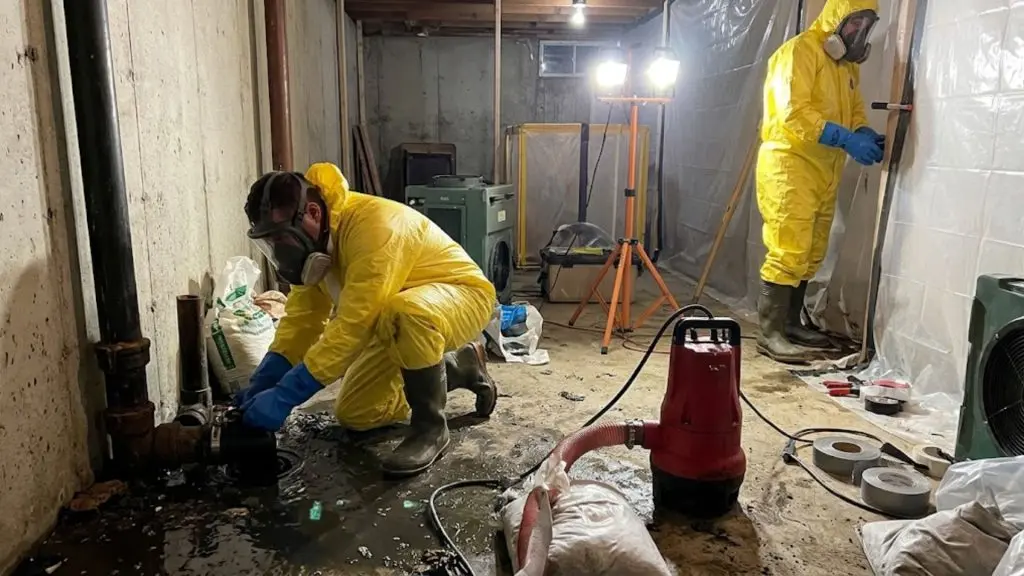
Containment and Source Control
We start by suiting technicians in personal protective equipment and sealing off the affected area so contamination doesn’t spread to the rest of the home. Where possible, we shut off the source of the backup before any cleanup begins.
Extraction and Removal
Once the area is contained, we remove standing sewage and extract contaminated water with dedicated equipment. Porous materials that absorb the water, carpet, pad, affected drywall, and saturated insulation, are bagged and disposed of as contaminated waste rather than dried in place.
Cleaning and Decontamination
Remaining surfaces are cleaned with EPA-registered antimicrobials suited to Category 3 pathogens. We treat framing, hard flooring, and structural components before moving into drying, since drying a space before it’s decontaminated would just circulate pathogens through the air.
Drying and Verification
After decontamination, we bring in drying equipment and monitor moisture levels until materials reach a safe standard. Every step, from initial containment to the final moisture reading, is documented for your insurance claim.
What Can Be Saved and What Has to Be Thrown Out
The deciding factor in Category 3 cleanup is how porous a material is. Non-porous surfaces like sealed concrete, metal, and glass can usually be cleaned and decontaminated because pathogens stay on the surface. Semi-porous materials such as wood framing can often be saved with proper treatment.
Porous materials are a different story. Carpet, carpet pad, insulation, and the lower portion of drywall absorb contaminated water into a structure that can’t be reliably cleaned, so they’re removed rather than dried. Upholstered furniture, mattresses, and rugs that contact sewage are typically discarded for the same reason. It’s a hard call for homeowners with sentimental or expensive items, but it’s the only way to be sure the contamination is actually gone.
Who’s Responsible, Your Lateral Line or the City’s Main Line?
In Louisville and Jefferson County, the property owner is generally responsible for the lateral line running from the house to the city main, typically the first 50 to 100 feet. Louisville MSD maintains the public main line.
If a blockage in your lateral line, often from tree roots, grease buildup, or a collapsed clay pipe, caused the backup, the cost usually falls on the homeowner. If MSD’s main line is the cause, you may be able to file a claim with them. Documenting the damage and the likely source helps support that claim either way.
Insurance Considerations for Sewage Damage
Coverage for sewage backups depends heavily on your specific policy. Some homeowners policies include a sewer backup rider, while others exclude this type of damage entirely unless it’s added separately. Whether the event was sudden and accidental versus related to deferred maintenance also affects what’s covered.
Detailed documentation, photos, moisture readings, and a written scope of work, supports the claims process and helps your adjuster move faster. We bill directly to your insurance carrier and handle that communication as part of the cleanup.
Preventing Future Sewage Backups
While not every backup can be prevented, a few steps lower the odds significantly:
- Install a backwater valve to stop sewage from re-entering during municipal overloads
- Schedule regular sewer line inspections to catch cracks or root intrusion early
- Avoid flushing wipes, grease, or other debris that can clog lines
- Maintain your sump pump and keep a backup power source on hand for storms
These habits won’t guarantee you never deal with a backup, but they meaningfully reduce the risk.
Frequently Asked Questions
A sewage backup happens when wastewater flows back into the home instead of out to the sewer system, often through drains, toilets, or floor drains. It’s classified as Category 3 contamination, meaning it can carry bacteria, viruses, and parasites, which is why it’s treated as a biohazard rather than a routine cleanup.
In most cases, no. Category 3 contamination can create unsafe airborne conditions and persistent odor, so temporary relocation is often recommended depending on how much of the home was affected and how long the water sat before cleanup began.
Emergency cleanup usually happens the same day, with drying taking two to five days and full restoration ranging from one to three weeks depending on severity, the materials affected, and how much reconstruction is needed.
We don’t recommend it. Proper cleanup requires personal protective equipment, industrial extraction equipment, EPA-grade disinfectants, and correct disposal of contaminated materials; a shop vac and bleach alone can spread contamination rather than remove it.
Category 3 water can contain E. coli, Salmonella, and other bacteria, along with viruses and parasites. That’s why IICRC S500 requires full protective equipment for technicians and removal of porous materials that absorb the water.
Final Thoughts on Sewage Cleanup in Louisville, KY
A sewage backup is one of the few home emergencies where waiting even a few hours makes the job meaningfully harder. Contamination spreads into flooring, framing, and air as time passes, and what starts as a contained mess can turn into a larger demolition and rebuild if it’s not addressed quickly.
If you’re dealing with a sewage backup in Louisville, Jeffersontown, St. Matthews, or anywhere nearby, Bear Restoration handles the containment, decontamination, and drying from the first call to the final walkthrough. A backed-up drain or a flooded basement tied to a sewer issue is exactly the kind of job where getting it right the first time matters more than getting it done fast.

Read Our Reviews