
St. Matthews has a flooding history that goes back further than most of its homeowners realize. The area was originally built on poorly drained farmland, and locals once called it “the land of the lakes” for how often the streets pooled after a hard rain.
That history still matters today. A lot of St. Matthews homes were built in the 1940s and 1950s, with plaster walls, hardwood floors, and finished basements that behave very differently in a water loss than modern construction does.
This article covers how water damage is classified, what typically goes wrong in St. Matthews homes specifically, and what the water damage restoration process looks like from the first inspection to the final repair.
If water is actively spreading through your home right now, the priority is getting it stopped and extracted, the details below matter most once that first step is handled.
Why St. Matthews Homes Are Prone to Hidden Water Damage
The neighborhood’s drainage system was built back in 1945, and while it’s held up reasonably well, much of it is now outdated relative to modern development. The Middle Fork of Beargrass Creek also runs through the area, carrying runoff from a wide stretch of developed land upstream.
Add in the housing stock itself, finished basements, original plaster walls, hardwood flooring, and decades of additions and renovations, and water has a lot of places to hide. It moves downward through subfloors, sideways through joist bays, and inward through wall cavities, which means what’s visible after a loss is often only a small part of the actual damage.
How Water Damage Is Classified Under IICRC S500
Every water loss is assessed based on two key dimensions: water category and water class. Understanding the difference helps determine the appropriate cleanup methods, drying equipment, and restoration timeline.
- Category 1: Clean Water: Comes from a clean source, such as a broken water supply line.
- Category 2: Gray Water: Contains a noticeable level of contamination, such as water from a washing machine overflow.
- Category 3: Black Water: Is grossly contaminated and may contain harmful pathogens. In St. Matthews, this commonly involves a sewer backup or stormwater intrusion from Beargrass Creek.
- Class 4: Specialty Drying: Describes water losses involving deep saturation in dense or low-permeance materials, such as plaster, hardwood, and masonry. This can be particularly relevant to older St. Matthews homes built over slab or masonry foundations. Misclassifying a Class 4 loss can lead to undersized drying equipment and a longer-than-expected restoration timeline.
Common Water Damage Scenarios in St. Matthews Homes
Basement and Crawlspace Flooding
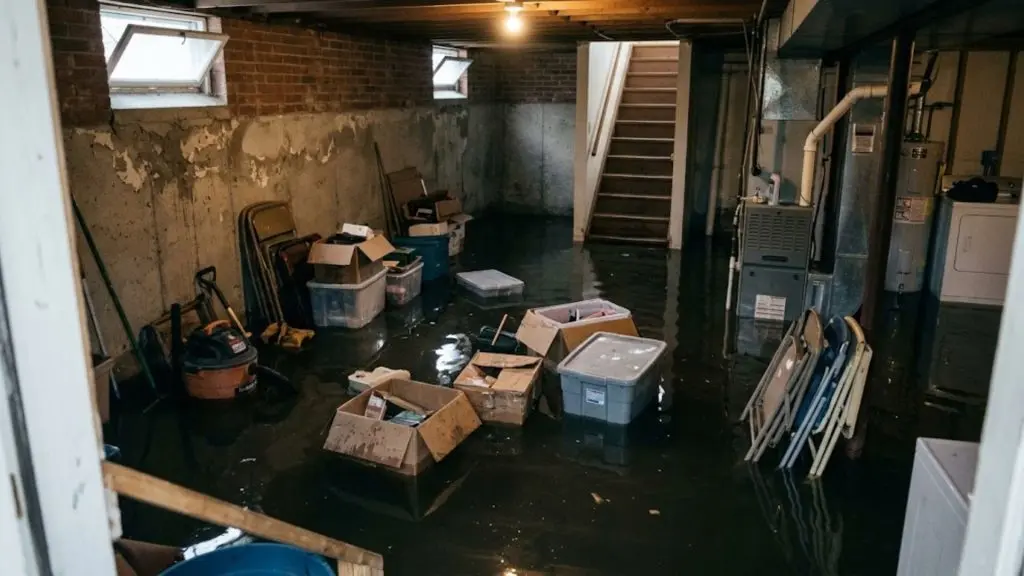
Most calls in the St. Matthews area involve a flooded basement, and the reason comes down to construction. Many of these basements, built in the 1950s and 1960s, used block foundations without an exterior moisture membrane, and interior drain tile that’s since clogged with iron buildup. When the creek rises or the storm sewer backs up, water enters at the joint where the slab meets the wall and travels through the joist bays from there.
Burst Pipes and Supply Line Failures
A failed supply line or water heater is one of the more common sudden losses we see, and the numbers add up fast. A burst toilet supply line can release two to five gallons a minute until it’s shut off, and a ruptured water heater dumps its full tank, generally 40 to 50 gallons, before it keeps feeding from the supply side. Slow leaks, like a dripping refrigerator line, often do more cumulative damage than a dramatic burst simply because nobody notices them in time.
Water Intrusion Behind Plaster Walls
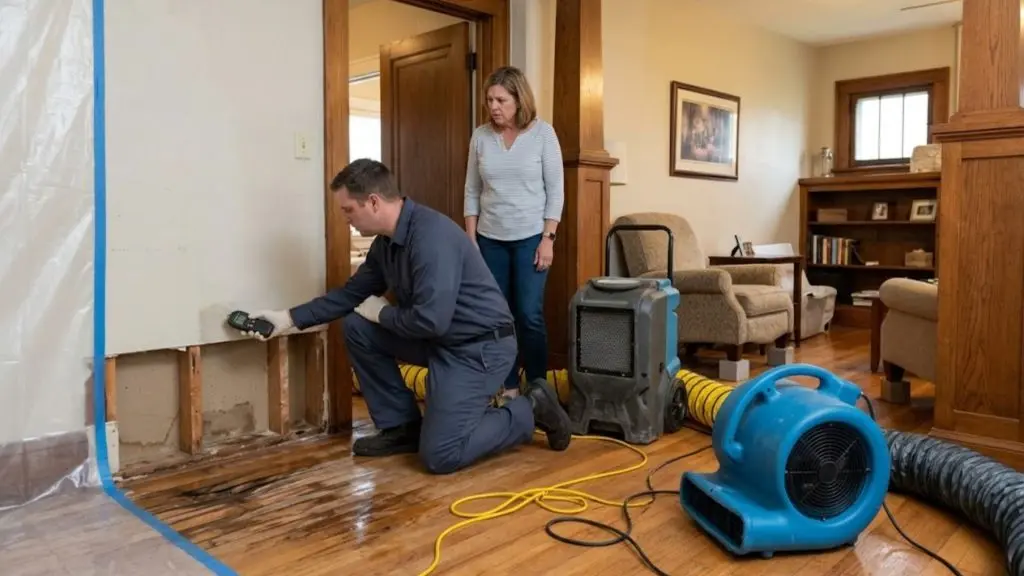
The plaster-on-lath construction common in St. Matthews homes conceals water far longer than modern drywall does. Drywall stains within days of a leak, while plaster can absorb moisture for weeks while the painted surface still looks sound. By the time a hairline crack or bubble shows up, the framing behind it has often been wet for a long stretch already, and when colonies have already formed behind the wall, the job shifts to mold remediation before any rebuild begins.
Our Water Damage Restoration Process
When we arrive at a St. Matthews property, the first priority is figuring out how far the water actually traveled, not placing equipment. We inspect moisture meters, thermal imaging, and environmental readings to identify both visible and hidden moisture before building a drying plan based on actual conditions.
From there, we bring in commercial-grade extraction, dehumidification, and air movement equipment, sized to the loss. Moisture levels get checked daily, with adjustments made as the structure dries. Every job is documented with photographs, moisture readings, and daily drying reports, which also becomes the record your insurance carrier will want to see.
Can Original Hardwood Floors Survive a Water Loss?
In most cases, yes, if drying starts within the first two to three days. Original red oak flooring common in St. Matthews homes from the 1940s and ’50s is thicker than modern prefinished flooring, which gives it more tolerance for cupping and enough wear layer to sand once it’s fully dry.
The sequence matters more than any single piece of equipment. Surface water gets extracted first, then vacuum drying mats pull moisture up through the boards while dehumidifiers hold the room at an aggressive drying condition. Sanding too early is the mistake that ruins these floors, boards sanded while the core is still wet will crown later, at which point replacement becomes the only option.
Insurance Considerations for St. Matthews Water Damage Claims
Most water damage claims in St. Matthews are covered under a standard homeowners policy when the loss is sudden and accidental, a burst pipe, a failed water heater, or an overflowing fixture. Damage from long-term leaks, deferred maintenance, or flooding from Beargrass Creek often isn’t covered the same way, and may require separate flood insurance through the National Flood Insurance Program.
Thorough documentation, photos, moisture readings, drying logs, and a scope of work, helps support a faster, more accurate claim review regardless of which type of coverage applies.
Areas We Serve Near St. Matthews
We regularly work in St. Matthews neighborhoods including Beechwood Village, Norbourne Estates, and Druid Hills, along with the commercial corridors near Shelbyville Road and Dutchmans Lane. If you’re in zip code 40207, 40222, or the surrounding 40223 area and dealing with water damage, our St. Matthews team responds with the same inspection and drying process described above.
Frequently Asked Questions
We don’t rely on what’s visible. We establish a dry standard, then use moisture meters and thermal imaging to map where water actually traveled through subfloors, wall cavities, and insulation, which is especially important in older homes with plaster and hardwood construction.
Usually not under a standard homeowners policy. Flooding from a creek or waterway typically requires separate coverage through the National Flood Insurance Program, while a sudden pipe failure or appliance leak is generally covered under standard insurance.
It depends on the class of the loss and the materials involved. Plaster and hardwood dry more slowly than drywall and carpet, so a Class 4 loss in an older St. Matthews home can take longer than a comparable loss in newer construction.
Often, yes, if the plaster hasn’t delaminated from the lath behind it. Plaster that’s still structurally sound can usually be dried in place with targeted cavity drying, which takes longer than drying drywall but preserves original details that are costly to replace.
Move valuables to higher ground if it’s safe, shut off power to the area if you can reach the breaker, and avoid walking through water that may be contaminated. Call for extraction and moisture mapping as soon as possible, since finished basements hide moisture behind walls and under flooring.
Final Takeaways on Water Damage Restoration in St. Matthews, KY
The age and construction of St. Matthews homes, plaster walls, hardwood floors, and finished basements built decades before modern waterproofing standards, change how a water loss needs to be handled. What dries quickly in a newer home can stay wet for weeks in an older one if it’s not measured and monitored correctly.
If your St. Matthews home has taken on water, from a basement flood tied to Beargrass Creek to a burst supply line upstairs, Bear Restoration measures the loss correctly from the first visit so plaster, hardwood, and finished basements get a real chance at being saved instead of guessed at.

Read Our Reviews