
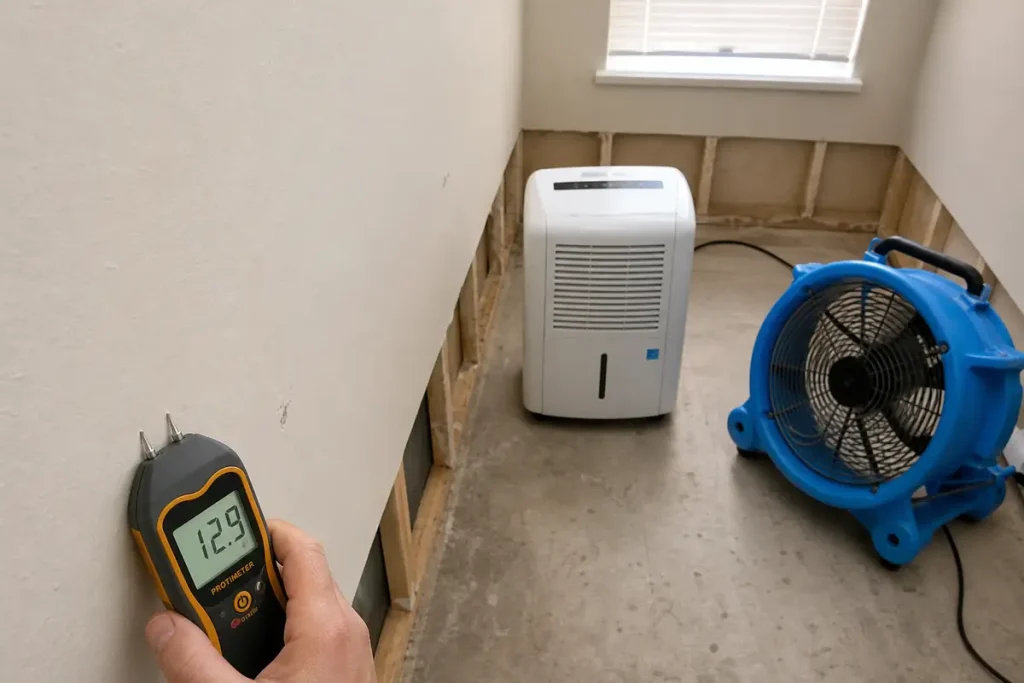
Imagine your home as a sponge, soaked and heavy after a flood. If you don’t act quickly, that sponge will start to grow mold, turning your sanctuary into a breeding ground for health risks. To prevent this, you need to understand the essential steps for mold prevention. From evaluating water damage to monitoring for growth, each step is critical. So, what should you do first to protect your home? From evaluating water damage to monitoring for growth, each step is critical.
Key Takeaways
- Remove standing water promptly to minimize moisture that encourages mold growth.
- Dry out affected areas thoroughly with fans, dehumidifiers, and open windows for ventilation.
- Clean and disinfect surfaces with mold-specific cleaners to eliminate potential spores.
- Monitor humidity levels using a hygrometer, keeping them below 60% to prevent mold.
- Regularly inspect for visible mold signs or musty odors, especially after flooding.
Assessing Water Damage and Safety Hazards
After a flood, it’s essential to assess water damage and identify safety hazards before you begin any cleanup.
Start with a thorough safety assessment of your environment. Look for exposed wiring, unstable structures, or hazardous materials that may have been displaced. Make sure to wear protective gear, including gloves and masks, to shield yourself from potential contaminants.
Next, conduct a damage evaluation to determine the extent of water intrusion. Check walls, floors, and personal belongings for signs of saturation or mold growth.
Document your findings with photos and notes, which can prove invaluable for insurance claims and future remediation efforts.
Removing Standing Water Quickly
To effectively prevent mold growth, you must remove standing water quickly and efficiently. This is vital in your flood response planning to mitigate future issues.
Here are three effective water removal strategies:
Use a Pump: If the water is deep, a submersible pump can efficiently clear large volumes. Choose one suitable for the depth and type of water.
Wet/Dry Vacuum: For smaller areas, a wet/dry vacuum is ideal. It can help you remove remaining puddles and moisture, ensuring no water is left behind.
Mop and Towels: After using pumps and vacuums, mop up any residual moisture with towels. This step is essential for preventing mold spores from settling.
Drying Out Affected Areas
To prevent mold growth, you need to dry out affected areas as quickly as possible.
Start by removing any remaining standing water, then increase air circulation using fans or dehumidifiers.
This combination helps to guarantee that moisture levels drop swiftly, reducing the risk of mold development.
Remove Standing Water
Removing standing water is essential in preventing mold growth after flooding, and you should act quickly.
Delaying water extraction can lead to extensive damage and health risks.
Follow these steps to efficiently remove standing water:
Use a Pump: Invest in a submersible pump for larger areas to expedite water removal.
Wet/Dry Vacuum: For smaller spaces, a wet/dry vacuum can effectively extract remaining water.
Dispose of Contaminated Materials: Safely discard soaked items like carpets and furniture that can’t be salvaged.
Increase Air Circulation
Once standing water is removed, increasing air circulation is essential for drying out affected areas and preventing mold growth.
To achieve ideal air flow, consider employing various ventilation strategies. Open windows and doors to create cross-ventilation, allowing fresh air to flow in while pushing damp air out. Use fans strategically placed to enhance air movement, focusing on the most affected spots.
If possible, run your HVAC system to maintain consistent air circulation, which can further aid in drying. Dehumidifiers can also be beneficial, as they remove excess moisture from the air.
Cleaning and Disinfecting Surfaces
After flooding, cleaning and disinfecting surfaces is vital to prevent mold growth.
You’ll need essential cleaning supplies, such as soap, water, and disinfectants, to guarantee thorough sanitation.
Understanding effective disinfection techniques will help you eliminate mold spores and maintain a healthy environment.
Essential Cleaning Supplies
Equipping yourself with the right cleaning supplies is essential for effectively tackling mold growth after flooding. Having the proper tools not only streamlines the cleanup process but also guarantees you’re well-prepared to combat any potential mold issues.
Here are three essential tools you’ll need:
Mold Cleaner: Choose a cleaner specifically designed to eliminate mold and mildew. This isn’t just any cleaner; it’s your first line of defense.
Protective Gear: Gloves, masks, and goggles will keep you safe from harmful spores while you work.
Scrubbing Brushes: Invest in a variety of brushes to reach different surfaces and textures, guaranteeing a thorough clean.
With these cleaning supplies, you’ll be ready to tackle the aftermath of flooding effectively.
Effective Disinfection Techniques
While flooding can create an ideal environment for mold growth, effective disinfection techniques can greatly reduce the risk of contamination.
Start by thoroughly cleaning all surfaces to remove dirt and debris where mold spores can thrive. Use specific disinfection methods, such as a mixture of water and bleach (1 cup of bleach per gallon of water), to disinfect non-porous surfaces.
Remember to wear gloves and guarantee proper ventilation during this process. For porous materials like drywall or carpet, it’s often best to remove and replace them entirely.
After disinfecting, allow surfaces to dry completely, as moisture can promote mold growth.
Using Dehumidifiers and Air Movers
When you’ve experienced flooding, using dehumidifiers and air movers becomes essential for preventing mold growth.
These tools help lower humidity levels and improve air circulation, creating an environment that’s less hospitable to mold. To maximize their effectiveness, consider the following tips:
Adjust Dehumidifier Settings: Set your dehumidifier to maintain indoor humidity below 50%. Regularly monitor and adjust settings as needed to guarantee peak performance.
Strategic Air Mover Placement: Position air movers near wet areas, such as carpets or walls, to enhance airflow. Aim them towards the most affected spots for quicker drying.
Combine Forces: Use dehumidifiers and air movers together. This combination accelerates the drying process, reducing the likelihood of mold taking hold.
Sealing and Repairing Structural Vulnerabilities
To effectively prevent mold growth after flooding, addressing structural vulnerabilities in your home is crucial. Start by inspecting your foundation integrity. Look for cracks or gaps that could allow moisture to seep in. Sealing these openings with appropriate materials will help maintain a dry environment.
Next, consider installing moisture barriers in areas prone to water exposure, such as basements and crawl spaces. These barriers act as protective layers, preventing moisture from infiltrating your home and creating an ideal breeding ground for mold.
Don’t forget about windows and doors; verify they’re properly sealed to keep water out.
Regular maintenance of your home’s exterior, including roofing and siding, also plays an important role in preventing water intrusion. By prioritizing these repairs and enhancements, you create a more resilient living space, fostering a sense of safety and community among your loved ones.
Monitoring for Signs of Mold Growth
Regularly monitoring for signs of mold growth is essential, especially after experiencing flooding. Mold can develop quickly in damp environments, so staying vigilant is key.
Here are three important mold indicators to watch for:
Visible Mold: Look for any discoloration on walls, ceilings, or floors. Black, green, or white patches can signal mold presence.
Musty Odors: Pay attention to any unusual smells in your home. A persistent musty odor often indicates hidden mold.
Humidity Levels: Use a hygrometer to track indoor humidity. Levels above 60% create a prime environment for mold growth.
Mold can develop within 24 to 48 hours after flooding. Understanding the mold growth timeline is essential to mitigate flooding aftermath effects. Quick action helps prevent extensive damage and keeps your environment safe and healthy.
While essential oils and vinegar can help, their effectiveness in preventing mold isn’t foolproof. You should combine these methods with proper drying and ventilation for the best results in keeping your space mold-free.
You should call a professional mold remediation service when you notice extensive growth, smell musty odors, or if previous DIY efforts failed. They’ll provide thorough mold inspection and help you understand remediation costs effectively.
Yes, certain air purifying plants, like peace lilies and spider plants, help reduce indoor mold. Additionally, consider mold-resistant varieties, such as certain ferns, to create a healthier indoor environment while enhancing your home’s aesthetic.
During cleanup, you should wear protective gear, including gloves, masks, and goggles. These safety precautions guarantee you minimize exposure to harmful substances, keeping you safe and healthy while effectively tackling the aftermath of flooding.
Don’t risk further damage to your property. Bear Restoration‘s ‘s IICRC-certified team is available 24/7 for emergency restoration in Louisville, KY and surrounding areas.
Learn about our Mold Remediation service →

Read Our Reviews