
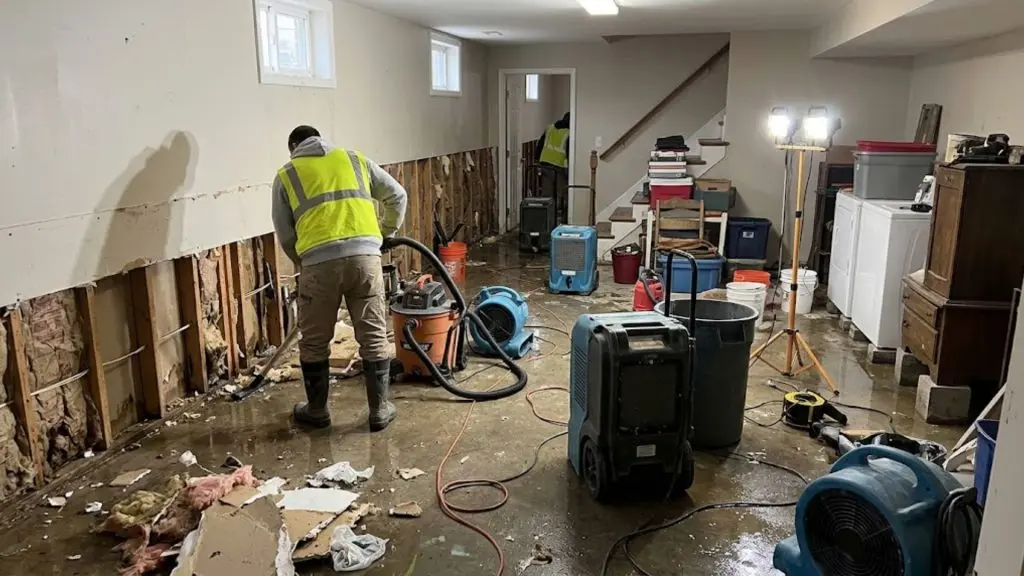
A few inches of water across the basement floor after an overnight storm is one of the most common calls we get in Louisville. It usually starts with a sump pump that gives out right when it is needed most.
What looks like a simple cleanup on the surface is often a bigger problem underneath. Water travels into concrete, behind drywall, and under flooring long before a homeowner notices the smell.
This article walks through why Louisville basements flood so often, how professional cleanup and drying actually works, and what to expect from the first phone call to the final repair.
If your basement is flooding right now, the priority is getting the water out and the drying started as quickly as possible, waiting even a day changes the scope of the job.
Why Basements Flood So Easily in Louisville
Kentucky’s weather and the age of a lot of our housing stock don’t always cooperate with each other. Most flooded basement calls we run in Louisville trace back to one of a handful of causes:
- A sump pump failing during a storm
- Water pushing in through foundation cracks
- Gutters and downspouts that aren’t moving water far enough from the house
- Municipal sewer systems getting overloaded during heavy rain
- Groundwater rising after an extended wet stretch
Once water finds a way in, the basement is almost always the first place it settles, since it’s the lowest point in the house.
Unfinished vs Finished Basement Flooding
How a flood plays out depends a lot on whether the basement is finished or not. In an unfinished basement, water spreads across the concrete slab and absorbs into the porous surface itself. Even after the standing water is pumped out, the slab and block walls keep holding moisture and slowly releasing it back into the air.
A finished basement is more complicated. Water gets pulled into drywall, insulation, baseboards, and flooring instead of just sitting on top. That creates hidden moisture pockets behind walls and under floors, which is exactly the kind of condition mold needs to take hold. What looks like a small puddle on the surface is often a much larger problem once you look behind the finishes.
Is the Water in Your Basement Clean, Gray, or Black?
It depends on the source, and basement floodwater rarely stays clean for long. The IICRC S500 standard classifies water into three categories, and a flooded basement can involve any of them.
Water from a clean supply line or rainwater entering through a foundation wall may initially be classified as Category 1 clean water. However, its contamination level can increase when it comes into contact with dirt, building materials, or contaminated belongings.
The water category depends on its source and the extent of contamination, so it should not be determined by time alone. Flooding caused by a sewer backup through a floor drain is classified as Category 3 black water and requires specialized sewage backup cleanup procedures. Properly identifying the water category helps determine which materials can be safely dried and restored and which must be removed to protect the property and its occupants.
What Happens During Professional Flooded Basement Cleanup
Assess the Source and Check for Safety Risks
We start by identifying where the water came from, a sump pump failure, foundation leak, burst pipe, or sewer backup, since clean water, groundwater, and contaminated water all call for different procedures. We also check for electrical hazards and damaged outlets before anyone steps into the water.
Remove Standing Water and Map Hidden Moisture
Once the area is safe, we extract standing water with pumps and professional equipment, paying close attention to carpet edges, flooring seams, and wall lines where water hides. Moisture meters and thermal imaging then show us where water traveled beyond what’s visible.
Remove Unsalvageable Materials and Set Up Drying Equipment
Carpet pad, insulation, and drywall that are too saturated to dry safely are removed so the structure can dry properly without trapping moisture behind new finishes. Commercial air movers and dehumidifiers go in next, sized to the basement and how far the water spread.
Monitor, Verify, and Restore
Drying is measured daily rather than guessed at. Once materials reach a safe moisture level, and not just a dry-looking surface, repairs can begin, from drywall and trim to flooring and insulation.
How Long Does Basement Drying Actually Take?
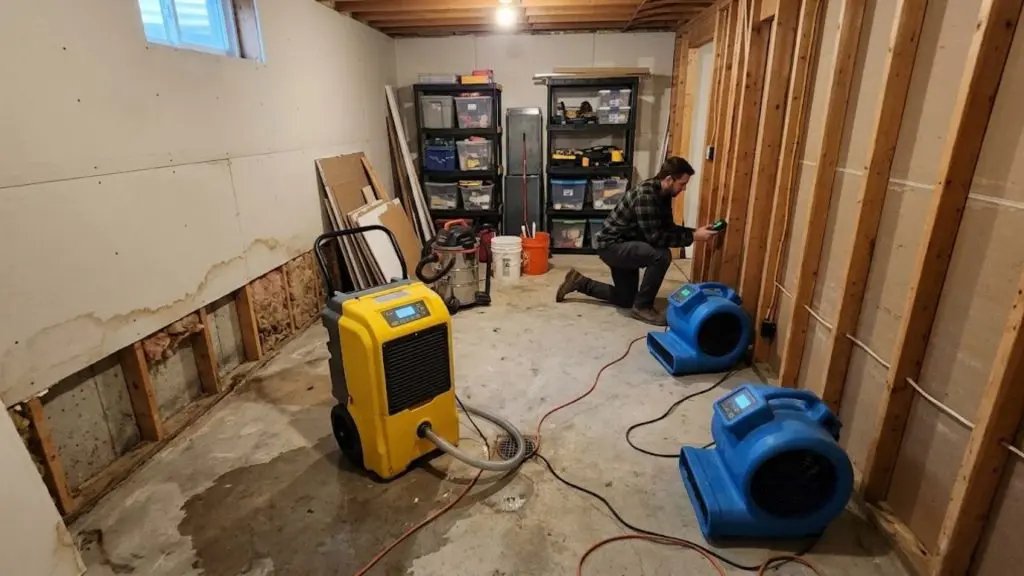
Most flooded basements take a few days of active drying, though the full timeline depends on how much water intruded and how long it sat before cleanup began. Standing water removal typically happens the same day it’s reported. Structural drying usually runs two to five days, and full restoration, including any rebuild, can take one to three weeks for more extensive damage.
A basement that sat wet for 48 hours or longer before anyone noticed generally takes longer to dry, since moisture has had more time to work its way into concrete and framing.
What to Do and Avoid After a Basement Floods
A few decisions in the first hours after a flood affect how much of the basement you get to keep. In general:
- Do shut off power to the area if it’s safe to reach the breaker
- Do move valuable or sentimental items to higher ground if the water is still rising
- Don’t run fans alone and assume the basement is dry, surface drying isn’t the same as structural drying
- Don’t pull up carpet or drywall yourself if the water may be contaminated
- Don’t wait to call for help hoping it will dry out on its own
These choices matter because materials that hold moisture for more than two days are far more likely to need replacement instead of drying in place.
Insurance and Flooded Basements in Louisville
Whether a flooded basement is covered usually comes down to the source of the water. A sudden pipe failure or appliance leak is generally covered under a standard homeowners policy, while damage from long-term groundwater seepage or surface flooding often isn’t, and may require separate flood coverage.
Thorough documentation, photos, moisture readings, and a detailed scope of work, supports a faster, more accurate claim review. We handle that documentation as part of every basement cleanup and bill the carrier directly where possible.
Frequently Asked Questions
Not always. Clean water from a supply line is less hazardous at first, but groundwater or sewage intrusion is contaminated from the start, and even clean water becomes unsafe if it sits too long.
It depends on saturation. Lightly affected drywall can sometimes be dried in place, but heavily soaked drywall and insulation usually need to come out to prevent mold from taking hold.
Sometimes, if the water was clean and removed quickly. Carpet padding is usually replaced regardless, since it traps moisture and bacteria even when the carpet itself looks fine.
Fans help with surface drying but won’t pull moisture out of walls, flooring, or concrete. Professional dehumidification and monitoring are needed to confirm the structure is actually dry, not just dry to the touch.
Even one inch of standing water is enough to ruin carpet padding and begin wicking moisture up drywall through capillary action. At six inches, outlets and HVAC returns can be submerged, creating a safety hazard on top of the water damage itself.
Key Takeaways on Flooded Basement Repair in Louisville, KY
The biggest factor in how much of a flooded basement you keep is how fast the water comes out and how thoroughly it’s dried, not just how deep it was. Basements that dry within the first two days generally fare far better than ones left standing over a weekend.
If your basement has flooded, Bear Restoration handles the extraction, moisture mapping, and drying across Louisville and nearby communities like St. Matthews and Jeffersontown. When the flooding involves a sewer backup or leaves mold growing behind the walls, our team coordinates sewage cleanup and mold remediation as part of the same job instead of treating them separately.

Read Our Reviews