
It’s a coincidence that many homeowners face basement flooding during heavy rains, often unprepared for the damage it can cause. Understanding the top water extraction methods can make a significant difference in minimizing the impact on your home. From using wet/dry vacuums to employing professional services, each technique has its own benefits. Knowing when and how to apply these methods effectively can save you time, money, and stress in an emergency situation.
Key Takeaways
- Evaluate the water source and damage extent, ensuring safety by turning off electricity and wearing protective gear during cleanup.
- Utilize wet/dry vacuums effectively by starting from the farthest corner and monitoring capacity to prevent overflow.
- Employ submersible pumps at the lowest point for efficient drainage, ensuring electrical connections are waterproof and compliant with local codes.
- Use dehumidifiers to control moisture levels, replacing wet absorbent materials regularly for optimal drying conditions.
- Call professional water extraction services for extensive damage, leveraging advanced technology for thorough restoration and quicker recovery.
Assessing the Situation and Safety Precautions
Before you begin any water extraction process, it’s essential to assess the situation and prioritize safety.
Start with a thorough situation evaluation to determine the extent of the water damage. Identify the water source—whether it’s from flooding, a burst pipe, or another cause. Verify that the electricity is turned off to prevent any electrical hazards.
Next, consider the structural integrity of your basement. Look for any signs of mold or damage, which can pose health risks.
Once you’ve evaluated the situation, implement safety measures such as wearing protective gear, including gloves and boots, to shield yourself from contaminants.
If the water is deep or if you notice any hazards, it’s best to call in professionals.
Taking these steps not only protects you but also guarantees a more effective water extraction process, fostering a sense of community and support in the face of emergencies.
Using a Wet/Dry Vacuum
Using a wet/dry vacuum is one of the most effective methods for extracting water from your basement. This tool offers several wet/dry vacuum benefits, such as its ability to handle both liquid and solid debris, making it versatile for various cleanup tasks.
To maximize efficiency, start by confirming the vacuum’s filter is appropriate for wet use.
Begin vacuuming from the farthest corner, working your way toward the exit to prevent tracking water. If your basement has standing water, check the vacuum’s capacity to avoid overflow; empty it as needed.
For better suction, use a wide attachment to cover more surface area quickly.
After extraction, always clean and dry the vacuum to maintain its functionality. By following these vacuum usage tips, you’ll guarantee a thorough water removal process, keeping your basement safe and dry.
Employing Submersible Pumps
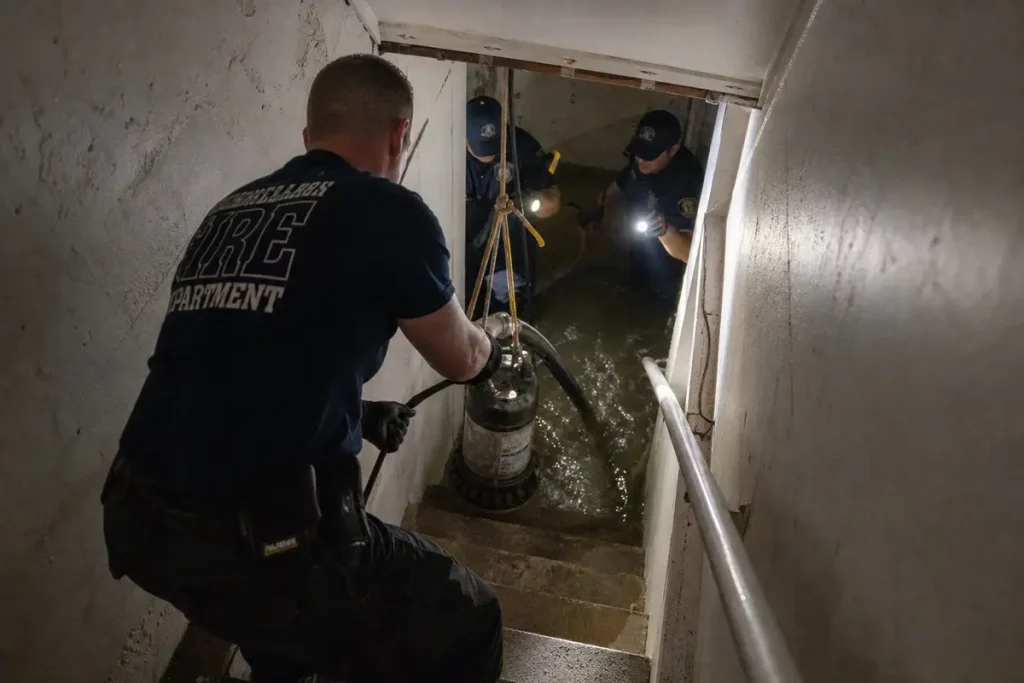
When you need to extract water from your basement efficiently, employing submersible pumps is a practical choice.
You’ll want to take into account the types of submersible pumps available, guarantee proper installation techniques, and follow maintenance and safety tips to maximize their effectiveness.
Understanding these aspects will help you tackle water issues effectively and safely.
Types of Submersible Pumps
Submersible pumps are essential tools for effective basement water extraction, offering various types tailored to specific needs. Understanding these submersible pump types can help you choose the right one for your situation, considering their pump power ratings as well.
-
Drainage Pumps: Designed for lower water levels, these are ideal for general water removal.
-
Sump Pumps: Typically used in basements, they’re powerful and suited for continuous operation.
-
Effluent Pumps: Best for moving wastewater, these are effective in managing sewage and gray water.
Selecting the appropriate submersible pump guarantees efficient water removal, protecting your basement from potential damage.
Proper Pump Installation Techniques
Choosing the right submersible pump is only the first step; proper installation is key to guaranteeing ideal performance and longevity.
Begin with strategic pump placement, ideally at the lowest point of your basement, to maximize water extraction efficiency. Ensure the pump is positioned above any sediment to prevent clogging.
Connect it to your drainage systems using durable, leak-resistant hoses to facilitate smooth water flow. Secure all connections to avoid disconnections during operation.
It’s essential to check that your electrical connections are waterproof and comply with local codes. Always test the system after installation to confirm it operates correctly.
Maintenance and Safety Tips
Although employing submersible pumps can greatly mitigate water issues, regular maintenance and adherence to safety protocols are essential for their ideal operation.
By implementing preventive measures and using proper safety gear, you can guarantee both your safety and the longevity of your equipment.
Here are some key maintenance and safety tips to follow:
- Inspect the pump regularly for wear and tear, including seals and cords.
- Always wear appropriate safety gear, such as gloves and boots, when operating the pump in wet conditions.
- Verify the power source is safe and dry to avoid electrical hazards.
Utilizing Sump Pumps
When it comes to basement water extraction, understanding the types of sump pumps available is vital for effective removal.
Proper installation techniques guarantee peak performance and longevity of your sump pump system.
Let’s explore the different sump pump options and installation methods to safeguard your basement from flooding.
Types of Sump Pumps
Sump pumps play an essential role in basement water extraction, and understanding the different types can help you select the right one for your needs.
There are several sump pump types, each with unique features and pump power suited for various scenarios:
-
Submersible Sump Pumps: These are designed to be placed underwater, making them efficient for continuous use.
-
Pedestal Sump Pumps: Mounted above the sump pit, they’re easier to maintain and typically have a longer lifespan.
-
Battery Backup Sump Pumps: These provide additional protection during power outages, ensuring your basement stays dry when you need it most.
Proper Installation Techniques
Proper installation techniques are essential to guarantee your sump pump operates effectively and efficiently.
Start by selecting a suitable location away from walls and close to a power source. Ascertain proper sealing of the sump pit to prevent groundwater seepage. This minimizes moisture and enhances your pump’s performance.
Next, connect the discharge pipe, making certain it slopes away from your foundation for ideal drainage solutions. Always check for clogs and use a check valve to prevent backflow.
Regularly test your pump to maintain functionality. By following these steps, you create a reliable system that protects your basement from flooding, giving you peace of mind.
With proper installation, you’re not just safeguarding your home; you’re also fostering a sense of community resilience.
Implementing Dehumidifiers for Drying
While many homeowners focus on immediate water removal, implementing dehumidifiers is essential for effective drying after a basement flood.
Dehumidifiers enhance moisture control, making certain that residual humidity doesn’t lead to mold growth or structural damage.
To maximize dehumidifier efficiency, consider the following:
-
Choose the Right Size: Select a unit based on your basement’s square footage and moisture level.
-
Maintain Ideal Conditions: Make sure windows and doors are closed to prevent outside air from entering and disrupting the drying process.
-
Regularly Monitor and Adjust: Check humidity levels and adjust the dehumidifier settings as needed for peak performance.
Applying Absorbent Materials
Applying absorbent materials is an essential step in managing water damage in your basement. These materials, such as towels, sponges, and specialized absorbent pads, can effectively soak up excess water and help prevent further structural damage.
For effective application, start by identifying the most saturated areas. Lay the absorbent materials down and press firmly to maximize water absorption.
You might consider using a combination of different materials to tackle various surfaces—thicker pads for carpets and thinner ones for hard floors. After the initial absorption, be sure to replace wet materials with dry ones regularly to maintain effectiveness.
Additionally, as you work, keep an eye on mold development, as damp environments can foster growth rapidly. Engaging in this proactive approach not only helps mitigate immediate water damage but also fosters a sense of community and responsibility for your home’s health.
Professional Water Extraction Services
Once you’ve tackled initial water absorption with materials like towels and absorbent pads, you might find that more extensive water extraction is necessary.
In such cases, calling in professional water extraction services can make a significant difference. These experts use specialized techniques and professional equipment to guarantee that your basement is thoroughly dried and restored.
Here are some service benefits you’ll experience:
-
Rapid Response: Professionals arrive quickly, minimizing damage and reducing the risk of mold growth.
-
Advanced Technology: They utilize high-powered pumps and industrial dehumidifiers for efficient extraction.
-
Expert Assessment: Trained technicians evaluate water damage, guaranteeing all areas are addressed.
Opting for professional services not only enhances the extraction process but also helps maintain the integrity of your home.
You’ll feel reassured knowing your basement is in capable hands, allowing you to focus on restoring your space.
To prevent future basement flooding, make certain your drainage systems are clear and functional. Install a reliable sump pump to manage excess water. Regular maintenance and monitoring will help protect your space from potential water damage.
Does your policy cover basement water damage? Typically, flood insurance provides coverage, but you need to check your coverage limits. Homeowners insurance might also apply, so review your policy details for clarity and protection.
It typically takes 3 to 5 days to dry a flooded basement, depending on drying techniques and drying equipment used. Proper ventilation and dehumidifiers can greatly speed up the process, ensuring a thorough and efficient drying.
Sure, you can totally extract water yourself with a sump pump or wet vac. Just remember, it’s best to tackle minor issues before they become major problems. Your basement will thank you for it!
Standing water in your basement poses health risks like mold growth and bacteria proliferation. These can lead to respiratory issues, allergies, and other health concerns. It’s essential to address any moisture problems promptly to protect your well-being.
Conclusion
In emergencies, you can take charge by evaluating the situation, using a wet/dry vacuum, and employing pumps. You can control moisture with dehumidifiers, absorb excess water with materials, and, when needed, call in professionals for extensive recovery. By following these steps, you not only mitigate damage but also create a safer environment. Remember, quick action, proper techniques, and thorough drying can make all the difference in restoring your basement and preventing future issues.

Read Our Reviews