
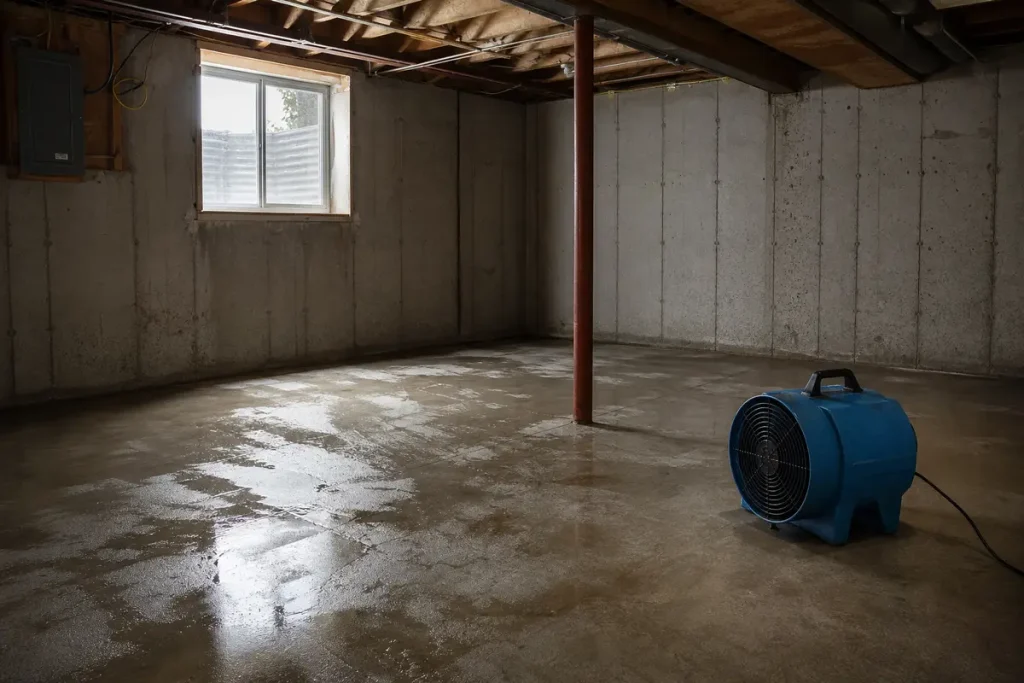
Category 2 Water Damage = Grey Water Damage
Gray water damage is Category 2 water damage, meaning the water has been contaminated by household use and carries a higher health and material risk than clean water. That distinction matters because water and freezing losses affect about 1 in 60 homes with insurance claims each year, yet gray water often gets dismissed as a routine cleanup when it is actually a time-sensitive contamination problem.
What Gray Water Damage Means and Why It Gets Misjudged
The Insurance Information Institute and recent insurer datasets place water damage among the most common property claims in the country, with roughly 22.6% to 29.4% of homeowner claims tied to water losses depending on the period measured. In plain terms, this is not a rare disaster category. It is a routine property-loss problem with expensive consequences.
Gray water damage sits in the middle of the restoration standard. Under industry classification, Category 2 water has been exposed to contaminants from normal household use, such as detergents, food residue, soil, and microorganisms. Category 2 water is more hazardous than clean water from a fresh supply line and less contaminated than sewage or floodwater, but that middle position is exactly why owners underestimate it.
At first glance, gray water often looks manageable. A washing machine overflow or dishwasher discharge does not look like a sewage backup. But appearance is the wrong test. The real risk comes from what the water carries, what it soaks into, and how long it sits before proper extraction and drying begin.
Finding: Gray water damage gets misjudged because it looks ordinary while acting like a contamination event.
How Gray Water Differs From Clean Water and Black Water
Clean water, or Category 1, starts from a sanitary source such as a broken supply line. Gray water, or Category 2, contains enough contamination to cause illness or discomfort through contact or ingestion. Black water, or Category 3, includes sewage, external floodwater, and other heavily contaminated sources that present a clear health hazard.
That sounds simple, but the categories are not fixed. Water changes category as it sits, picks up debris, or moves through building materials. A floor overflow that started as gray water can become significantly more hazardous after stagnating in carpet pad, drywall, or insulation. If you need the bigger picture, it helps to understand how the contamination levels are classified across all three categories.
The limitation is straightforward: a category label describes the water at a point in time, not forever.
Finding: Gray water is the underestimated middle category, and it can escalate fast.
Where Gray Water Usually Comes From Inside Your Property
Most property water losses begin indoors through plumbing and appliances, not dramatic storms. That pattern matches what owners in Louisville actually deal with: washing machine overflows, dishwasher discharge, shower and tub overflows, sink backups, toilet overflows involving urine but no feces, sump failures, and appliance line leaks.
Leak statistics help frame how fast this gets expensive. ConsumerAffairs reports that household leaks waste nearly 10,000 gallons per year, while a 1/8-inch pipe crack can release about 250 gallons in 24 hours. A running toilet can waste more than 200 gallons a day. None of those events need a burst main or a storm to create a serious loss.
In In In In Louisville housing stock, source matters. Older properties often hide aging supply lines, worn shutoff valves, and past repairs inside walls or under floors. Finished basements rely heavily on sump performance. Rental units add another layer because small leaks often go unreported until flooring swells or odors appear.
Finding: Gray water losses usually start with ordinary indoor failures, not rare catastrophes.
Why “Small” Appliance and Plumbing Leaks Become Large Losses
Visible water tells only part of the story. Gray water travels under vinyl flooring, behind baseboards, into cabinet toe-kicks, through subfloors, and down wall cavities. A leak in one room often creates a drying and demolition scope in three.
FEMA has long used the rule that one inch of water can cause about $25,000 in damage in a home. That number helps explain why a small-looking appliance overflow turns into removal of flooring, drywall cuts, cabinet drying, and moisture mapping across adjoining rooms. The catch is that surface water never marks the true boundary of damage.
Finding: A minor-looking gray water event often creates a major hidden-loss footprint.
Why Gray Water Is Riskier Than It Looks
Category 2 water contains contaminants that change the cleanup standard from simple drying to controlled remediation. Detergents, food particles, soil, and microorganisms are common, and the IICRC-based definitions cited by ConsumerAffairs note that gray water can contain unsafe levels of bacteria, mold, and viruses. Once that water reaches porous materials, the issue is no longer cosmetic.
The health side and the property side overlap. The EPA and public-health literature on damp indoor environments consistently link indoor dampness with respiratory symptoms, odor problems, and degraded indoor air quality. A 2012 water-damaged-home case study documented bacteria, mold contamination, and HVAC-driven spread of contaminated air into living spaces. That is an extreme example, but it illustrates the mechanism clearly: trapped moisture and contamination do not stay politely at floor level.
Porous materials absorb contamination below the surface. That is why wiping a floor clean does not resolve what entered pad, drywall paper, insulation facings, or particleboard cores.
Finding: Gray water is riskier because contamination and absorption travel together.
The 24- to 48-Hour Escalation Problem
The mold-growth window is one of the most important time markers in water damage. Multiple restoration and housing sources place mold colonization in the 24 to 48 hours after unaddressed intrusion. For gray water, delay creates a double problem: more microbial growth and more contamination absorbed into materials.
That is also why clean and gray water can shift into a more dangerous category quickly. If you want the short version of that timeline, this is the same issue behind why uncontaminated leaks stop being harmless fast….
The counter-finding matters: fast extraction, demolition of unsalvageable materials, and verified drying can limit secondary damage. But that only works when the contaminated scope is identified correctly from the start.
Finding: Time is not neutral in gray water losses, delay makes both health risk and cost worse.
Which Materials Usually Cannot Be Saved
Carpet pad, insulation, many drywall sections, particleboard, laminate underlayment, and other porous materials often require removal after gray water exposure. Contamination penetrates below the cleanable surface, and drying alone does not reverse that.
Less-porous materials, such as some tile, sealed concrete, metal, and certain solid surfaces, can often be cleaned and dried if the response is immediate and the contamination stays limited. But once water reaches the layers underneath, salvage decisions change quickly.
Finding: Materials that absorb gray water usually lose salvage value fast.
What Proper Gray Water Cleanup Actually Requires
Gray water restoration typically costs about $4 to $6.50 per square foot, higher than clean water because the process involves contamination control, not just drying. That middle cost range often misleads owners into thinking the work is moderate. It is not. It is specialized remediation with a drying component.
Proper cleanup follows a sequence: assessment, containment where needed, extraction, removal of unsalvageable porous materials, cleaning, antimicrobial treatment when appropriate, mechanical drying, and moisture verification. Surface wiping and a few fans do not meet the standard for Category 2 losses because contamination remains in hidden materials and enclosed assemblies.
The cost driver is not just square footage. Accessibility, material layers, and hidden spread all change the scope.
Finding: Proper gray water cleanup is a contamination-control process, not a surface cleanup.
What You Should Do Immediately After Discovering Gray Water
Stop the source if doing so is safe. Shut off power to affected areas when water has reached outlets, appliances, or cords. Keep occupants out of the contaminated space, avoid direct contact, and document the condition with photos and timestamps before major movement of contents begins.
Then report the loss promptly to restoration and insurance contacts. Emergency mitigation records, moisture readings, and early photos do more than organize the job. Those records establish timing, causation, and the difference between a sudden discharge and a long-term maintenance issue.
Finding: Your first response should protect safety, preserve evidence, and start mitigation immediately.
When a DIY Response Fails
DIY cleanup fails when gray water has reached porous materials, wall cavities, subflooring, HVAC pathways, multiple rooms, or any area with uncertain contamination level. It also fails once water has sat beyond the first day, because the cleanup standard changes with time and absorption.
There is one limitation: a very small event on a nonporous surface, addressed immediately and fully dried, is a different scenario. But most true gray water losses move beyond that threshold quickly, especially when the source comes from appliances, toilets, or backups. Once contamination approaches sewage, the risk profile shifts toward the hazards associated with heavily contaminated water….
Finding: Most gray water incidents exceed safe DIY limits faster than owners expect.
How Gray Water Damage Affects Insurance Claims
Water damage makes up roughly 22.6% to 29.4% of homeowner claims, with average payouts commonly falling between about $12,514 and $15,400 in recent datasets. Those numbers matter because coverage often turns less on the color of the water than on the cause of the loss.
The key distinction is sudden and accidental versus gradual and preventable. Standard homeowners’ insurance often covers sudden discharge from plumbing or appliances. It often excludes gradual leaks, deferred maintenance, and separate categories such as flood, drain backup, or sump failure without endorsements. RubyHome’s insurance summary states that sudden and accidental water damage is the usual coverage trigger.
Finding: Insurance decisions usually turn on cause and timing, not just contamination category.
What Insurers Usually Ask You to Prove
Insurers typically want the source of loss, when you discovered it, what emergency steps you took, and whether the damage reflects a sudden event rather than long-term neglect. Photos, timestamps, mitigation invoices, plumber reports, and drying logs all strengthen that file.
Delayed reporting weakens causation. If swelling, staining, odor, and deterioration have clearly been present for weeks, the claim becomes easier to frame as maintenance failure rather than accidental discharge.
Finding: Claim strength depends on proving a sudden event and a prompt response.
Gray Water Vs. Sewer Backup Vs. Flood Damage
Gray water is a contamination category. Sewer backup and flood are insurance categories with separate coverage rules. That distinction prevents a lot of confusion.
An indoor washing machine overflow can be gray water and still fall under standard homeowners coverage if it was sudden. A drain or sewer backup often needs a special endorsement. External floodwater usually falls outside standard homeowners coverage entirely and requires separate flood insurance.
Finding: Water category and insurance category are not the same thing, and mixing them up causes claim mistakes.
How You Reduce the Risk of Gray Water Losses in Louisville Properties
Prevention remains underused. Fewer than 20% of homeowners report taking common water-loss precautions even though appliance failures, plumbing leaks, and drainage issues drive many claims. In Louisville properties, risk reduction starts with the actual building stock in front of you.
Older homes need closer watch on aging plumbing, shutoff valves, and hidden prior repairs. Finished basements need dependable sump performance and moisture monitoring. Suburban homes need attention to laundry rooms, water heaters, dishwashers, and refrigerator lines. Rentals need tighter turnover inspections because leaks expand during vacancy or underreporting.
Finding: The best prevention strategy matches the property’s age, layout, and occupancy pattern.
Maintenance Steps That Prevent the Most Common Category 2 Events
Replace washing machine hoses and appliance supply lines on schedule. Inspect water heaters for corrosion, age, and slow seepage. Clear HVAC condensate drains. Test sump systems before heavy rain periods. Check under sinks and behind appliances for staining or softness. Maintain roofs and gutters so water does not compound interior moisture issues. Install leak detectors near water heaters, laundry equipment, dishwashers, and sinks.
Those are simple tasks, but simple is not the same as optional.
Finding: Routine maintenance prevents the most common gray water sources before they become claims.
Signs the Damage Has Moved Beyond “Just Water”
Odor, swelling baseboards, soft drywall, stained cabinetry, warped flooring, damp insulation, recurring humidity, and visible microbial growth all indicate that the water damage problem has moved past a routine spill. Color alone does not define gray water loss. Contamination level and material impact do.
If the room feels humid after the visible water is gone, or if odors return after cleaning, hidden moisture remains. That is the point where owners usually lose time by treating a contamination problem like housekeeping.
Finding: Gray water damage is identified by contamination and absorption, not by appearance alone.
Gray water damage is not a harmless middle ground. Once you understand that it combines contamination, hidden spread, and a short escalation window, the right response becomes obvious: treat it early, document it well, and never mistake a household overflow for a simple spill.

Read Our Reviews